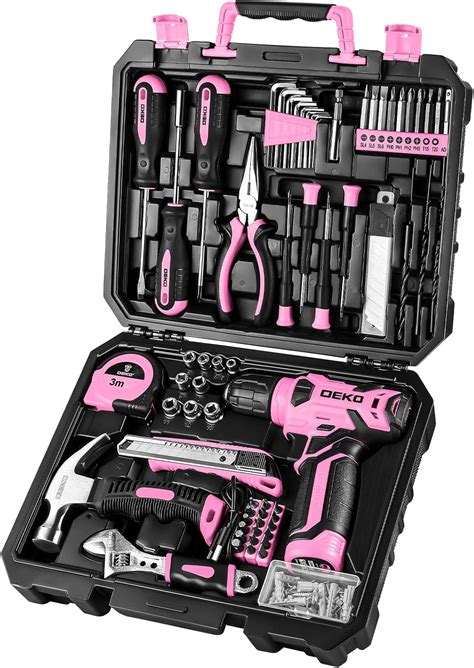
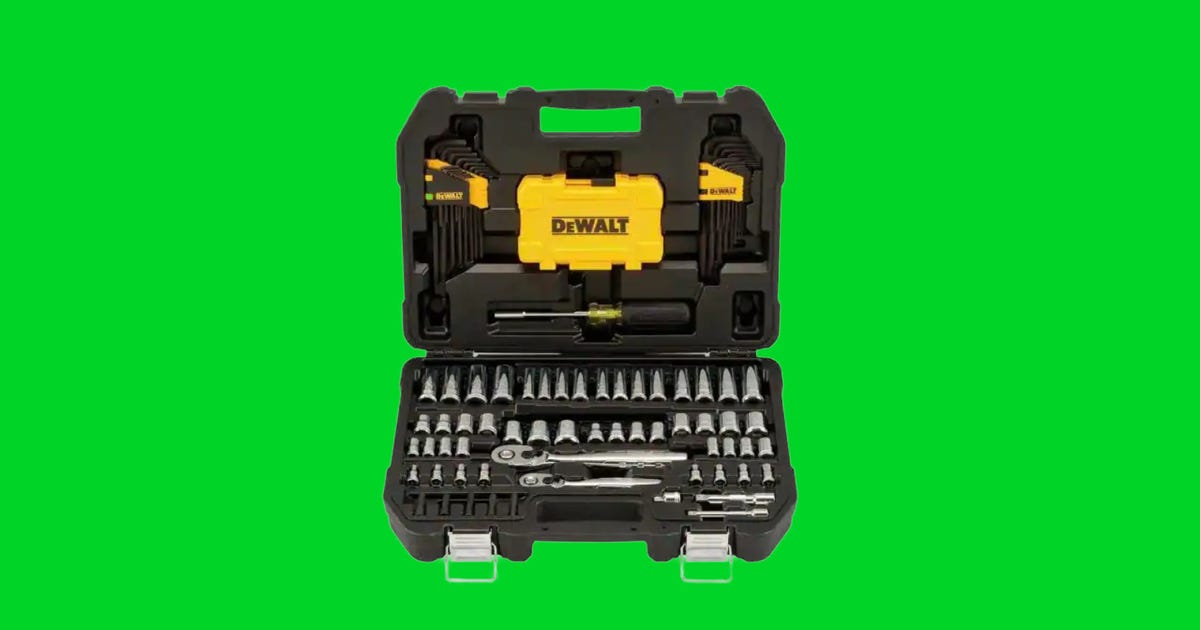
Here is one of the pictures featuring the Amazon Tools. Numerous images associated with the Amazon Tools can be utilized as your point of reference. Below, you'll find some additional pictures related to the Amazon Tools.
Amazon to Acquire One Medical in Major Boost to Its Health Care Business
Amazon to Acquire One Medical in Major Boost to Its Health Care Business
Amazon will acquire One Medical as part of its effort to expand into the health care business, the company said Thursday. One Medical runs a chain of more than 150 primary care clinics in over a dozen US cities and offers online and mobile services. Amazon will pay $18 a share for the company, putting the deal's value at about $3.9 billion.
The acquisition, which must be approved by regulators and One Medical shareholders before it's final, will greatly expand the primary care services Amazon is already offering through its Amazon Care brand.
"We love inventing to make what should be easy easier and we want to be one of the companies that helps dramatically improve the healthcare experience over the next several years," senior vice president of Amazon Health Services Neil Lindsay said in a statement.
One Medical offers services to individual subscribers as well as workers who receive its benefits from employers. It aims to speed up access to care with round-the-clock virtual care for patients and quick appointment booking. Amazon Care currently provides medical care in eight cities, including the home of Amazon's offices in both Seattle and Arlington, Virginia, and it's slated to expand into New York, San Francisco and other major cities.
Amazon's "presence becomes much stronger as One Medical's services reach nearly 800,000 members across 25 US markets," said Insider Intelligence analyst Rajiv Leventhal, who added that the acquisition will make Amazon a close competitor of CVS Health and Walgreen's efforts to expand into primary care.
Currently, Amazon Care patients can receive in-home visits for flu and COVID-19 testing, vaccinations, preventive care, prescriptions and treatment for a range of conditions and book online appointments.
After launching Amazon Care in 2019, the company followed up in 2020 by launching its own online pharmacy. Amazon Pharmacy fulfills prescriptions for those with or without insurance, and delivers them to customers' homes. Prime members receive special savings and free two-day shipping.
This story is part of Gift Guide, our year-round collection of the best gift ideas.
Do you have a father or know one who's always building, creating and showing off his handiness or technical prowess? If so, with Father's Day around the corner, you're probably wondering what to get for a DIY dad.
Sometimes the best gift is simply a helping hand, but if you're looking for tangible items for your father, then getting him a gift that makes his DIY experience easier is always a good idea. If you're ready to spend some cash, we have you covered with a list of gifts that covers tools, accessories and even food kits that will keep him prepared for anything.
Etsy
This is the kind of gift for the father who is always ready to fix something at a moment's notice. This multitool includes a hammer, nail puller, plier and wire cutter. If your dad needs to do anything around the house, he can whip this out and fix just about anything. To make this gift even more special, you can engrave it with a personalized message.
Amazon
Sometimes, lugging a heavy toolbox around is just too much, but for the dad who loves home improvement projects, you can make it easier on him by grabbing this Carhartt tool bag. There's a main compartment you can open and close with a zipper. Plus, 23 exterior pockets and loops and 11 interior pockets will hold everything he needs to get the job done. This bag can stand up to tough conditions, especially rain due to its water-repellent design.
Amazon
When your dad is working with heavy machinery and needs something to protect his ears, he'll thank you for these ear protectors from 3M. These have Bluetooth technology that connects to a phone or any Bluetooth-enabled device. There is an integrated microphone for hands-free calls and even an AM/FM radio so your dad can jam out to his favorite stations while having his ears protected up to 24 decibels.
Uncommon Goods
There's got to be a dad out there who not only loves barbecue but also making his own sauces. And if your dad's the kind of man who experiments with new flavors, especially those of the spicy variety, then he'll love this hot sauce kit. This kit features ground and whole spices, distilled white vinegar, and other items including an instruction booklet with recipes. If you want to sweeten the deal, book him a pick your peppers: Pick Your Peppers: DIY Hot Sauce Class via Uncommon Goods for an additional 30 bucks.
Amazon
Being in the rugged outdoors can be fun, but it's even better when you're prepared. This emergency weather radio will give him everything needed to help withstand anything. It has a rechargeable battery and he can power it in five ways: With AAA batteries, a hand crank, a 2,000-mAh power bank, micro-USB port and a solar panel. It also has a bright flashlight, weather broadcasts and an SOS alarm.
Microsoft says android apps won t be water but fire next time scripture microsoft says android apps won t be alone movie microsoft says android apps won t be silent microsoft says android apps won t update microsoft says android apps won t open microsoft says android apps won t microsoft android tablet microsoft says not connected to internet microsoft says verizon announcement
Microsoft says Android apps won't be available for Windows 11 on Oct. 5 launch
Microsoft says Android apps won't be available for Windows 11 on Oct. 5 launch
Microsoft's delaying one of the most highly anticipated features of its new Windows 11 software. The tech giant said it won't offer Android mobile phone apps on its new app store for PCs when its next iteration of Windows launches on Oct. 5 as a free upgrade for many users. Microsoft didn't give a date for when Android apps will be made available either.
Instead, the software said it plans to offer the new feature, developed in partnership with Intel and Amazon, available in a "preview" test "over the coming months."
Read more: Android apps and Windows 11: Here's what you should know
"We look forward to continuing our journey to bring Android apps to Windows 11," Microsoft said in its short statement on the matter Tuesday.
The move marks the first major setback for Microsoft's upcoming Windows 11 software, which is launching six years after Windows 10 hit store shelves. The new Android app support feature was an important selling point, alongside new visual looks, better organizational tools and improved gaming performance.
Read more: Apple's always been the anti-Microsoft. Now Windows 11 is the anti-Apple
Microsoft announced its Android app support in June, saying people will be able to find search for and install Android apps from its Microsoft Store on Windows 11. The apps would be offered through a partnership with Amazon. Before Microsoft made its plans public, there had been a couple of ways to access Android apps on Windows 10, including if you had a Samsung Galaxy phone. But Microsoft's new way promises to make it easier.
"It's just seamless and smooth," Microsoft's Chief Product Officer Panos Panay said when announcing the new feature.
§
Windows 11 started its wide rollout on Oct. 5 -- the first major upgrade in six years. Windows 11 is available as a free download for existing Windows 10 users, but it's not yet available for every compatible Windows device. And every major new feature promised isn't available right now. (Microsoft announced this in an August blog post).
We've already tested and published a full review of Windows 11 (it's familiar but fresh, with a Mac-like design). You can expect a few new multitasking features, and the Start menu is in a new place. However, it will not include one of the most anticipated updates: support for Android mobile apps in its new app store. Microsoft also didn't offer a date for when Android apps would be available either, other than saying that it would roll out in a "preview" test "over the coming months," according to the post.
There's a lot to look forward to. But even if your device hasn't been prompted to update, you can still check to see if you meet the compatibility requirements. Heads up, (you'll need to be running Windows 10 first to do so -- here's how to download Windows 10 for free if you haven't yet). And just because you have a compatible Windows device doesn't mean you'll be able to run Windows 11 starting today.
Microsoft said the launch will be "phased and measured," with new eligible devices getting the upgrade first and the rest getting offered the free upgrade sometime between October and mid-2022, depending on your hardware, age of device and other factors. You'll get a notification from Windows Update letting you know when Windows 11 is available to you, or you can check manually (here's more on how to download Windows 11 before your system asks you to).
While you wait for Microsoft's new operating system to arrive, you can check to see if your computer will be able to automatically update to Windows 11 (you'll need to be running Windows 10 first to do so -- here's how to download Windows 10 for free if you haven't yet). But even if it isn't deemed compatible, there will be a way to manually download a version that is not supported by Microsoft. And here's how to set the default search engine, if you'd rather not use Bing.
You also don't have to upgrade to Windows 11 right away if you don't want to -- Microsoft will still support Windows 10 through October 2025.
For more, check out the every big difference between Windows 10 and Windows 11 and what you'll need to do before you upgrade to Windows 11.
Nvidia gpu control center nvidia data center gpu manager architecture of nvidia data center gpus data center driver nvidia news for nvidia today news on nvidia today nvidia system monitor
Nvidia's new data center GPU packs 20 times the performance of its predecessor
Nvidia's new data center GPU packs 20 times the performance of its predecessor
For the most up-to-date news and information about the coronavirus pandemic, visit the
WHO
and
CDC
websites.
Whenever a new GPU or CPU hits the market, it boasts faster speeds, usually in the magnitude of two or three times better than before -- at most. But Nvidia on Thursday blew right past those normally strong performance increases. The company's new GPU performs 20 times better than its predecessor, giving a major boost to the cloud computing companies that will use the chips in their data centers.
Nvidia on Thursday unveiled its A100 graphics processor. It's the first GPU based on the Santa Clara, California, company's new Ampere architecture.
"The Ampere architecture provides the greatest generational leap out of our eight generations of GPUs," Paresh Kharya, Nvidia's director of product management for data center and cloud platforms, said Wednesday in a briefing with reporters.
"Eight" comes up again in Thursday's announcement: The DGX A100 board combines eight A100s into a super-GPU that can work as one giant processor -- or as separate GPUs for different users or tasks. It weighs 50 pounds and fits into Nvidia CEO Jensen Huang's oven as you can see in the video.
The A100 is aimed at intensive tasks like AI training, conversational AI, high-performance data analytics, genomics, scientific simulation, seismic modeling and financial forecasting. And it will be used to help explore cures and vaccines for the novel coronavirus, which has infected over 4.3 million people so far around the globe. Because of the GPU's speed, it will let researchers crunch data in days or months instead of years.
Nvidia is one of the world's biggest graphics chips makers, and it has built a cult following among gamers. In earlier days, GPUs mainly went into computers and gaming consoles, aimed at tasks that required high-quality, responsive graphics. Today, GPUs are used by anything that needs to crunch a lot of data quickly. Because of the way GPUs efficiently process information, they're key to robots, self-driving cars, data centers powering artificial intelligence and supercomputers trying to find cures to diseases. They're also typically more efficient and require less floor space than CPUs, which traditionally have served as the brains of systems.
The A100 chip is based on a 7-nanometer design. A key part of semiconductor manufacturing is shrinking the components called transistors, extraordinarily tiny electronic switches that process data for everything from microwave oven clocks to artificial intelligence algorithms running in our phones. The smaller the transistors, the better the battery life and performance. The Ampere architecture boasts 54 billion transistors, "making it the world's largest 7-nanometer chip," Nvidia said.
With the A100, not only will machines be capable of crunching a lot of data quickly, but also the servers will be more flexible.
"It's going to unify that infrastructure into something much more flexible, much more fungible and increase its utility makes it a lot easier to predict how much capacity you need," Huang said Wednesday in a briefing with reporters.
Training AI
Nvidia's new A100 GPU is already shipping to customers around the globe. It will be used by the biggest names in cloud computing, including Alibaba, Amazon, Baidu, Google and Microsoft. The companies operate huge server farms that house the world's data. Netflix, Reddit and most other online services rely on the cloud operators to keep their sites up and running. Nvidia said that Microsoft, with its Azure cloud, will be one of the first companies to use the A100.
"Azure will enable training of dramatically bigger AI models using Nvidia's new generation of A100 GPUs to push the state-of-the-art on language, speech, vision and multi-modality," Mikhail Parakhin, Microsoft corporate vice president, said in a press release.
Other organizations that plan to use the A100 include national laboratories, leading universities and research institutions like Indiana University; Germany's Julich Supercomputing Centre, Karlsruhe Institute of Technology, and Max Planck Computing and Data Facility; and the US Department of Energy's National Energy Research Scientific Computing Center.
The A100 will be particularly useful in training and operating AI systems. The technology is flexible, letting companies scale their servers up or down as needed, and the A100's speed can reduce the amount of time it takes to teach an artificial intelligence program.
"Modern and complex AI training and inference workloads that require a large amount of data can benefit from state-of-the art technology like Nvidia A100 GPUs, which help reduce model training time and speed up the machine learning development process," Gary Ren, machine learning engineer at food delivery service DoorDash, said in a press release.
Along with cloud and supercomputer organizations, many tech companies will use the A100 in servers. That includes Atos, Dell, Fujitsu, Lenovo and Supermicro.
Five 'miracles'
The new A100 pulls off five "miracles," as Nvidia's Kharya put it. First is the Ampere architecture.
"This is unquestionably the first time that we've unified the acceleration workload of the entire data center into one single platform," Huang said. "Everything from video analytics to image processing through voice to training to inference to data processing is now on one unified server."
The Nvidia A100 GPU will speed up intensive tasks like crunching data to develop a vaccine to fight COVID-19.
Nvidia
Second is Nvidia's third-generation Tensor cores, which improve high performance computing applications. Third is a multi-instance GPU that lets a single A100 be partitioned into as many as seven separate GPUs to "deliver varying degrees of compute for jobs of different sizes, providing optimal utilization and maximizing return on investment."
Along with those advancements, the A100 use the third generation of Nvidia's NVLink, a high-speed, GPU to GPU interconnect. In the A100, the NVLink is twice as fast, letting multiple GPUs be connected to operate as one giant GPU. The fifth advancement in the A100 is something called structural sparsity. The efficiency technique "harnesses the inherently sparse nature of AI math to double performance."
Everything else
Along with the A100, Nvidia on Thursday introduced its DGX A100 system. It features eight A100 GPUs connected with Nvidia NVLink and is aimed at intensive AI computing. One DGX A100, which starts at $199,000, is capable of delivering 5 petaflops of AI performance and consolidates the power and capabilities of an entire data center into a single system.
The first organization using the DGX A100 is the US Energy Department's Argonne National Laboratory. It plans to use the cluster's AI and computing power to better understand and fight COVID-19 .
"The compute power of the new DGX A100 systems coming to Argonne will help researchers explore treatments and vaccines and study the spread of the virus, enabling scientists to do years' worth of AI-accelerated work in months or days," Rick Stevens, associate laboratory director for computing, environment and life sciences at Argonne, said in a press release.
The company also updated its software linked to the A100 GPU. That includes Jarvis, a multimodal conversation AI system; Merlin, a deep recommender application framework; and Nvidia's high performance computing SDK to help supercomputer makers debug and optimize their code for the A100.
Jarvis provides a complete, GPU software stack and tools to make it easy for developers to build and launch real-time conversational bots that can understand terminology unique to each company and its customers. For instance, a bank's app built with Jarvis would understand what financial terms mean.
Nvidia expects Jarvis to be helpful during the pandemic, when more people are working from home and telemedicine and remote learning are becoming the norm.
"Conversational AI is central to the future of many industries, as applications gain the ability to understand and communicate with nuance and contextual awareness," CEO Huang said in a press release. "Nvidia Jarvis can help the healthcare, financial services, education and retail industries automate their overloaded customer support with speed and accuracy."
Companies that will use Jarvis include Voca, an AI agent for call center support; Kensho, which provides automatic speech transcriptions for finance and business; and Square, which has a virtual assistant for appointment scheduling.
TunnelBear VPN review: The overpriced ursine has trouble living up to the hype
TunnelBear VPN review: The overpriced ursine has trouble living up to the hype
TunnelBear's gotten a lot of hype in the last couple of years. It was touted by Wirecutter as the New York Times' top virtual private network pick for several months through 2020, US News and World Report ranked it 6th for the year, and PC Magazine and TechRadar liked it too. But when I look at TunnelBear after a year spent under the hoods of its VPN competitors, I just don't get the excitement.
Sure, TunnelBear's speeds are reasonable. And yes, like some of its competitors, it offers yearly transparency reports and has been audited independently. But it's also a Canadian business owned by US-based McAfee, so if you're looking for subpoena-proof international privacy, you're playing with fire. It holds a paltry 23 server locations from which you can't manually choose your server or even a city. It doesn't offer Tor-over-VPN, it only offers split tunneling on Android, and it can't even unblock Netflix.
Read more: The best VPN service of 2022
Why do people like this VPN so much? What am I missing? Is it the cutesy little bear animation that you see when you click the connection button? Is that what's got everyone excited? No judgment. I just want to know.
I know it can't be the cost that makes it so appealing. The TunnelBear plan with the best value is $120 for a three-year subscription with a limit of five connected devices. Meanwhile, competitor Surfshark costs half as much at $60 for a two-year subscription, outperforms TunnelBear on every privacy and feature front, has likewise been independently audited, and allows unlimited connected devices.
By every measurement I've got, TunnelBear is just a slightly overpriced yet middling offering within a privacy-averse jurisdiction, and has all the configuration options and visual appeal of Baby's First VPN by PlaySkool.
Editors' note, Feb. 9, 2022: The VPN industry has undergone significant change in the past few months, with all three of our top VPN choices announcing major changes in corporate ownership. In December, ExpressVPN announced that it had officially joined Kape Technologies, a company that already owns several other VPNs and has raised privacy concerns in the past. In February, NordVPN and Surfshark announced the two companies were merging, though they'll continue to operate autonomously. We're in the process of reevaluating all of our top picks in light of these changes. We will update our reviews and, if necessary, our rankings to account for this new competitive landscape.
Speed
Average speed loss: 63%
Number of servers: 1,800
Number of server locations: 23
Number of IP addresses: Unknown
I ran speed tests using TunnelBear over three days with dynamic IP addresses, in two locations, using both wireless and ethernet connections. Internet speeds in the US vary by state and provider. And with any speed test, results are going to rely on your local infrastructure. Hyperfast internet service will yield higher test speed results.
That's one reason I'm more interested in testing the amount of speed lost (which for most VPNs is typically half or more) across both high-speed and slower connection types, and in using tools such as speedtest.net to even out the playing field. In the case of TunnelBear, nearly 63% of average internet speed was lost. That average includes both the superfast speeds recorded for nearby servers, and the sluggish speeds recorded for the more distant servers.
Read more:All the VPN terms you need to know
Speeds I recorded for TunnelBear placed it near the middle of the VPN pack. It struggled to catch up to the popular NordVPN's overall 32% speed loss, and catching up to other speed-intensive VPNs such as Surfshark and ExpressVPN (which in previous tests experienced overall losses of just 27% and less than 2%, respectively) could be an even bigger problem. TunnelBear's speeds have steadily improved over the years as measured by other review and testing sites, though, and the US scores I recorded saw a speed loss of only 54%.
In my tests, US servers delivered the peak speed of 176Mbps, with an average of 112Mbps. That's more than fast enough to torrent, game, or browse. Non-VPN speeds in the same round averaged about 244Mbps. UK speeds came in second place, averaging 104Mbps. Australia followed in third place, with an average 100Mbps.
Speeds bottomed out in Singapore, though, with a low of 4.95Mbps and an average speed of 68Mbps. TunnelBear's connections routinely faltered when testing in the region. The lowest averages were found in Europe, at 65Mbps overall. As has been the case for every VPN I've tested, German servers underperformed compared to French.
Security and privacy
Jurisdiction: Canada, with US parent company
Encryption: AES-256
Leaks: None detected
Includes kill switch
You want to unblock Netflix, BBC iPlayer, or another streaming service? TunnelBear isn't the best choice. You want to torrent? Yes, TunnelBear offers P2P torrenting on all of its servers but its home jurisdiction of Canada -- a member of the Five Eyes international mass surveillance and intelligence-sharing agreement -- is known to come down hard on copyright violations when they're caught. As is the US, where its parent company McAfee is headquartered.
Notably, TunnelBear isn't making the same "no logs" promise that many other VPNs make. It is open about collecting what would normally be considered very limited connection logs -- as opposed to usage logs -- which include data on your bandwidth use and whether you've used TunnelBear in any given month, and which version of the app you've installed on which OS.
I prefer a VPN keep no logs, especially a VPN located inside a country that's part of an international intelligence-sharing ring. But TunnelBear is holding its own in the transparency competition among VPNs by publishing the results of its independent security audits and annual transparency reports that are presented in plain, easily understood language. Those reports tell us that from September 2018 to September 2019, TunnelBear received 10 government or legal requests for user information.
Those reports also tell us something arguably more important: When TunnelBear is alerted to a significant service or security issue, the company addresses and fixes it. When it contracted Cure53 for its third independent security audit (released in January), TunnelBear set about fixing issues post-haste. While TunnelBear isn't the only VPN with routine audits and transparency reports, this is the kind of habitual transparency we should all expect from every VPN on the market.
No IP address, DNS or other potentially user-identifying data leaks were detected during our testing, but in the past TunnelBear was observed to have been leaking WebRTC information on at least two occasions. TunnelBear's encryption is standard AES-256, and it supports Perfect Forward Secrecy, which means it frequently changes encryption keys to avoid security compromises.
I'd like to see TunnelBear offer the latest VPN protocol WireGuard, but for now it offers only OpenVPN and IKEv2 protocols. The software includes a kill switch, which prevents network data from leaking outside of their secure VPN tunnel in the event the VPN connection fails. TunnelBear doesn't offer a multi-hop option nor Tor-over-VPN, but it does offer limited split-tunneling in its Android client so you can pick which of your computer's connections you want to encrypt. However, split-tunneling is not available on any other OS.
In a recent release, TunnelBear claims to have successfully circumvented a nationwide VPN block in Iran, while offering 10GB worth of free VPN usage to individuals inside the country. Perhaps more interesting, though, is that TunnelBear appears to have become the second app to have built support for a notably effective anti-censorship extension into its Android application. These moves toward expanded privacy under encroaching internet restriction suggest promising advancements in TunnelBear's security priorities.
Cost
Usability: Nearly impossible to get wrong, at times oversimple
Platforms: Windows, Android, MacOS, iOS, (limited) Linux
Price: $3.33 per month, or $120, for a three-year plan
Number of simultaneous connections: Five
I don't usually dig into the aesthetics of VPN software outside of how easily they might allow a newcomer to get the hang of a product, or how intuitively organized and accessible the software's configuration options are. But nearly every review of TunnelBear ends up noting the unavoidable cuteness of its design as a standout feature, and it's worth pointing out why it works and how it could help users in the longer run.
My general distaste for cutesy-tech aside, I get it: In a world full of wanna-be edgy VPN software aesthetics, a cartoon bear doing silly things is an inviting visual queue of user friendliness. VPNs seem complicated and internet surveillance is scary; a teddy bear is comforting and simple. The choice of a bear as a marketing mascot is all the more clever for its dual symbolism: Where other VPNs rely on abstract logo design (or on less cuddly animals like vipers or sharks), a bear mascot stands out from the crowd by suggesting powerful protection of the user. In some design elements, TunnelBear's mascot is a cub. In others, it's a giant grizzly using its laser eyes to attack fighter jets.
When you're spending more than you should for a product with less features than its competitors, however, the cuteness stops being cute and becomes infantilizing, insulting even. It's more frustrating than helpful to be presented with an interactive map for choosing your desired country when there's only one "tunnel" per country.
TunnelBear has cute, accessible branding and design, but its features are lacking.
TunnelBear
But I'm not suggesting TunnelBear grow up and polish its playground look. The mascot strategy is brilliant, and the branding too strong to let go. What's more, the cartoonish aesthetic provides TunnelBear a better opportunity at creating VPN power users than perhaps any other VPN on the market. If Joe Camel could persuade kids to light up a cigarette, TunnelBear's grizzly can persuade VPN newcomers to understand encryption and internet censorship.
To take advantage of this opportunity, TunnelBear should put some elbow grease into developing a stronger suite of features. Why not introduce WireGuard and let users experiment with different security protocols by allowing them to choose what kind of armor the bear wears (the lighter the armor, the faster he tunnels but the less protected he is)? Why not give the bear more than one cartoon tunnel per country and illustrate the differences in server load by showing the number of other bears queuing through each tunnel?
More playfulness in design is needed across privacy tech as its first-time users flee increasingly invasive domestic surveillance and strive to secure their browsing across an often too-steep learning curve. I don't think we should kill TunnelBear's cutesy-tech mascot, but for the money he demands, we should at least put him to work.
On a per-month breakdown, the least expensive TunnelBear plan is its $120, three-year plan. Given the volatility of the competitive VPN field, though, three years is a long time to commit to a VPN provider, especially one like TunnelBear -- one with a 48-hour wait time on its troubleshooting ticketing system instead of 24/7 live chat support, one which "may offer refunds on a case-by-case basis," and one whose trial period is only available for its free version (which has limited use and features). You can do better. So can TunnelBear.
You can also go month to month for $10, or pay $60 upfront for a single year. If you're going to spend $60 on a VPN, though, you might as well spend it on Surfshark's two-year plan, rather than TunnelBear's one-year. Either way, TunnelBear accepts payment via credit card and Bitcoin. Unlike other VPNs, it doesn't take PayPal. Also unlike other VPNs, it doesn't support Amazon Fire Stick or Android TV.