Apple Ipad Sale


Here is one of the pictures featuring the Apple Ipad Sale. Numerous images associated with the Apple Ipad Sale can be utilized as your point of reference. Below, you'll find some additional pictures related to the Apple Ipad Sale.

Showing posts sorted by relevance for query Apple Ipad Sale. Sort by date Show all posts

Apple IPad (8th-gen, 2020) Review: The Best IPad Value By Far


Apple iPad (8th-gen, 2020) review: The best iPad value by far


Apple iPad (8th-gen, 2020) review: The best iPad value by far

The eighth-gen iPad feels familiar. It should be familiar: iPads don't change much. But the world certainly has. My whole family is trapped at home, working and going to school; remote connections are our whole lives. And iPads and Chromebooks are everywhere in our house.

My kids connect to their classes through devices: one on a Chromebook, the younger one on an iPad. iPads aren't ideal for school. They're convenient in a pinch, but not all apps work well, and not all input tools do, either.

Like

  • Faster processor handles iPadOS better
  • Supports Pencil and keyboard cases
  • Faster charger included in box

Don't Like

  • 10.2 inch screen feels cramped with two-app multitasking
  • Doesn't support Pencil 2 or newer Magic Keyboard cases
  • Older front-facing camera, still not great for landscape Zooming
  • Entry-level 32GB storage too low to recommend

The basic iPad has been the "good enough" iPad for forever, while the Pro and Air have offered fancier features and better performance. This year, the iPad Air is getting a major revamp with a new processor, big display and USB-C, making it look much like an iPad Pro for less. But that new iPad Air starts at $599 (£579, AU$899). The new eighth-gen iPad I've been using, in the meantime, starts at $329 (£329, AU$499). Most stores will probably drop that to $300, and holiday sales could even bring it down further, if past years are any indication. 

So what about this new 2020 entry-level iPad? It's an iPad, just like the one before. But it's a bit faster now. Whether you get one is basically the same question as before.

There's not a lot to say about this new 10.2-inch iPad. It's the same device as last year with one key improvement: Now it has an A12 processor instead of last year's A10. That's a big difference, and makes this a great time to consider the upgrade if you have an iPad that's several years old. Last year's basic iPad increased screen size and added a smart connector on the side, but it didn't change the processor. Upgrading is a major overhaul.

But you should also know that this basic iPad is a lot like last year's 2019 iPad Air and iPad Mini. So much so that, really, they're variants on the same device. (That 2019 Air is gone from Apple's website, but the Mini remains.) Think of it as last year's Air for less, and it's a good deal. But it's also an older iPad design. It still has a Touch ID home button and a headphone jack. And it still uses Lightning to charge and connect accessories, even though the upcoming iPad Air and current Pros use USB-C.

Here are the key similarities and differences between this new iPad and last year's Air and Mini:

  • The new eighth-gen iPad has the same processor and RAM as those iPads.
  • It also comes with less base storage (32GB).
  • The front-facing camera is worse on the eighth-gen iPad: 1.2 megapixels and 720p, versus 7 megapixels and 1080p on last year's Air and Mini.
  • The eighth-gen iPad works with the first-gen Pencil, just like those older iPads. That means you'll have to stick it in your iPad's Lightning port to charge -- and lose track of the little pop-off Pencil cap on the end in the process.
  • It works with the same Apple Smart Keyboard as the 2019 iPad Air, but that's not true of every Air case. Logitech's Combo Touch, for instance, has the same keyboard base but has two models to fit the Air and iPad's different thicknesses.
  • The included charger is better and faster: It's 20 watts, and the cable is now Lightning-to-USB-C, allowing it to work better with recent MacBooks.
  • The 10.2-inch display is a bit smaller and a hair less vivid than the 2019 Air. But it's still more than good enough.
  • Now that the iPad supports trackpads and mice, it's also more versatile for web apps and tools.
027-apple-ipad-2020

A Lightning charger, still, but a faster 20-watt one.

Scott Stein/CNET

So this all adds up to: The iPad Is Totally Fine. More than fine, I'd say. I'm writing this review on it using the smart keyboard (editing and prepping on CNET's content management system is still best on a laptop).

The iPad still isn't as useful as a Chromebook for a lot of school tools, at least in my house. App support is amazing, and Apple's streaming-friendly ecosystem also helps it double as a fantastic little TV. But multitasking and file saving are still weird and frustrating, even with iPadOS 14 improvements.

iPads in my house tend to be free screens we grab to do things, and this basic iPad fits that role fantastically.

Do you wait for the 2020 iPad Air?

The fancier Air comes out soon, and it looks nice. It's also nearly twice the price. As a result, it's not the same product at all. The Air looks like it would make a lovely gift for someone who needs a more powerful iPad for art or graphics work, and wants to save over the Pro. But for most people I bet this iPad will be fine.

Why is the camera on the side?

Most annoying iPad feature in 2020: The front-facing camera is still on the side in landscape mode, which is the mode most of us do chats and Zooms in. My face ends up off-angle and strangely centered, staring off into space. The iPad's camera is good enough, even in a step-down mode, and better than most laptops. But it's terrible for centering your face. And everything now is Zoom. 
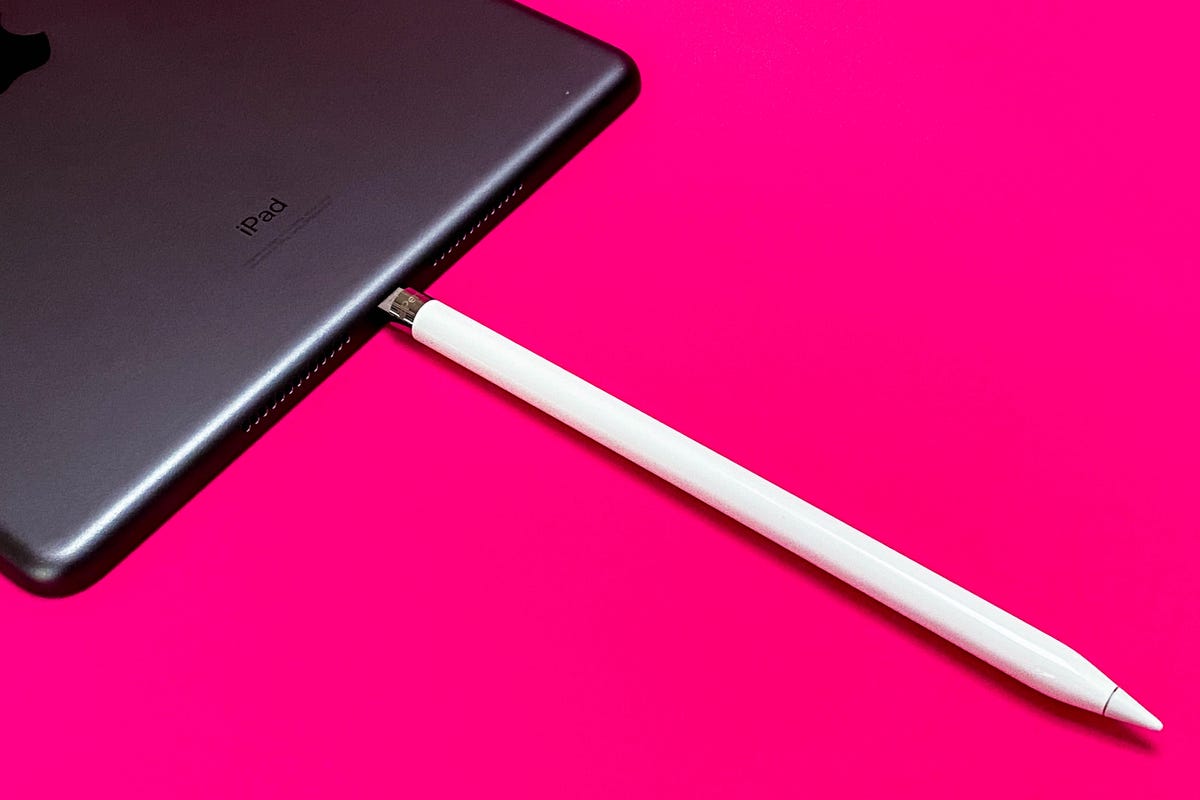
018-apple-ipad-2020

The Apple Pencil still goes in the Lightning port to charge.

Scott Stein/CNET

No great keyboard cases?

The Logitech Combo Touch has a trackpad, but its bulkier case and kickstand design aren't great for lap typing. It's perfectly usable, but at $150 it's an expensive accessory.

There's no Apple Magic Keyboard for this iPad, but you can use Apple's older smart connector Smart Keyboard cover, which is compact but lacks a trackpad. 

Trackpad and mouse support is the best 2020 iPad feature

Just like every other recent iPad, with iPadOS 14 you can connect a mouse or trackpad (or get a trackpad-enabled keyboard case). I find it a huge help with editing and navigating, especially while the iPad is propped up on a desk with a kickstand case.

025-apple-ipad-2020

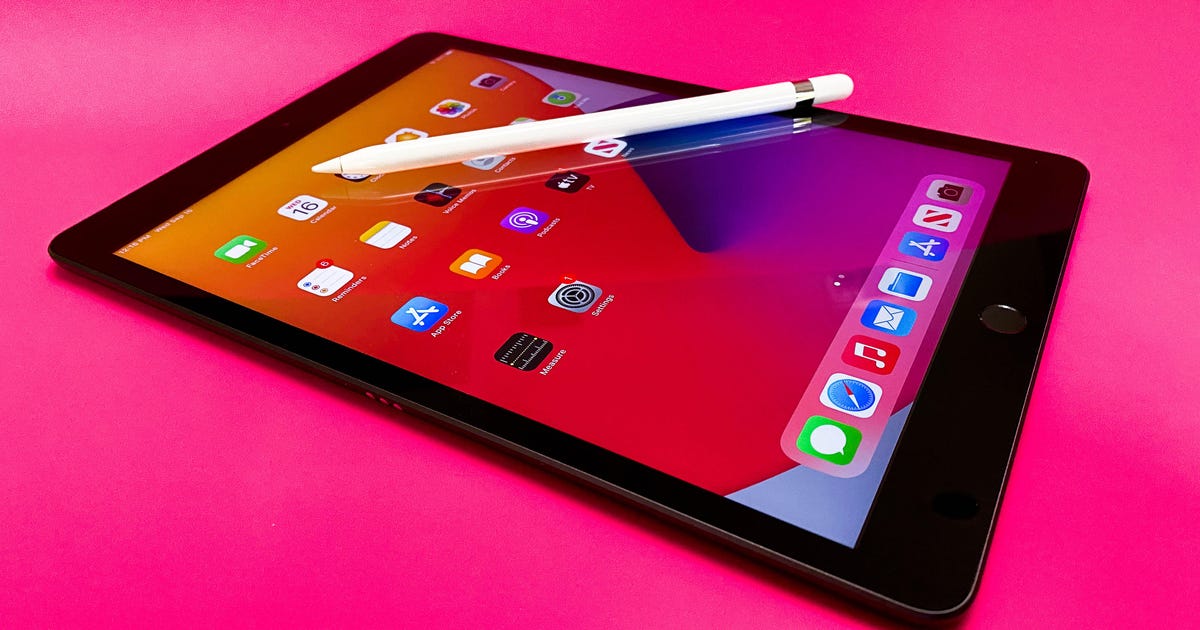
The smart keyboard case and Apple Pencil work with this iPad, but they cost extra and aren't the most recent versions.

Scott Stein/CNET

Battery life so far: Pretty good, as always

I was able to do a Zoom for an hour without making much of a dent on a full charge. I multitasked, read, watched shows, played games, worked on stories, and the battery held. No surprise, since the iPad's claim of around 10 hours of battery life has been the same for years, though it varies a few hours more or less depending on the model. I haven't done a battery benchmark but it's doing a full day with ease. The included faster charger is welcome.

005-apple-ipad-2020

iPadOS 14 is here now, and you might want to eventually try it on your existing iPad first before upgrading iPads.

Scott Stein/CNET

What I miss most from better iPads

Compared to the higher-end iPads, this one lacks the extra screen real estate on its sides. This larger-bezeled iPad is fine, but in multitasking modes with two apps open it starts to feel cramped. The next iPad Air (or iPad Pros) feel considerably more expansive, even if it's just an inch or so. Most laptops, TVs and other screened devices make a big deal about how narrow their screen bezels are. Still, this only really matters if you need to multitask -- keeping Slack and Gmail on screen at once, for example, or writing while following news feeds. It can be done on this iPad, but it works better with a second screen that's narrower (like an email, Twitter or Slack stream).

I also miss the TrueTone on the 2019 iPad Air and iPad Pro (and iPhone). It auto-adjusts color temperature, and I've really gotten used to it. This iPad's display seems harsher or bluer than I'm used to. It also lacks the fancy 120Hz refresh of the iPad Pro, but you might not notice the difference. The 2,160x1,620-pixel display is otherwise great.

If you're looking for an iPad and have no idea which to get, this is the safe iPad bet and the one you should probably buy. It officially starts at $329, but many stores sell it for $299, which can drop to $250 during sales. And, yeah, I'd recommend going to the $429 128GB model for that extra storage security blanket if you're considering downloading more than a handful of apps. If you're a pro, and need pro-level features, then you're already considering the iPad Pro or the upcoming improved iPad Air. For everyone else -- families, students, anyone looking to pick up a good versatile extra screen -- this is where you're likely to start looking, and also where you're likely to end up. 


Source

Tags:

Apple Announces New $499 IPad Air And $399 IPad Mini, Both With Pencil Support And Faster A12 Processor


Apple air ipad 1474 latest version of apple ipad air apple ipad air latest version ipad air 4th generation 256 new apple air ipad apple ipad air 4 64 ipad air version 4 apple announces new products
Apple announces new $499 iPad Air and $399 iPad Mini, both with Pencil support and faster A12 processor


Apple announces new $499 iPad Air and $399 iPad Mini, both with Pencil support and faster A12 processor

One week before it's expected to lift the curtain on a long-rumored video streaming service at an event on March 25, Apple announced two new iPads. 

Starting at $499 (£479, AU$779), the new iPad Air features a 10.5-inch Retina display and the same A12 Bionic processor used in the iPhone XS. The new $399 (£399, AU$599) iPad Mini will replace the aging iPad Mini 4, which had been left virtually unchanged by Apple since its debut in 2015. The new models are now available for preorder and will be in stores next week. See the buying links below, and note that CNET may get a share of revenue from the sale of products featured on this page.

The 2019 iPad Air 

The new iPad Air sits between the 9.7-inch iPad introduced last year, which starts at $329, and the 11-inch iPad Pro, which starts at $799 and has a more powerful A12X processor. The new Air is essentially a refresh of the 10.5-inch iPad Pro from 2017, which Apple has now discontinued. It has a nearly identical design -- and accessories will be interchangeable between the two -- but a few newer components. Apple hadn't released an "Air" version of the iPad since switching over to the plain old "iPad" in 2017.

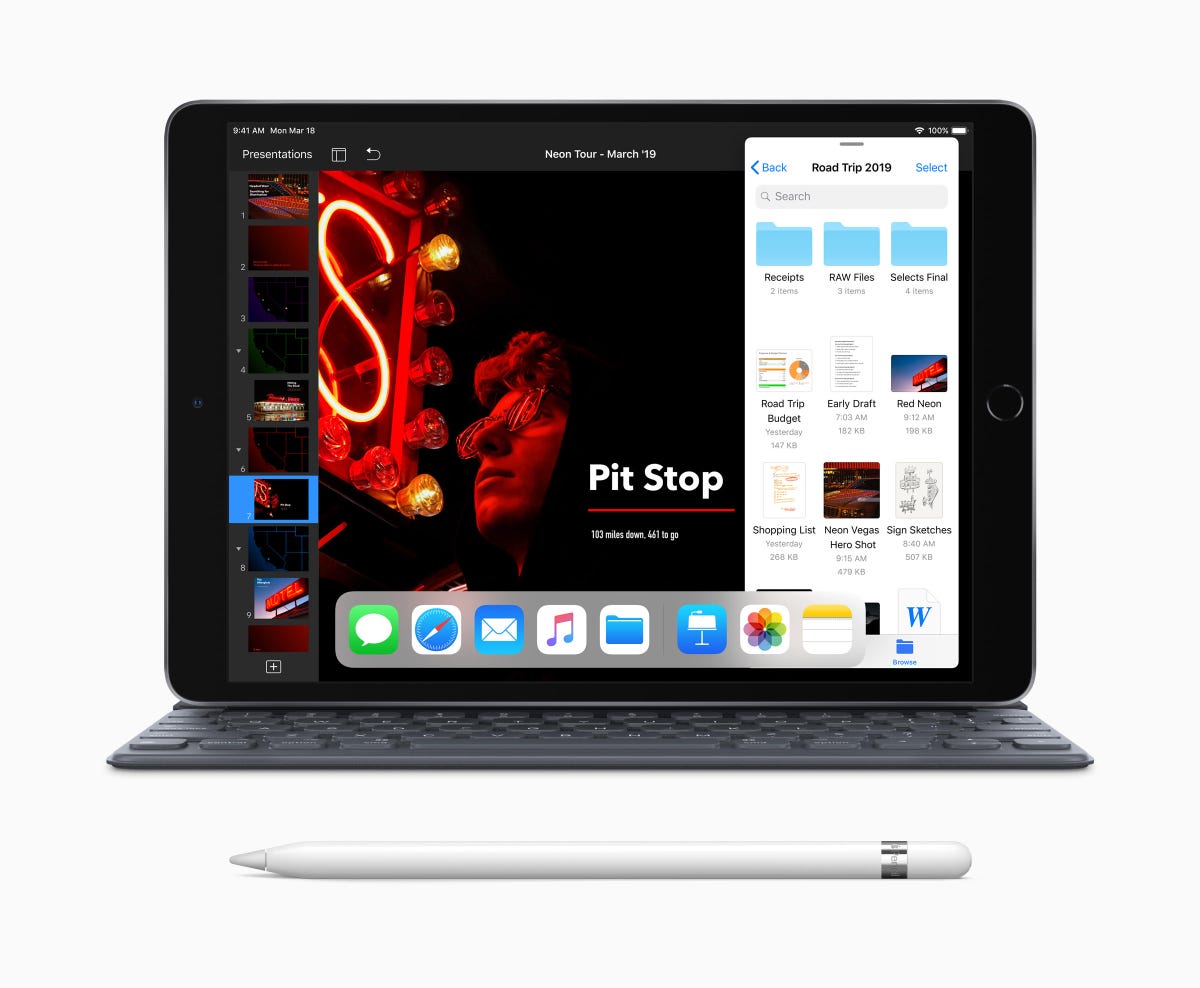
new-ipad-air-with-smart-keyboard-apple-pencil-03192019.jpg

The new iPad Air with Apple's smart keyboard and Pencil.

Apple

Here's a rundown of the 2019 iPad Air's specs:

  • 10.5-inch Retina display (2,224x1,668-pixel resolution), 500 nits
  • 8-megapixel rear camera, 7-megapixel FaceTime camera
  • Support for the original Apple Pencil (not the newer one announced in October)
  • A12 Bionic processor with Neural Engine, M12 coprocessor
  • 64GB or 256GB of storage
  • Support for eSIM
  • Rated for 10 hours of battery life
  • 3.5mm headphone jack
  • Touch ID
  • Lightning connector
  • Weighs 1 pound (456 grams); Wi-Fi + cellular model weighs 1.02 pounds (464 grams)
  • Available in space gray, silver and gold
  • Starts at $499, £479, AU$779

The 2019 iPad Mini

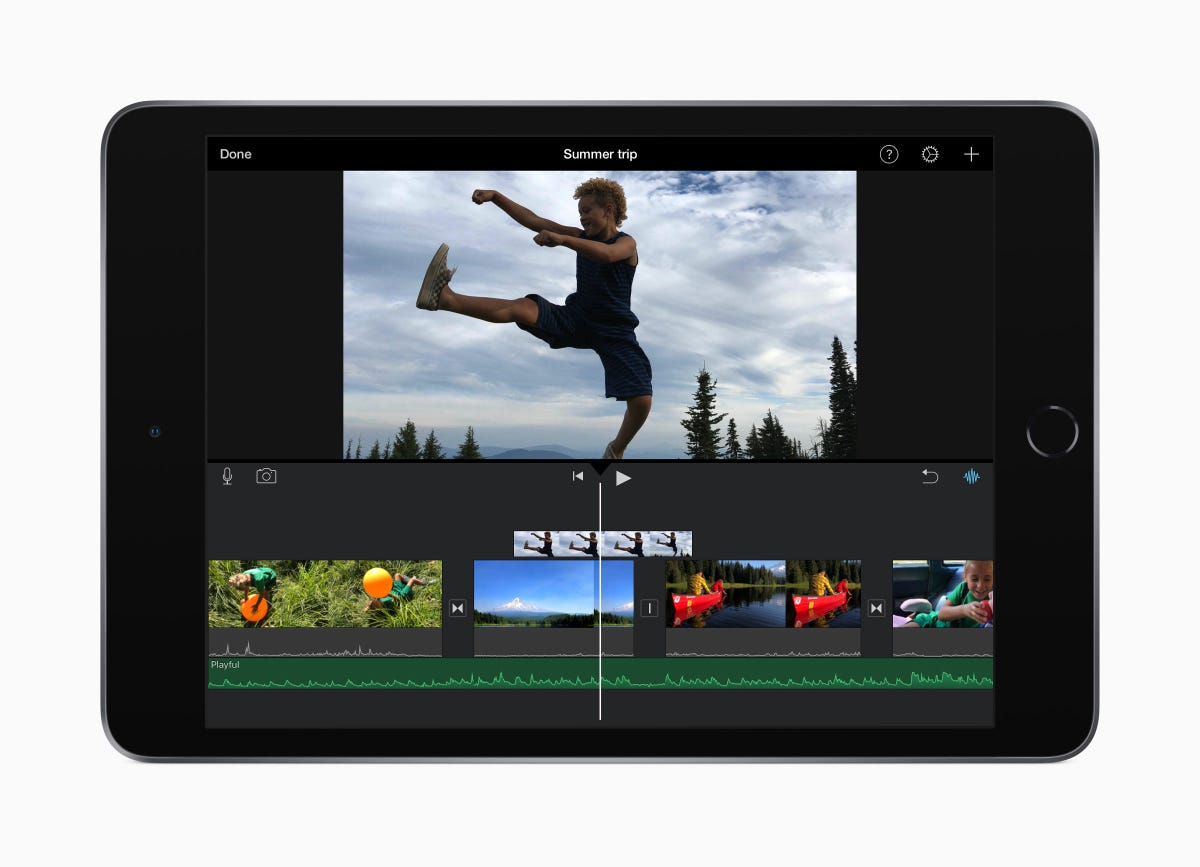
new-ipad-mini-imovie-03192019

The new iPad Mini.

Apple

The new iPad Mini has the same basic design as the iPad Mini 4, with the same 7.9-inch display and the same broad bezels. (The camera has moved to a different position, however, so Mini 4 cases may not fit properly on the new model.) The new Mini doesn't have Face ID or USB-C ports -- major upgrades found on other recent Apple tablets -- though it has a much faster A12 processor. That chip will surely give the new model a significant performance advantage over its predecessor, which used the same A8 chip as the 2014-era iPhone 6. The new model retains the previous model's 3.5mm headphone jack and Lightning port -- two features that Apple excluded from last year's batch of iPad Pros. 

Here's a rundown of the 2019 iPad Mini's specs:

  • 7.9-inch Retina display (2,048x1,536-pixel resolution)
  • 64GB or 256GB of storage
  • A12 Bionic processor with Neural Engine, M12 coprocessor
  • 8-megapixel rear camera, 7-megapixel FaceTime camera
  • Support for the original Apple Pencil (not the newer one announced in October)
  • Touch ID
  • Lightning connector
  • 3.5mm headphone jack
  • Support for eSIM
  • Weighs 0.66 pound (300 grams); Wi-Fi + cellular model weighs 0.68 pound (308 grams)
  • Available in space gray, silver and gold
  • Starts at $399, £399, AU$599

Apple often introduces new products in March. At last year's event, Apple delivered a refreshed edition of its entry-level iPad in addition to some education-friendly software initiatives. That today's announcement was made by press release suggests that the company wants to keep the focus of next week's event solely on its new video streaming service.

Originally published March 18 at 6.39 a.m. PT.
Update, at 11.05 p.m. PT: Added more details about accessory compatibility.


Source

Xiaomi Mi 4 Review: Xiaomi's Mi 4 Flagship Phone Innovates On The IPhone Design (hands-on)


Xiaomi mi 4 review xiaomi s mi 4 flagship phone definition xiaomi mi 4 review xiaomi s mi 4 flagship one xiaomi mi 4 review xiaomi s mi 4 flagship car xiaomi mi 4 review xiaomi s mi 4 cast xiaomi mi 4 review xiaomi s mi 4 digit xiaomi mi 4 review xiaomi store xiaomi mi 4 review xiaomi note xiaomi mi 4 review xiaomi 11t xiaomi mi smart band 4 review xiaomi mi band 7 xiaomi mix 2s xiaomi mix alpha
Xiaomi Mi 4 review: Xiaomi's Mi 4 flagship phone innovates on the iPhone design (hands-on)


Xiaomi Mi 4 review: Xiaomi's Mi 4 flagship phone innovates on the iPhone design (hands-on)

BEIJING -- It's not the first time we've seen Xiaomi pull off an Apple-inspired design, so the look of the newest Xiaomi Mi 4 shouldn't be too surprising. For one, the recently announced Mi Pad borrowed elements of the iPad Mini and the iPhone 5C, while its Mi WiFi Mini router resembles the Apple Magic Trackpad.

The Mi 4, the company's new Android flagship phone, borrows its style heavily from the iPhone 5S, but the Chinese company has added its own touches to the design with a removable rear cover and a larger 5-inch display.

The 1,999RMB smartphone will be available in China for 1,999RMB (which converts to $320, £190, AU$345) for the 16GB model and 2,499RMB (which converts to $400, £235, AU$430) for the 64GB version at the end of the month, while the 4G version (TD-LTE, for China) will launch in September. There's no word yet on global availability.

Design and display

As mentioned, the Mi 4 takes a lot of design cues from the iPhone 5S. The stainless steel frame around the edges is similar to those on the iPhone, though the button placements are opposite each other. The phone looks completely different from the previous Mi 3 flagship, which looked more like a Nokia handset.

Aloysius Low/CNET

The stainless steel frame holds the phone together.

Aloysius Low/CNET

It's hard not to think of the phone as a clone of the iPhone, but Xiaomi has added its own touches. Instead of going with onscreen keys like some of the recent Android phones, the Mi 4 still keeps the old-school style of the back, home and menu buttons.

These touch sensitive buttons light up when depressed, and fade away to be hidden from sight when not in use. Perhaps it's a better design decision to use onscreen keys instead, after all.

Despite its 5-inch full-HD display -- which only has a 1,920x1,080-pixel resolution -- the phone is incredibly light at a mere 149g. In comparison, the iPhone 5S weighs 112g, but is much smaller in size.

Unlike the iPhone's metallic rear, the Mi 4 comes with a swappable cover, in a bunch of varied designs. If you like Samsung's faux leather rear, Xiaomi has something similar. If you liked the Moto X's wood covers -- you guessed it -- Xiaomi also has one. And if your taste has no boundaries, there's also a marble-looking cover, for moments when you need your phone to match your floor.

Aloysius Low/CNET

Specs and software

Internally, Xiaomi's Mi 4 comes packing what you'll find in most flagship phones. It's powered by a 2.5GHz quad-core Qualcomm Snapdragon 801 processor, has 3GB of RAM and comes with either 16GB or 64GB.

More importantly, Xiaomi has managed to squeeze a 3,080mAh battery into the phone's 6.7mm-slim frame, which should easily last you a day or more. There doesn't appear to be a microSD card slot, and the phone seems to still cater to the older large SIM cards.

On the rear is a 13-megapixel camera while there's a front 8-megapixel shooter for taking detailed selfie shots. The rear has a six-element lens while the front uses five-elements. Both cameras have a f1.8 aperture. Xiaomi also demoed an image refocusing capability similar to that found on the LG G3 and Samsung Galaxy S5.

Aloysius Low/CNET

The Mi 4 runs MIUI on top of Android KitKat (4.4.3), and is likely to be v5. While Xiaomi has announced a new upcoming v6 that will debut on August 16, the phone likely isn't running it as it will go on sale at the end of July in China. A quick check of the phone's MIUI version shows that it's running MIUI 4.7.20, but the last major release for v5 was 4.6.27 in June.

Outlook

With Xiaomi's CEO Lei Jun publically stating at the event that the company has enough facilities to ensure stock availability, the new Mi 4 could quickly launch in other regions outside of China after its local launch. Furthermore, the Xiaomi boss was quick to downplay the 4G version at the press conference, possibly due to the fact that if users wait for the LTE model, sales of the 3G-only model would be affected.

Given the popularity of the Chinese company's phones, however, that's unlikely to happen, especially as the phone is so reasonably priced for a high-end device. Given that Xiaomi's competition, such as Oppo, already have 4G-capable devices ready for an international market, Xiaomi will have to work harder to get the 4G version of the Mi 4 to the more mature markets, such as Singapore.

While the Xiaomi Mi 4 is one of the best phones to come out of the company yet, Apple's likely to launch a new model of its handset soon, and Xiaomi's design may feel a little dated once that's released.

Aloysius Low/CNET

Source

https://nichols.my.id/how-to-repair-chipped-chrome.html

.

Search This Blog

Menu Halaman Statis

close