Here is one of the pictures featuring the How Much To Have Saved By 35. Numerous images associated with the How Much To Have Saved By 35 can be utilized as your point of reference. Below, you'll find some additional pictures related to the How Much To Have Saved By 35.
Save Up to 35% on These Great Smartwatches During Mobvoi's Prime Week Sale
Save Up to 35% on These Great Smartwatches During Mobvoi's Prime Week Sale
Mobvoi's Prime Week Sale is happening now . You can save up to 35% off on a TicWatch from now until July 14. TicWatch is a great way to get the smartwatch experience without paying a premium. TicWatch offers the same basic functions as an Apple Watch but uses Google Wear OS instead. Designed for fitness-lovers, TicWatch has over a hundred different workout modes. It also offers 24-hour heartbeat monitoring and measures your blood oxygen saturation. All TicWatches are swim-proof and will pair with most fitness tracking apps on your phone.
The TicWatch GTH Pro, is one of the more basic models. But it's on sale for just $70 right now, making it the perfect watch for you if you're just looking to count your steps or track your workouts. On sale for just $140, theTicWatch E3 is the next upgrade. The E3 has a little bit more to offer with a built-in GPS, Google Pay and a sleeker, round watch face.
Mobvoi's newer smartwatches are definitely more comparable to an Apple Watch, but are more ideal for fitness and outdoor enthusiasts. Priced at $195, the TicWatch Pro 3 GPS gets you all the perks of the previous models, but you can also view messages and manage phone calls. This version also allows for offline music storage, and offers Dual Display.
Mobvoi's Dual Display layers a low power consuming screen over a rich retina AMOLED display, enabling battery conservation through the toggling between Smart Mode and Essential Mode. With Smart Mode, your watch can last up to 24 hours without needing a charge. And with Essential Mode, the Pro can last up to 45 days -- making it perfect for monitoring your progress during a backpacking trip. On sale for $210, the TicWatch Pro 3 Ultra GPS has all the perks of its predecessor, but is built to last, featuring a gorilla glass display and US Military Standard 810g certification.
Best ceramic coating for headers best ceramic coating for headers best ceramic coating for black cars best ceramic coating 2021 best ceramic coating best ceramic wax best ceramic brake pads best ceramic cookware best ceramic space heater
Best Ceramic Coating for 2022
Best Ceramic Coating for 2022
Listen to the hype about ceramic auto paint coatings and you might get the idea that a ceramic top coat will protect your vehicle from falling tree limbs. It won't. The best ceramic coatings will give your car or truck its best defense against settling airborne chemicals and pollutants, tree sap, road and sea salt, bird poop and the sun's harmful ultraviolet rays. They'll also deliver a gorgeous sheen that's hard to beat.
Think of ceramic coating as a harder, more protective clear coat for your paint's clear coat. It's the best, most durable way to protect your vehicle's finish, short of a full transparent film wrap, and its hydrophobic (water sheeting) properties make cleaning much, much easier. A properly applied ceramic coating can last for years.
The best ceramic coatings require differing amounts of time and energy to apply, but all require some level of sweat equity and commitment (there's a reason automotive detailing shops get big bucks to professionally apply ceramic). There's a lot of white noise about ceramic coatings and literally hundreds of products to choose from. We've waded through the hype and chosen the best OTC ceramic coatings for a variety of circumstances, purposes and commitment levels based on expert knowledge and opinion, user ratings and personal experience. Click through our best ceramic coatings to understand your options, then read on for a primer on what this amazing technology will and won't do for your vehicle and how best to use it.
CarPro
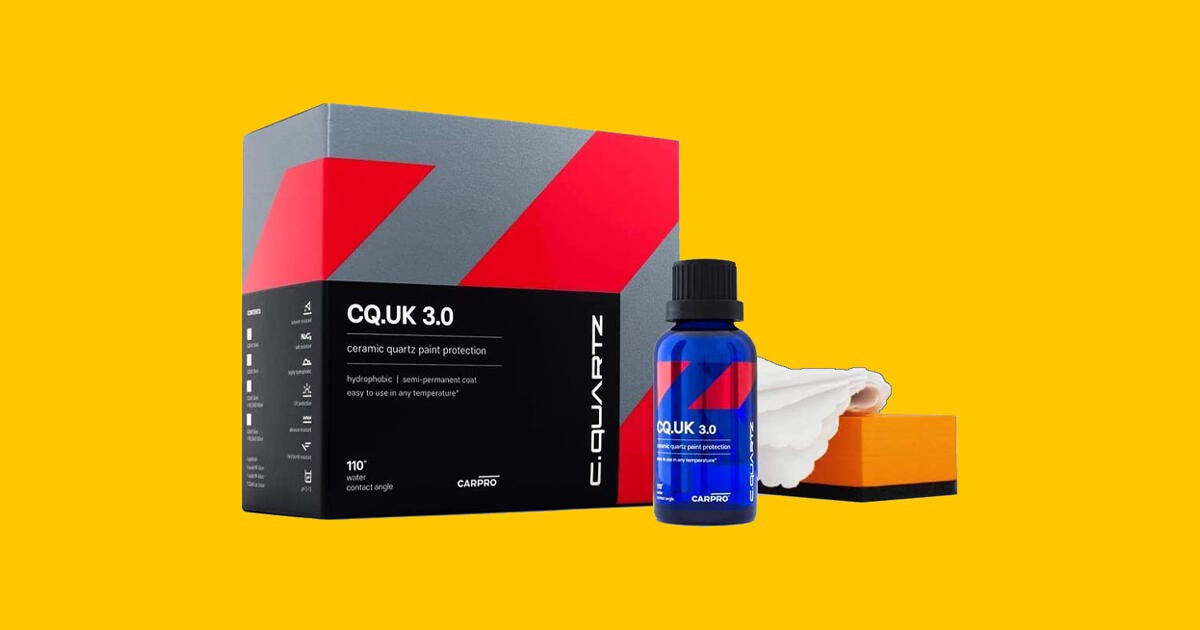
CarPro CQuartz UK 3.0 is the top over-the-counter product from a Malta-based company that pioneered automotive ceramic coatings in the early 21st century. It contains 70% silicon dioxide that's 99% pure and it leaves what might be the deepest wet-look gloss we've seen. It delivers all the durably protective properties only true ceramic coatings can.
Better still, CQuartz UK 3.0 is not terribly difficult to apply, as pro-grade ceramic coatings go. It's much less finicky about air temperature during application than other serum-type ceramic liquids (anything between 40 and 100 degrees Fahrenheit will work). Its initial hardening time is longer than most, so there's more time to spread and work. Yet it fully cures in only 60 minutes, so you can take a blast by the time you clean up. Or you can build layers during a single-day session, if you want even longer protection. CarPro projects 18 to 24 months of full hydrophobic performance for each layer applied. Every bottle is labeled with its production date and it's guaranteed to remain fully pliant for one year
In short, CarPro CQuartz UK 3.0 is the best combination of quality and ease of application we've encountered and the kit includes almost everything you need. According to users (and CarPro's own math), the included suede applicator wraps will be used up before a medium to large size vehicle is coated, so you might want to order some extras.
Nasiol
Like our best overall ceramic coating product, this kit comes from a company that has been in the ceramic coating business since the beginning. Indeed, Turkey-based Nasiol manufacturers a range of nano-ceramic protectants, including coatings for countertops, marine products, wood and clothing. The chemistry in ZR53 Nano Ceramic coating is impeccable. It goes on in one coat, delivers a rich shine and 9H hardness and should last at least three years in all conditions. The kit includes ZR53 ceramic coating, application pads, gloves, two microfiber cloths and other accessories.
So what's not to like? You'd better know what you're doing when you lay this ceramic down. It needs to go on thin and even and that's easier said than done. Trickier still, it starts to harden in as little as 20 seconds. It's imperative to work small, and quickly, because if it's not buffed before it dries, it can leave streaks or uneven clouds. And the only way this stuff is coming off is with ultra-high PH detergent you won't find at your local hardware store, or with pro-skill power wheeling and enough experience to get it without going into the paint underneath.
Mothers
How difficult is applying Mothers CMX Ceramic Spray Coating? You spray it on an applicator pad, spread it evenly, let it set about five minutes and buff it lightly with a microfiber towel. Then you let it cure for 24 hours. In other words, it goes on easier than conventional "wax on, wax off" carnauba or polymer auto coatings. While it won't last as long as more expensive (and more challenging) ceramic coatings, it will last multiples longer than most of those conventional carnaubas and polys. Or a year or so, depending on how much your car sits out in the sunlight and smog.
You can also layer CMX Ceramic Spray with two or three consecutive coats, leaving those 24 hours in between, before you ever pull the car from the garage. That will extend its durability. Either way, it will provide better hydrophobic protection than most carnaubas and poly waxes, keeping your paint safer and your car cleaner and making your car easier to wash. With application this easy there shouldn't be too much trouble finding time to shine your car once a year.
Nexgen
Nexgen Ceramic Spray can leave flecks and streaks that take some serious elbow grease to buff out. That's almost certainly because you sprayed too much on the paint to begin with. Use less, work less. The eight-ounce bottle is enough for four or five mid-size cars. Once it's on, Nexgen leaves a slick shine and something you don't get in many easy-app ceramic sprays.
That would be a whole lot more silicon dioxide in the formula and silicon dioxides are what thatch the coating molecules together and bond the ceramic to your paint. Nexgen claims it has the highest concentration of SiO2 in any over-the-counter spray; at 13%, double what many have. That should mean that its liquid-shedding, chemical protecting gloss will last longer than the typical easy-app ceramic spray.
Meguiar's
Meguiar's Hybrid Ceramic Liquid Wax is more like a conventional wax formula infused with silicon dioxides to bond the molecules and build that ceramic barrier and there's something to be said for familiarity. It goes on like conventional liquid in a circular motion and dries to a haze that you buff off. To be sure, the haze is lighter than old-school wax residue and less work to remove. It's really hard to mess this stuff up.
What's left when you're finished is a deep, mellow shine and extreme water-beading action. Moreover, the haze makes it harder to miss spots and easier to gauge even coverage and Meguiar's Hybrid will not whiten non-painted trim or rubber gaskets.
Drexler
Drexler is a relatively new, small-volume company in France that warrants some of its ceramic coatings up to 10 years. Its over-the-counter ceramic for vehicles is applied in two stages: one liquid, one spray. It's time consuming (at best) to apply, but not terribly tricky and the manufacturer offers an on-line tutorial.
What you get for the trouble is a hard 9H finish that should minimize light scratching as effectively as any ceramic coating can. It's intended to last five years or more, like many of the professionally applied, detail-shop ceramics. Drexler claims that with moderate hose pressure (say, from a low-grade pressure washer), virtually anything stuck to a Drexler-coated vehicle will rinse off without rubbing.
Weiruixin
This product originates in China and delivers pro-grade chemistry for the price of good, easy-application, consumer-grade detailing products, with applicator, towels, etc. in the package. Weiruixin claims 10H Ceramic Coating 3.0 has an industry best 10H hardness rating and remains bonded at temperatures up to 1,400 degrees Fahrenheit. It guarantees its hydrophobic properties for at least two years... or your money back.
We wouldn't want to have to chase that $25, but the indicators suggest this could be a good product for not much money, if you're willing to make it work. Experience tells us that it won't be easy to use. The thick fluid will be temperature sensitive, demanding room-temperature, no-dust application conditions and you'll have to keep your car dry and shaded for seven days for it to fully cure. If you lack pro-grade skills, better to choose something like our best cheap and easy ceramic coating. You'll be much happier with the process and maybe even with the results.
Mothers
Remember the first fundamental rule of all ceramic coatings: Surface or paint preparation matters at least as much as the coating itself. The coating simply protects and shines whatever is underneath and it will last longest when its bond with the paint is strongest.
Now, you could spend thousands of dollars or a week's worth of hard work on a full paint correction for your daily-driving 2008 Subaru Impreza. Or you could get Mothers' relatively inexpensive CMX Surface Prep. CMX Surface Prep is pH neutral and biodegradable, and it strips oil, grease, wax and other chemical residue without harming the paint-as easily as cleaning the windows. Just spray CMX Surface Prep on the paint and wipe it off. It won't do much about existing swirl marks or scratches, but it will leave a chemically spotless foundation that helps ensure maximum bonding for the ceramic coating that follows.
Mothers
Like our best minimalist ceramic coating prep (Mothers CMX Surface Prep), CMX Ceramic 3-in-1 Polish & Coat removes grease, old wax and other chemical residue in advance of your ceramic coating application. Yet 3-in-1 adds a light polishing compound, so with a dose more elbow grease or a polishing wheel, it can also remove swirl marks, light scratches, oxidation and other imperfections in the paint.
Better still, Mothers CMX Ceramic 3-in-1 Polish & Coat includes mineral oxides like those in the ceramic coating itself, so it leaves a nice, hard gloss when you're finished. It's hardy enough to leave as it is, but it also provides a fantastic primer coat for a full ceramic coating on top. It won't deteriorate an existing ceramic coating, either, and that makes it a great refresher to invigorate and deepen a good coating that's a couple years old with less work (and cost) than starting from scratch.
Comparison of the best ceramic coatings for 2022
Product
Price
Best ceramic coating overall
CarPro CQuartz UK 3.0 Kit
$83
Best ceramic coating for pro-skill home detailers
Nasiol ZR53 Nano Ceramic Coating Kit
$118
Best cheap and easy ceramic coating
Mothers CMX Ceramic Spray Coating
$18
Best ceramic coating for home detailing newbies
Nexgen Ceramic Spray
$35
Best old school/new school ceramic wax
Meguiar's Hybrid Ceramic Liquid Wax
$25
Best ceramic coating for off-roaders
Drexler Ceramic Car Coating Kit
$74
Best cheap ceramic coating for pro-skill home detailers
Weiruixin 10H Ceramic Coating 3.0 Kit
$25
Best minimalist prep for any ceramic coating
Mothers CMX Surface Prep
$13
Best stage 1 upgrade prep for any ceramic coating
Mothers CMX Ceramic 3-in-1 Polish & Coat
$13
Mothers
Ceramic coatings 101
Somewhere in or under your automobile, there's almost certainly some ceramic coating. Automakers have been using it for years because it's the best protective finish for a variety of parts, including wheel hubs, interior trim bits and things you'll see if you lift the hood. You just won't have ceramic coating on your vehicle's finish paint unless you put it there yourself.
Ceramic coatings can have different names -- nano ceramic, quartz or silica coatings -- and come in various forms. There are thermal sprays, dry powder coatings and wet chemical sprays or liquids. There are different auto-detailing ceramics for different surfaces like wheels, paint, windows or trim. In this report we'll focus on the paint, though some products will work on all of the above. Some of them aren't ceramic coatings in the original form. They're hybrids manufactured like more conventional auto waxes and infused with the key ingredient that makes ceramic coatings "ceramic."
That ingredient is silicon dioxide (SiO2), which bonds the coating at a molecular level to itself and the paint underneath, then cures to form a hard, hydrophobic (impenetrable to water) layer on top of the paint. The silicon dioxide is extracted from natural materials like quartz or sand. Over the years, some ceramic coating manufacturers have added titanium dioxide (Ti02) or more complex silicon compounds such as silicon nitride (Si3N4 9) and silicon carbide (SiC) to their formulae. These can increase the performance of the coating.
Any ceramic coating worth the name will have at least 5% silicon dioxide. The best consumer-grade ceramics have SiO2 concentrates in the 70-80%range, though these can also be the most difficult to apply. Professional detailers and installers typically use ceramic coatings with SiO2 concentrations between 93 and 97%. Other things equal, the higher the SiO2 percentage, the stronger and more durable the coating becomes, and the more money it costs.
In ceramic coatings, other things are rarely equal. The overall performance and price of the product is at least as important as the amount of silicon dioxide. Every ceramic coating also has polymers (more conventional bonding chemicals), glossing agents, curing compounds and or other ingredients. While most manufacturers keep their exact formula proprietary, their products must do more than protect. They must also maximize shine and make application consistent, if not necessarily easy. While the level of silicon dioxide is important to a ceramic coating's overall durability, it's not the only thing that determines a coating's overall performance, in terms of how it looks on your car and how easy or difficult it is to put there.
Meguiar's
Ceramic coatings are sometimes rated with a number before the letter H like 8H or 9H. Contrary to published claims and popular belief, this is not a rating on the Moh scale, which is used by geologists to rank mineral hardness from 1 to 10 (the surface of a copper penny is about 3.5H on the Moh scale, while a diamond is 10H). Rather, the ratings for ceramic coatings will be based on the Wolff-Wilborn Pencil Hardness Test. A pencil hardness test drags increasingly hard graphite pencils across the surface of a coating. The resultant number identifies the softest pencil that will leave a scratch on the coating. A 9H in a pencil hardness test demonstrates about the same surface hardness as the copper penny on the Moh scale, and while that's not diamond grade, it's still pretty darn hard. By pencil hardness, the standard clear coat paint on your car or truck is somewhere between 2H and 4H. That means a 9H ceramic coating is 2.25 to 4.5 times harder to scra tch.
Over-the-counter ceramic coatings are, obviously, intended for use by DIY auto detailers. In the simplest terms, application is similar to traditional automotive wax: You spread the ceramic on in some fashion and then buff it (though not necessarily off). Yet anyone who's done much automobile waxing knows the simplest terms don't fully explain the level of energy required. The best do-it-yourself ceramic coatings and the best results demand some level of sweat equity, in both surface preparation and application. The best in terms of durability or long-term protection are usually the most demanding. If you mess a high-grade ceramic coating up, it will be really, really hard to get off.
It's no coincidence that high-end detailing shops (sometimes called auto spas) have boomed in the era of ceramic coatings. The good shops know what they're doing and they can almost certainly do it better than you can. There are nonetheless a range of great consumer-grade ceramic coatings out there, suitable for everyone from raw DIY detailers to those with pro-grade skills. Those products can leave the paint on your car or truck looking gorgeous... and a you that's proud of what you accomplished, wherever you rank in the detailing-skills pecking order.
We'll get to the details of ceramic coating preparation and application shortly, but if you plan to do it yourself you need to start by gauging how much time and energy you're willing to commit. And by not overestimating your skills. And by considering what you're willing to do if it goes wrong.
First, let's get specific about the real benefits of ceramic coatings and the myths.
Nasiol
What ceramic coatings will (and won't) do
The best ceramic coatings will give your car or truck an incredible shine and probably a better shine than it's ever had before. Professional detailers and some car geeks know that shines can be different like the deep, mellow, lusty shine of perfectly applied, old-school carnauba wax or the more aggressive, wet-look shine of subsequent polymer sealants. The best ceramic coatings span a similar spectrum, but all of them will leave you looking over your shoulder and admiring as you walk away from your vehicle in a parking lot. They'll keep your car cleaner, longer and they'll make it look like you just re-waxed it every time you wash it.
At least as importantly, the best ceramic coatings will protect your car's paint better than any conventional carnauba or poly wax can. Think of any wax or sealant as a transparent sacrificial layer that can be removed or reapplied as necessary to protect the paint underneath it. Ceramic coating is just harder and less porous than more conventional waxes, so it makes it more difficult for anything that settles on the paint to penetrate or even stick. We're talking things like airborne chemicals and pollutants, overspray of any type, tree sap, bird droppings, road or sea salt or the sun's relentless UV rays. Ceramic coating is the best chemical barrier against the harmful effects of multiple substances that can damage paint and diminish its appearance over the years, even moreso if your car lives outside. It will fill the role of sacrificial layer better than any carnauba or poly was and it can do so more economically.
That's because, thanks to silicon dioxide and all that molecular bonding, ceramics stay put a lot longer. A relatively inexpensive, easy application, ceramic spray can protect for a year or so. To maintain peak performance with a traditional wax-on, wax-off carnauba or poly coat, you'll need to lay down a new layer every three or four months. The manufacturers of some more expensive ceramic liquids warranty their product for two years. (We are not weighing in on how difficult or fruitful it might be to make a claim on those warranties.) We've known consumer-grade ceramic liquids that have lasted close to five years before their hydrophobic properties start to diminish. Detailing shops in urban areas around the country, including Motor City Auto Spas in greater Detroit, will guarantee their ceramic applications five, seven or 10 years, depending on the product used.
"We'll guarantee our top product for life, if the car is relatively new, with an annual inspection and detail," says Motor City founder and CEO Matt Lifter. "Short of the annual visits we'll guarantee seven years. Not even acidic solvents like wheel or brake-dust cleaners will take it off. It's really amazing stuff."
Mothers
Ceramic coating is more durable than wax or poly in another sense because it's much harder. That means it's more resistant to light scratches or paint swirls (those spiraling curves that can develop in clear coat after years of washing). Indeed, a ceramic-coated vehicle that's washed properly (no drive-thrus) is nearly immune to paint swirls.
We emphasize "resistant" above because no ceramic coating is scratch proof, even if some to the wildest marketing hype suggests that it might be. Drag a key along a door panel on a ceramic-coated car and the panel will definitely scratch. Throw pebbles at it hard and it will nick. Bottom line: Ceramic-coated cars are still susceptible to rock chips. Some road rash is still likely to build up over the miles and years.
If your overriding goal is preventing rock chips or road rash, better look past ceramic coating. In the current state of auto protection, that would mean looking toward transparent film or "wraps."
Not up to speed on wraps? Vinyl auto wrap is a blend of polyvinylchloride and additives that make it flexible and resistant to UV light and sometimes add color. The additives are blended, dropped onto moving sheets of PVC, then baked and cured. Transparent wrap is virtually invisible on your car's paint, except for barely perceptible edges where the wrap might end and give way to unprotected paint, and it provides an actual, physical cushioning barrier between the paint and whatever the road throws at it. Good wrap will self-heal, so if a high-velocity pebble takes a divot out of the protective barrier, light and heat will actually close and smooth it again.
Drexler
Wrap will get you closer to proofing your car from scratches, rock chips or road rash than any ceramic coating can. It is also considerably more expensive than ceramic (the product) and significantly more difficult to apply. While some brave amateurs have tried, we wouldn't think about doing this ourselves.
Before we get to the process of applying ceramic, there's one more myth to address: Yes, even with the best ceramic coating, you will still have to wash your car.
We're compelled to make this point because a lot of the hype out there seems to suggest you'll never have to wash your car again. We assure you you'll have to do it less often, but dirt, road salt and other appearance-marring substances will eventually build up on the ceramic. The good news, beyond the fact that you'll wash it less, is that your ceramic coated vehicle should be much easier to wash than it was before the ceramic coating: generally no repeated rubbing back and forth over sticky, embedded stuff (which is another reason ceramic can keep swirl marks to a minimum) and usually more like a wipe and rinse. Indeed, some ceramic manufactures promise that, with proper application and sufficient water pressure, anything on your paint will rinse off without rubbing. Finally, know that washing can still leave water spots on ceramic coated cars, depending on the mineral content in your water source. Always towel dry.
On to the work at hand.
Mothers
Layin' it down
Professional-grade ceramic coatings are usually thick, almost glue-like and often require more than one step in the curing process. Consumer-grade ceramics are generally more forgiving to apply, though the most durable can be tricky. If you've browsed our best list, you've seen that there are several types of over-the-counter ceramic coatings. Even the most modestly priced, easiest-to-apply ceramics should outperform comparably priced conventional waxes when it comes to protection and longevity.
Whichever you choose, you must understand the first rule of ceramic coatings (or conventional carnauba and poly waxes, for that matter): surface or paint preparation matters at least as much as the coating itself, and more so if the paint is in poor shape to begin with. The coating simply protects and shines whatever is underneath and it will last longest when its bond with the paint is strongest. Without any prep, you're going to make those scratches or tar flecks or bits of oxidation shine for a long time.
"I'd say on average, our prep is four to five hours," says Lifter, whose Motor City Auto Spa has been doing ceramic since the early days (ed. note: that's four or five hours from efficient, well-trained techs). "It's at least two or three times more time than the actual application. Sometimes the prep can take two full days, but we can't guarantee our product without it."
You can expect a detailing shop to undertake most or all of these steps in advance of applying ceramic coating: Washing the vehicle with an appropriate detergent and sometimes a power washer; "Claying" the paint from stem to stern, or rubbing it with soft clay slabs and a lubricating fluid to remove sap, tar and other substances from the clear coat's pores; Polishing with a compound and a power pad, which can be the trickiest part depending on the age and depth of the paint, to remove swirls, scratches and oxidation; Wiping with a chemical cleaner to remove the final vestiges of dust, grit, waxes or grease.
Mothers
Now, you can do all those things yourself, if you have the inclination and fortitude and the time. It's always worth it, even on a beater with decent paint. You have to decide what you're willing to try. If it's your baby, which only leaves the garage on nice days for car meets or weekend blasts, you probably need to suck it up and try the full Cleveland. It will pay big in the final results. If it's a car you use for track days or the 10-year-old Civic that gets you reliably and satisfyingly to work and the paint still looks good, you can get away with a clay and chemical wash.
If you lean toward the less-work end of the prep spectrum, we urge you to at least undertake the chemical wash (after a good water wash). Using a product like Mothers CMX Surface Prep is essentially like washing windows. You spray it on and wipe it off, and it leaves a squeaky, chemical-free foundation that will ensure a solid bond between the ceramic and the paint. If you're up to a little more elbow grease or have an easy oscillating buffer, try something like Mothers 3-in-1 Prep & Coat. It adds a light polishing compound, so the extra rubbing will take care of a lot of the swirls and light scratches and leave a nice, polished finish.
Given the steps in proper preparation, you might surmise that the best time to apply ceramic coating is when a car is brand new or nearly so. You'd be correct. New cars (for lack of wear) require the least amount of paint correction. Detail shops will often guarantee their ceramic coatings longest when they're applied to new vehicles. If your car is already a few years old, you've got what you got. Just remember that your final ceramic-coating results will be directly related to how well the paint is prepped.
When it's time to actually apply the coating, follow these general rules. Do not apply in direct sunlight, or to paint that's hot to the touch. Do it in a garage, if there is enough light, or borrow one of those cheap outdoor canopies, if that's the next best option. Zero dust is best, and nearly impossible to achieve short of full climate-control conditions, but keep that objective in mind as you set up to start coating. An ambient temperature of about 70 F is ideal; your specific product's instructions will give you a range of acceptable application temps.
Definitely read those instructions and watch the videos on your product manufacturer's website (if available). Time spent now will be time saved during the application, and it will likely improve the end results.
Mothers
Ceramic liquids are invariably what the pros use and typically have the highest silicon-dioxide concentration in consumer-grade coatings. Most come in kits with an applicator sponge and soft cloths to wrap it. Some come with microfiber towels for buffing. It never hurts to have extra application clothes.
To start, you'll wrap the applicator with one of the clothes and spot it with the ceramic coating, sometimes as little as several drops. Working in small areas, spread the coating as evenly as possible. Your product will have its own recommendation on "small," but it's not going to be more than two feet square. Over the next few minutes, depending on the product, the moisture in the ceramic will evaporate to a point where the surface gets a gleaming, almost oily look (sometimes called flashing). That's when you buff with a microfiber towel. When you're happy with what you see, start a new section.
Too little product will be better than too much. The typical 50 ml bottle of ceramic liquid can be enough for multiple cars and too much on the surface is a frequent cause of bad results. Change the applicator cloth and the polishing rags frequently, because if the coating hardens on the rags, it can definitely scratch the paint. If you have any hope of reusing the rags or applicators, throw them in a bucket of water to keep the ceramic from setting until you can wash them thoroughly.
Once you've made your way around your vehicle, leave it sitting out of the sun (and the rain) for as long as it takes for the ceramic to cure. Your product instructions will tell you specifically. Touch contact is typically allowed in 60 minutes to six hours. Liquid contact usually requires at least 24 hours, though it can take up to seven days.
Nasiol
"You've got to make sure the prep is good, but we already said that," veteran ceramic pro Lifter reminds home detailers. "Stay small [in the application area] as you progress, and don't think because you've successfully applied a couple small patches you can expand to bigger sections. Staying small is the best way to avoid high spots. We've had a few customers bring us messes because they lost track of that idea."
The worst-case outcome with consumer grade ceramic liquids is relatively rare, but it happens. It's usually the result of too much product applied in too big an area for the workable set time and is an uneven mess of ridges and cloudy high spots on the paint that is really, really hard to get off. Remember that this stuff is designed to last for years. The only options are looking at the mess every time you get in your car for years, or heading to a good detail or body shop, where a pro-skill polisher might get it off without wrecking the paint. That's going to cost you as much or more than what you hoped to save by applying the ceramic coating yourself.
If you're not willing to accept that risk, we suggest at least starting with one of our relatively inexpensive best ceramic sprays. The general rules are the same: Use it in the best conditions you can create, use less than you might think you need and work small. Thanks to the viscosity of the sprays, which sometimes include lubricants, and to the way they set up, they're loads more forgiving than most liquids. And they're easy enough that you can apply two or three layers in short order, as long as you respect the cure time.
Finally, whichever product you use, don't neglect your health and safety. These products are industrial-grade chemicals. You definitely want to avoid sucking the vapors into your lungs and you want to keep the liquid off your skin. Work in a well-ventilated space and wear a ventilator or a chemical mask (we should be used to masks by now). Definitely wear gloves (many kits include them); it's not a bad idea to wear a long-sleeve shirt, too.
Mothers
Are you ready?
There might be a couple big-picture questions to ponder before you tear into this ceramic coating thing. If you own multiple vehicles, which do you most want to protect as best you can? How much money do you have to spend on your cars?
If the answer to that second question is as much as you need to spend, have ceramic coating professionally applied. Or maybe think about a full wrap with transparent film. It will cost more than pro-applied ceramic, but it has advantages, as previously noted.
If you only have as much money to protect your paint as you can get away with, think creatively. Maybe you pay the pros for a limited wrap (say the front fascia, door sills and rear fender bulges) and put ceramic on everything including the wrap yourself. That might be your most efficient use of resources. Or maybe you just take a nice day and apply a relatively inexpensive ceramic spray.
Unless you have the full inventory of tools, climate-controlled car space, the right skills, years of experience and a lot of time, you will not get the same results and durability as a professional establishment applying high-grade ceramic coatings. What you can get is an awesome gloss that protects much better and lasts years longer than conventional carnauba or polymer auto waxes, for up to thousands less than you might pay the pros.
That's not bad at all.
Written by J.P. Vettraino for CNET Cars.
More car cleaning recommendations
Ceramic coating FAQs
What is ceramic coating and is it worth it?
Ceramic coatings, sometimes called nano-ceramic, quartz or silica coatings, were developed in the early part of the 21st century. They're applied to automobiles in very generally the same fashion as old-school liquid or paste waxes: spread on and buff. They universally contain silicon dioxide (SiO2), derived from quartz or sand. Over the years, some manufacturers have added other mineral compounds, including titanium dioxide (Ti02) or more complex silicon compounds such as silicon nitride (Si3N4 9) and silicon carbide (SiC). These compounds bond the coating at a molecular level to itself and the paint underneath, then cure to form a hard, hydrophobic layer on the paint. It's the primary reason ceramic coatings last.
Worth it? Loaded question, but yes, ceramic coatings are worth it. The least expensive consumer-grade ceramics don't cost much more than traditional waxes and don't take any longer to apply. Properly done, they'll work better and last longer.
How much does a ceramic coating cost?
It can be $1,000 or more when it's professionally applied by product-certified auto detailers. Consumer-grade ceramics can cost in excess of $100 for top-grade durability and performance and can be tricky to apply. Ultimate results are directly related to cost or time and energy invested, yet even the least expensive, easiest-to-apply ceramics (about $20) should out-perform conventional wax of a similar price.
Is ceramic coating easy to apply?
Yes, and no. Generally, the most protective and durable ceramic coatings are the most difficult or time consuming to apply and the trickiest. Experienced do-it yourself detailers shouldn't have too much trouble with any of them, but it takes work and occasionally disasters ensue. Easy ceramic sprays or hybrids are easier than traditional wax-on, wax-off sealants to apply. They'll shine at least as well as the conventional waxes, protect better and last longer.
Just remember: the ceramic coating will only shine and protect whatever is underneath it, so you can end up with some really shiny scratches and tar flecks. Final appearance and durability are directly related to the amount of paint prep that precedes the actual coating. If your paint is in reasonably good shape, we at least recommend a spay-and-wipe prep solution, which will remove old wax and chemical residue and ensure a solid foundation that maximizes the bond between the coating and paint.
How do I maintain a ceramic-coated car?
You wash it, until the coating's hydrophobic properties start to wane and that can be years. Washing will be easier than ever: You won't have to wash your vehicle as often as you did before the ceramic coating and you shouldn't need strong detergents. Ceramic coatings work partly because far fewer substances stick to them than to old-school carnauba or polymer waxes, sort of like Teflon on a frying pan. Those substances that do settle are much more easily removed.
You can use a wash detergent that's intended for ceramic coatings, or a spray refresher on the paint as you dry. Both can extend the life of the coating itself. Either way, your vehicle will look like you just polished it when you're done. You definitely don't need to wax it once the ceramic is applied. The ceramic coating replaces wax and provides all the gloss and protection you need.
How long does ceramic coating last?
Longer than conventional wax, in the worst case. Some professional auto detailers will guarantee their ceramic coatings for the life of the car. Pro-style consumer-grade ceramics can last five years or more, properly applied. Some manufacturers guarantee these for two or three years. The easiest spray-on ceramic coatings can last a year or so, depending on whether the vehicle lives outside and they're easily layered for more durability. Conventional carnauba or poly waxes typically need to be applied every three or four months.
Take Better Vacation Photos: 7 Tips From a Travel Buff
Take Better Vacation Photos: 7 Tips From a Travel Buff
Here's a secret: You don't need an expensive camera to get great photos. Sure, it can help, and there are some photos only a "real" camera can take. However, you might be surprised at how good your photos can be just using your phone or an inexpensive camera. Learning these tips and techniques will help you if you ever upgrade to a big camera too.
Who am I to give this advice? I'm a travel writer and photographer, with over 150 photo galleries here on CNET taken all over the world. I have an expensive camera, sure, but I also use my phone more than you'd expect.
There's an overused, but still true, adage: The best camera is the one you have with you. So if you can get photos you like without spending money on a camera you might only use once or twice a year, even better.
While each phone is slightly different in its hardware and camera app, I've kept the following tips general enough that they should work on just about every device. More expensive phones can generally take higher quality images than cheaper phones, but you should be able to get great results no matter what you have. Also, if you're confused by any of the terminology, there's a glossary of some often-used camera terms at the bottom.
For more, here's how to take great vacation videos with your phone camera and some tips for getting great shotseven if your phone is old. Plus, here are the seven things you should always pack when you travel and what travel veterans recommend before leaving on vacation.
1. Clean the lens
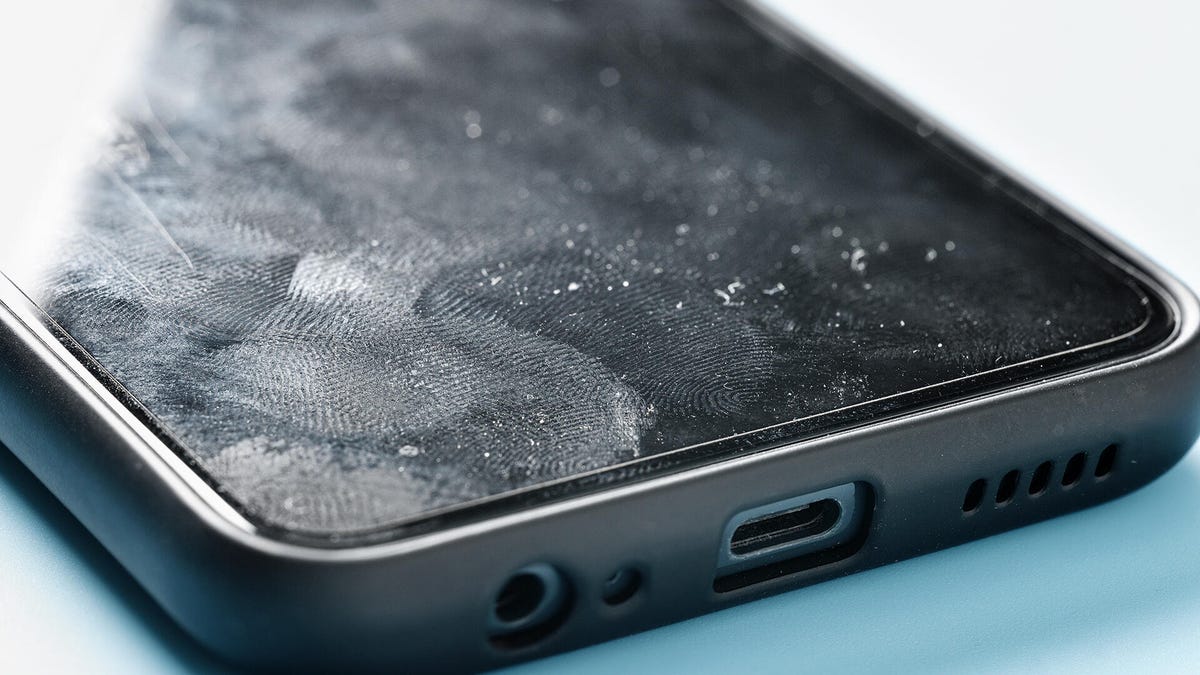
Does your phone screen look like this? I bet the camera does too. Few things can improve the quality of your photos more than a clean camera lens.
Serhii Shleihel/GettyImages
I can't stress enough how important this is. Well, I guess I can stress it since I'm putting it first. I'm amazed how often I see washed out and smudged images that are the result of fingerprints or other schmutz on the camera lens. Just cleaning your lens will improve the quality of your images probably more than any other tip.
How often? I literally check my camera lens before every group of photos. Important ones, anyway. Phone comes out of my pocket, I check the camera lens.
Ideally, you'll use a microfiber cloth, the same sort that comes with glasses/sunglasses. If not, even a soft shirt will be fine. Nothing rough or coarse. Nikon sells a nice microfiber cloth that comes in its own tiny neoprene baggie. This keeps it clean and conveniently on hand.
If you have a real camera, always (always always always) use a lens cap. I get such anxiety when I see people pull a camera from a bag, or have it dangling around their neck, and there's no lens cap. Scratches are even worse than smudges since they permanently decrease the image quality possible with the lens. Lenses are the eyeballs of your camera. Treat them as such.
If you're worried about losing your lens cap, or hate juggling it while you're handling your camera, check out cheap lens cap straps. They're great.
2. Tap the screen
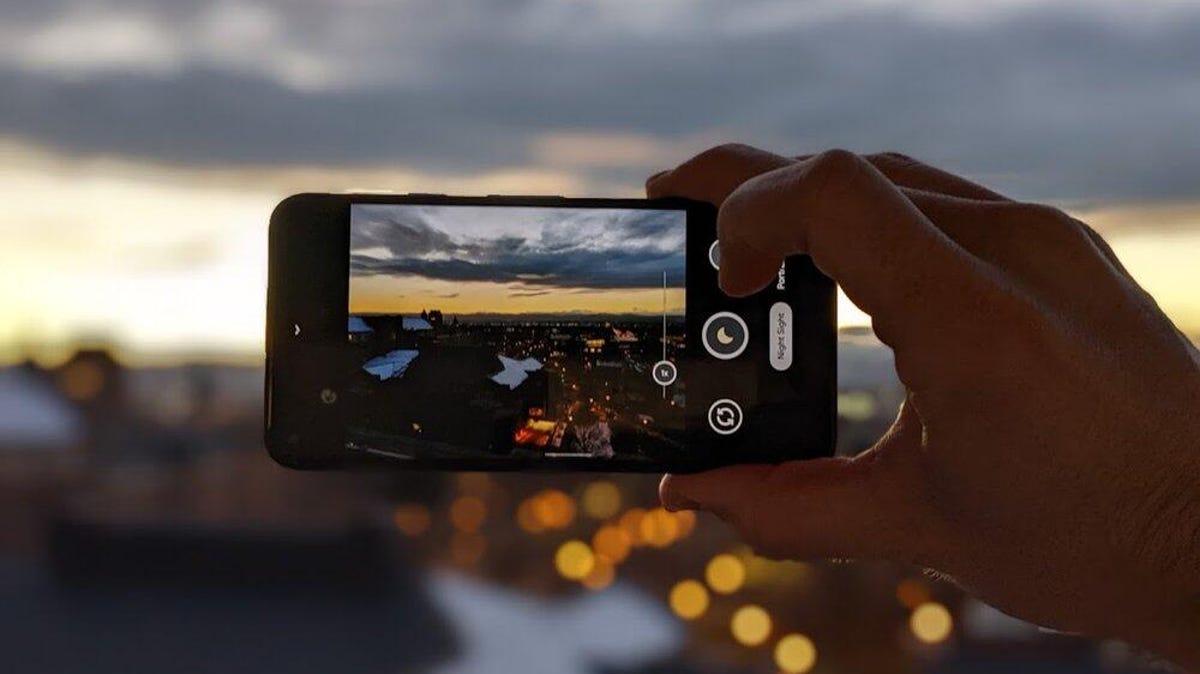
The camera app on a Google Pixel
Google
This always seemed obvious to me, but I've regularly caused "ah-ha!" moments giving this advice. When lining up your shot, if it doesn't look right, tap the screen. Most phones are pretty good at figuring out what you're trying to photograph, but not always. Tapping on your subject, a person, animal, thing, whatever, and changes the focus and exposure.
Here's an example. Say you want to take a photo of your partner on the beach at sunset. Three beautiful things in one photo: partner, setting sun, ocean. The beach too I suppose unless you don't like sand. This is called a backlit photo, and it's extremely hard to do. Most often, your partner will be underexposed (see the terminology section below), as in they'll look dark/shadowed.
With most phone and camera apps, you can tell the camera where to expose the image. In this case, on your partner. The sun will then be overexposed (blown out), but you'll still get the idea it's a sunset and you'll be able to see your partner, which is generally the point, right? If your phone is able to take HDR photos, this image will look better than if it can't.
There is some editing you can do to make a photo like this look better, but that can only go so far. We'll get to editing a little later.
3. Don't use the flash
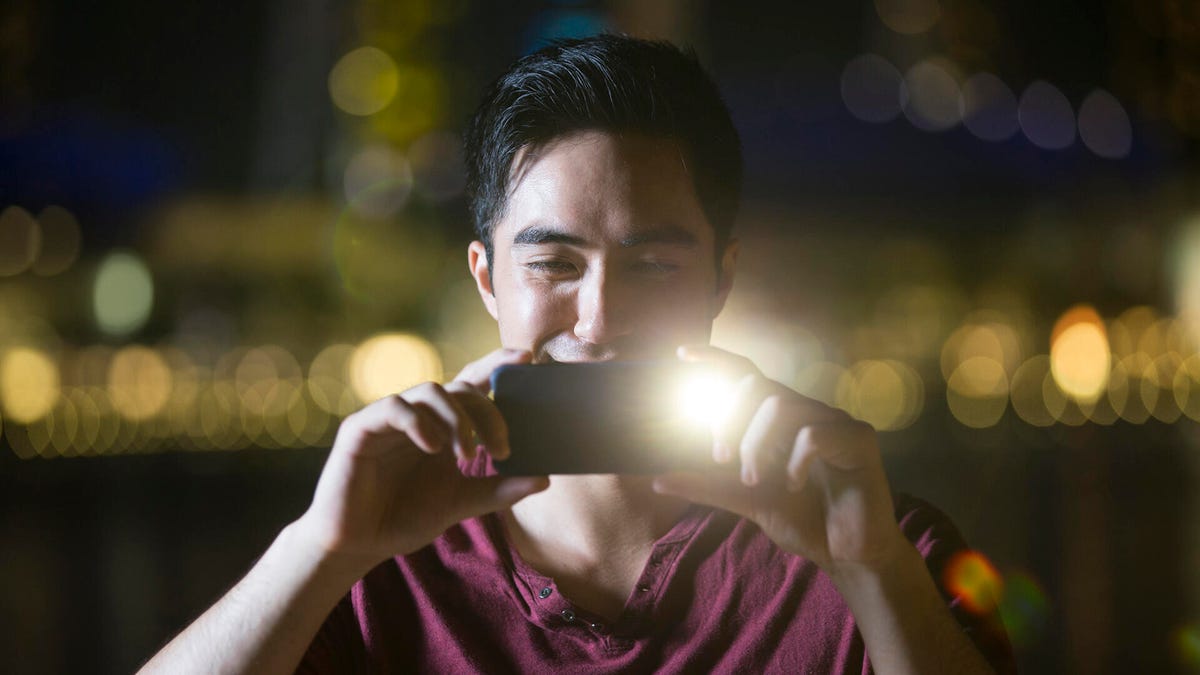
If you're this close to your subject, sure, try the flash. Most phones and cameras have decent low-light capabilities, so the image might look better with the flash turned off. It's worth checking.
Jenner Images/Getty Images
There's no such thing as a good camera flash on a phone. They're all terrible. Even the big add-on flashes for full-size cameras only work in certain situations. Believe it or not, in most cases you'll get a better photo turning the flash off completely. Not 100% of the time, however, so it's worth trying both options.
This is especially true if you're using a full-size camera with built-in flash. In every scenic place I've ever been there's at least one person trying to take a landscape photo and their flash fires. Flashes, even the best, only work within a few feet of the subject. Not only will they do nothing for landscapes, they'll wear down your battery faster at best, and mess with the exposure at worst.
You can turn off the flash in your camera app's settings. More on that below.
There is such a thing as a Slow Sync Flash photography that can be great when trying to photograph people in front of a twilight or night landscape. I'd classify this as a bit more advanced, but with a bit of practice the results can be great!
4. Get a selfie stick
Grandma's gonna find that reindeer and enact revenge.
Geber86/Getty Images
Selfie sticks are good. I have apishly long arms and I still have one, though I typically use it for my 360 camera. My 80-year-old dad has one. They're great. People should take more photos of themselves, of their family and friends, everything. I honestly don't get the hate. Photos are great! Preserve whatever memories you can. Future you will thank you.
To put it more pragmatically, a selfie stick will let you get a wider field of view of yourself, the people you're with and where you are. It just makes for a better photo.
When you're using them, certainly be wary of your immediate surroundings and the people near you. Some locations, especially crowded or dangerous ones, tend to restrict selfie stick usage. Keep an eye out for signage.
If you're not sure how much you'll use it, there's this $8 option on Amazon that extends to 28.7 inches, has a Bluetooth remote built in, and has a base that extends out into a tripod. It collapses down quite small too. For something a bit more elaborate and sturdy for an action camera, GoPro's own 3-way 2.0 configures to a wide variety of positions and angles. It's made for their cameras, of course, but many action cameras use the GoPro-style mount.
5. Get a better angle
This is Smeagol and he is a Very Good Boy.
Geoffrey Morrison/CNET
Most people just bring the phone or camera up to eye level and take the photo. Sometimes that's fine, but you can often get far better results with a different angle. Try holding the camera above your head and aim down. Photographing people from below tends to be rather unflattering, but slightly above often looks great. If you're taking a picture of a kid or animal, get down to their level. A dog's-eye-view of a dog is almost always a more interesting photo than a human's-eye-view of a dog.
This is an aspect where a selfie stick helps. Extend it out and you'll be able to easily frame that epic photo of you and the fam at the Grand Canyon where you can see you, the fam, and the Grand Canyon instead of you, parts of the fam, and a sliver of the Grand Canyon.
6. Learn your app's settings and modes
Changing the default settings on your phone's camera app can have big results.
Apple
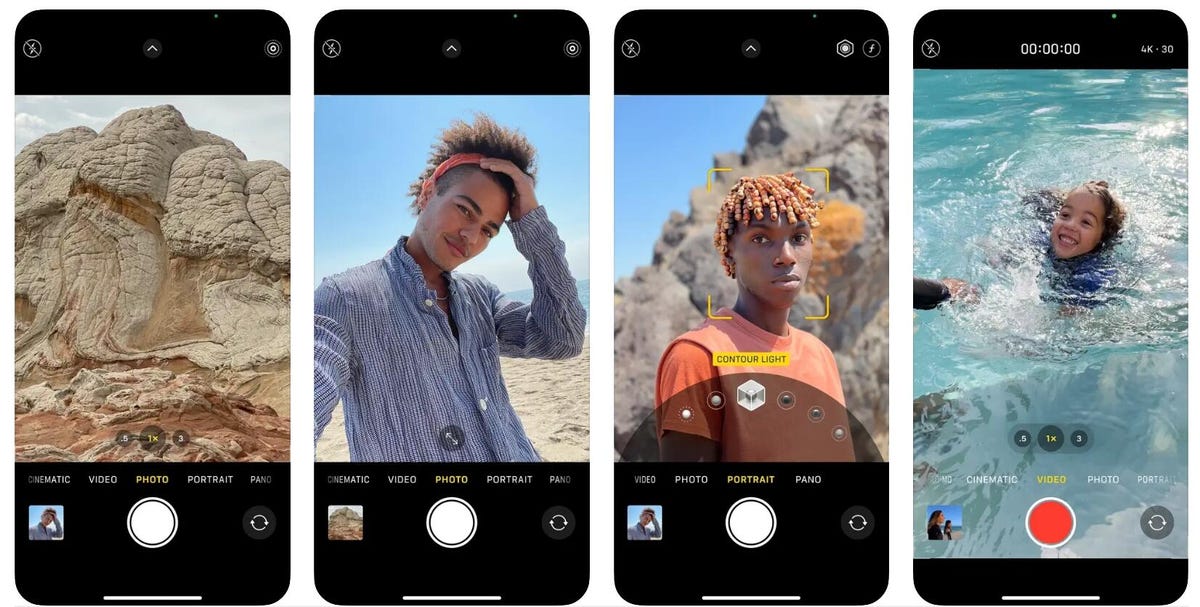
Nearly every phone's camera app is capable of a variety of different photo styles. I'm always surprised to see how many people have no idea. Portrait mode, landscape mode and night mode all let you take vastly more interesting photos than the basic mode, all with just a few taps on the screen. Check them out, see what they do.
As far as settings go, generally the stock ones should be fine. It's worth checking to make sure it's taking the highest-resolution it can and that the flash is turned off (see No. 3). Some apps let you shoot RAW, more info on that in the terms section below.
I'd also recommend enabling manual controls, if available. They'll just take a few minutes to learn and they should help you get the photo you want when, like described in No. 2, the camera itself is struggling to do so.
Fun fact: Many camera apps have the option to use one of the phone's buttons as the shutter. If it's too hard for you to tap the screen while holding the phone, perhaps using the volume button instead will be easier. There are also timer functions that give you a countdown of a few seconds to get your pose and people ready.
Read more: How to Use the iPhone's ProRaw Mode to Make Your Photos Look Better Than Before
7. Editing
Note the different editing possibilities cycling through on the right.
Google
Nearly every great digital photo you've ever seen has gone through some amount of editing. Colloquially this is called "Photoshopping" but you don't need to pay Adobe for a subscription to that specific program. In fact, there are a lot of free options. Your phone might have some built in to its gallery already. Instagram has some great adjustments too. Beyond those, check out CNET's best free and paid photo editing apps for iPhone and Android.
The easiest way to learn is to just pick a photo and see what all the options do. Visually, it will be pretty obvious what things like contrast, brightness, and so on actually do. Most of them do the same thing on your TV, if you're interested.
Slight tweaks to contrast, brightness, and color will do wonders for any image. You can "slap a filter on it," sure, but starting with a better base image will usually make it look better after you apply a filter too.
Bonus! Cloud backup
Ymgerman
While not a camera tip per se, I very strongly recommend getting some sort of cloud backup for your photos. Integrated with your phone this means that whenever you're on Wi-Fi all your photos will get backed up to the cloud. With a real camera you can download them to the camera's phone app, and usually they'll get sent to the cloud from there. Sometimes, like with GoPro, there's an extra step required to save them to your phone's gallery.
With a cloud backup if you lose your phone or camera, you won't lose your photos. This saved me in a big way when I got robbed on an overnight train in Italy, and another time when a hard drive crashed on me.
Also, never forget, there are only two types of hard drives: Those that have failed, and those that will fail.
Check out our six ways to keep your photos safe in case of an emergency and best cloud storage services for 2022.
When to upgrade
As you get to know your phone's camera, you'll start to find its limitations. A limited zoom is going to be the most obvious, followed by noise in the image, a lack of settings, and so on. Some of you will start wanting more. It's a logical progression, one I bounded through myself, from inexpensive options to more and more expensive options. It's a pricey hobby, to be sure. Buying used can help.
I recommend checking out my Best Camera for Summer Travel article as a next step. It's aimed towards vacation/travel options, but should give you an idea what's out there and what the upgrade steps look like.
Terms and words and stuff
You'll find these terms when reading about actual cameras, as well as about phone cameras and within apps.
Wide angle: A type of lens that typically captures more than what you'd see with your eyes in one glance. The whole forest instead of a single tree, so to speak.
A wide angle photo, taken with my phone, of the Root Glacier in Wrangell-St. Elias National Park. Note the tiny people in the lower left.
Geoffrey Morrison/CNET
Telephoto: The tree, not the forest. Telephoto lenses let you capture images where you seem right up close to a subject but were actually far away.
Standing in the same place as the above photo, but with a 135mm telephoto lens on a Canon R6. These are the same hikers, a few minutes earlier, as they made their way across the glacier. Note how much closer they seem.
Geoffrey Morrison/CNET
SLR/DSLR: Single Lens Reflex/Digital Single Lens Reflex. Historically the "big, real camera." Usually a shorthand for a camera where you can change the lenses. Gradually being replaced, even among expensive cameras, with mirrorless versions.
Mirrorless: Lacking the moving mirror found in all SLR/DSLR cameras. What this means for you is the cameras are slightly smaller and lighter. Offered in a wide variety of prices. At the top end they're replacing professional DSLRs.
35mm equivalent: Refers to 35 millimeter film, the old standard, as a way to describe how wide, or telephoto, a lens is. For example, a 35mm-equivalent 12mm lens is wide, a 100mm lens is telephoto. Used as a relative reference since the actual focal length will vary depending on the size of the image sensor.
Optical zoom: This is the only real zoom. Uses glass or plastic lenses to make a subject appear closer.
Digital zoom: Best to think of this as "fake" zoom. It merely crops the image, and then upconverts it. Doesn't make the subject more detailed, just larger. OK if there's no other option, but the image quality is vastly inferior to optical zoom.
Underexposed: A subject or image that's darker than desired.
Overexposed: A subject or image that's brighter than desired.
RAW: An image format that's just very lightly processed data from the image sensor. At the professional level, RAW files are used almost exclusively as there is more range available to edit. However, you need to be knowledgeable with photo editing and have an app/software that can edit your camera/phone's RAW files. Not for beginners.
As well as covering TV and other display tech, Geoff does photo tours of cool museums and locations around the world, including nuclear submarines, massive aircraft carriers, medieval castles, epic 10,000-mile road trips, and more. Check out Tech Treks for all his tours and adventures.
He wrote a bestselling sci-fi novel about city-size submarines, along with a sequel. You can follow his adventures on Instagram and his YouTube channel.
Galaxy s21 ultra 5g review samsung s premier phone is pretty a noun galaxy s21 ultra 5g review samsung s premier phone is pretty an adjective galaxy s21 ultra 5g review samsung s premier phone is pretty an adverb galaxy s21 ultra 5g review samsung s premier phone holder galaxy s21 ultra 5g review samsung s20 galaxy s21 ultra 5g review samsung s 10 galaxy s21 ultra 5g review samsung sound galaxy s21 ultra 5g review samsung phones galaxy s21 ultra 5g 128gb unlocked galaxy s21 ultra 5g 512gb iphone 13 pro max vs galaxy s21 ultra galaxy s21 ultra review
Galaxy S21 Ultra 5G review: Samsung's premier phone is pretty badass
Galaxy S21 Ultra 5G review: Samsung's premier phone is pretty badass
The Galaxy S21 Ultra 5G, unveiled alongside Samsung's Galaxy S21 and S21 Plus phones, proves that sometimes you have to do something twice to get it right. While just as bold as last year's Galaxy S20 Ultra, the S21 Ultra is a refined second take on the concept. There's still the 100x Space Zoom, but it's easier to use. There is still the "big for the sake of being big" design, but it looks more appealing. And there's still a high price, but at $1,200 (£1,149, AU$1,849) it costs $200 less than the S20 Ultra in the US.
If you want the absolute best specs and features, the S21 Ultra is undoubtedly appealing. The phone will also attract camera nerds, thanks to the improvements. The addition of S-Pen support -- it's the first Galaxy S phone to support the stylus -- will likely catch the eye of Galaxy Note users looking for a different option.
Like
Gorgeous phantom black finish
Two telephoto cameras
The screen is spectacular
S-Pen support
Don't Like
It's heavy
Lacks a microSD card slot
$1,200 is still expensive
Last year's Ultra model seemed like it came out of nowhere. It was a phone all about excess that, by sheer fate, was launched at the beginning of a global pandemic and recession. Its bold, behemoth take on the Galaxy S line was undercut by its $1,400 (£1,199, AU$1,999) price and issues with its nearly domino-size camera system.
Overall, the S21 Ultra is a major update both in terms of hardware and software over the S20 Ultra. And when you factor in a lower price, it all kind of makes sense. And that's why the Samsung Galaxy S21 Ultra earned a CNET's Editors' Choice Award. The whole Galaxy S21 lineup is available to purchase -- here's how you can buy one.
Read more: Samsung Galaxy S21 vs. S21 Plus vs. S21 Ultra
The Galaxy S21 Ultra has the best black finish
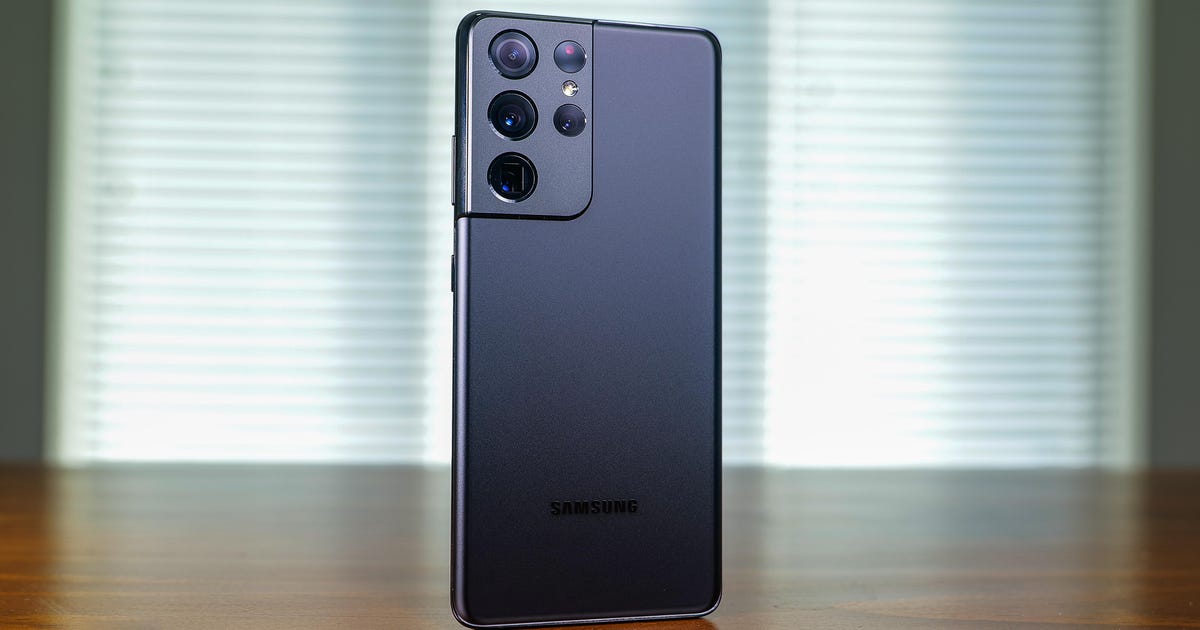
I wouldn't call the S21 Ultra's design radically different, but my review unit has the best black finish I've ever seen on a phone. It's the stuff that goth dreams are made of. The color is called phantom black, and seeing it in person makes you understand why Samsung made a nearly three-minute video explaining the blackest black finish. The S21 Ultra also comes in phantom silver and there are limited-edition phantom finishes in titanium, brown and navy, which can only be found on Samsung's website.
The camera bump is large and melts into the sides of the phone, which are glossy black. And while the regular S21 and S21 Plus looks snazzy in their two-tone colors, the all-black S21 Ultra is cool, elegant and badass all at the same time.
Read more: Galaxy S21 drop test: It broke on the first drop
The S21 Ultra is heavier than last year's S20 Ultra and the iPhone 12 Pro Max. It's the second heaviest phone I have tested in the past year, just behind the Asus ROG Phone 3.
The display is brighter and adds S-Pen support
Around the front is one of the most impressive displays I've seen. It has a Wide Quad HD resolution and a variable refresh rate between 10 and 120Hz, which is determined by what's on the screen. And just to be clear, it can be set to 120Hz without the hit to resolution that the S20 Ultra had. The 6.8-inch display is bright and the contrast is gorgeous. Covering the front and back is Corning's Gorilla Glass Victus.
Support for the S-Pen means you can draw, write, edit photos and sign documents on the S21 Ultra.
Sarah Tew/CNET
Under the screen is a larger ultrasonic fingerprint reader which feels peppy. I had a hard time telling if it was faster than the one on the S20 Ultra. The display also has S-Pen support.
The Galaxy Note phones line always tempted me, but I didn't think I'd use the S-Pen enough to justify getting one. I like the iPad Pro-Apple Pencil approach Samsung took with the S21 Ultra. Without an S-Pen, you can still enjoy using the S21 Ultra. But if you're S-Pen curious, you can buy a new S-Pen or find an old one and it will work. There's a lot you can do like draw, take notes and sign documents. I love editing photos and making adjustments with the S-Pen.
There are a few S-Pen considerations. The S21 Ultra doesn't come with an S-Pen and doesn't support Bluetooth or gesture functionality. For example, the S21 Ultra can't send you a notification if you leave your S-Pen behind. Also, the Ultra doesn't have a built-in slot to store an S-Pen. Samsung does sell cases for the phone that include S-Pen storage.
The S21 Ultra has two telephoto cameras
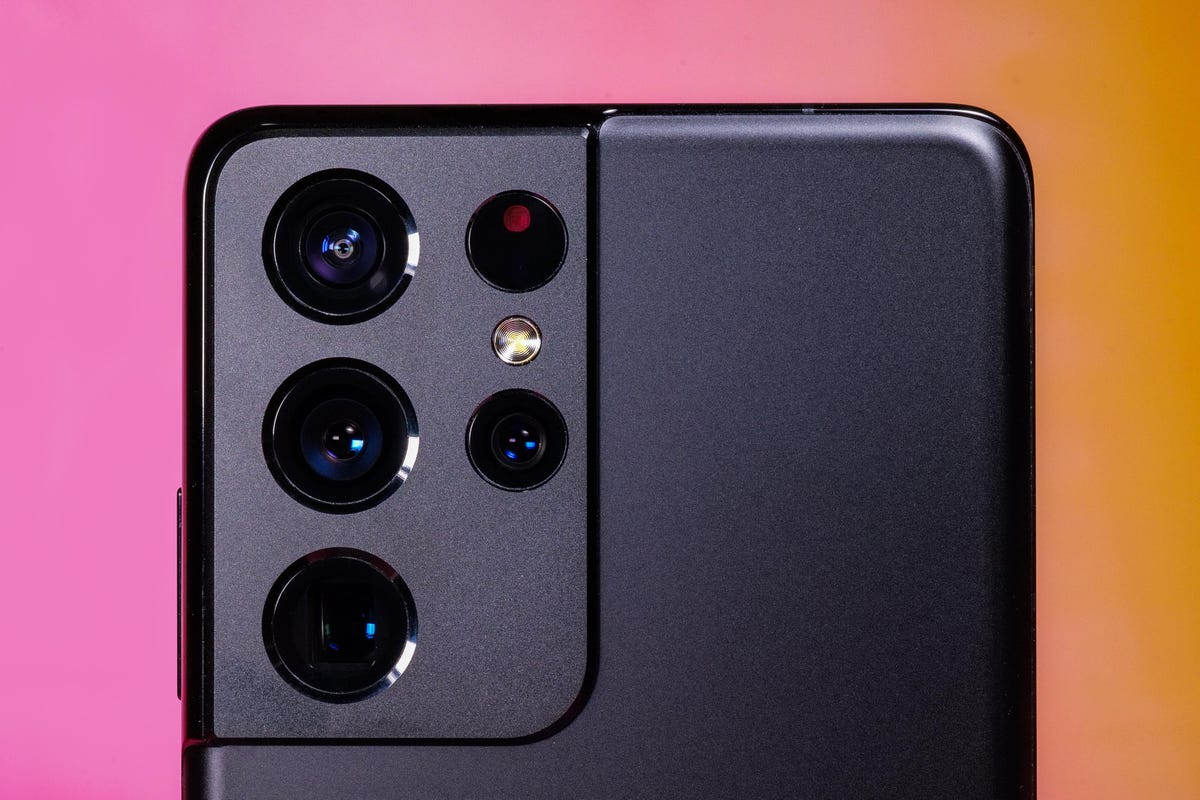
The S21 Ultra's camera system received several significant updates. There are four rear cameras: one wide, one ultrawide and two telephoto cameras. The time-of-flight sensor on the S20 Ultra is gone; in its place is a laser autofocus module.
The 108-megapixel sensor on the main camera is new and has better autofocus for both photos and videos. There's even a new focus enhancer tool that pops onscreen to help the phone focus faster. The tool looks like it might be switching to a wider view to do so.
Read more: S21 Ultra vs. iPhone 12 Pro Max vs. Pixel 5: Which phone has the best night mode?
There are four rear cameras: wide, ultrawide and two telephotos.
Patrick Holland/CNET
The dual-telephoto cameras add a number of benefits. One has 3x magnification and the other 10x. This means when you zoom in, there are two places in your zoom range where the image isn't cropped and where you'll capture the best image quality. Another benefit is stability. The two cameras are paired to help make zooming in, even at 100x, easier and more steady.
At 30x or higher, a zoom guide appears to help you find the specific spot that you're zoomed in at. You can lock it so the cameras don't move, which turns the guide yellow. This works quite well. Obviously you have to be careful not to move the phone around too much, but it's less finicky and frustrating than the S20 Ultra.
Photos from the S21 Ultra are excellent, with good detail and a wide dynamic range. There is a 108-megapixel mode, but I found that the 12-megapixel photos that come from pixel binning look consistently great.
Below are several photos I took with the S21 Ultra.
The main camera was set to 12 megapixels, which uses pixel binning to combine nine pixels into one.
Patrick Holland/CNET
One benefit of pixel binning is that it can bring out the details in a photo. Notice the different textures and details.
Patrick Holland/CNET
I used the single-take mode in the camera app to capture photos and videos of this cute dog. Here's one of the pictures my S21 Ultra chose.
Patrick Holland/CNET
There's so much for the S21 Ultra to capture correctly here: the barren tree branches, the water and the white fluffy clouds in the blue sky.
Patrick Holland/CNET
Here are three different photos I took from the exact same spot using the wide 1x camera (left), the 3x telephoto camera (middle) and the 10x telephoto camera (right).
Patrick Holland/CNET
In low light, the S21 Ultra's night mode is outstanding. Flaring on the lens is minimized and photos look bright without a bunch of image noise or noise-reduction smearing. Below are a few night mode photos I took:
This might be my favorite night mode photo of the bunch.
Patrick Holland/CNET
Here's another night mode capture. I like how the S21 Ultra brought out the colors in the sculpture.
Patrick Holland/CNET
Night mode on any of the S21 Ultra's cameras. I took this shot with the ultrawide.
Patrick Holland/CNET
For selfies there's the same 40-megapixel camera that the S20 Ultra had. You now have an option to change the color tone to either bright or natural which is excellent.
Here is a selfie I took with the natural setting.
Patrick Holland/CNET
Samsung added the ability to take raw 12-bit color photos. There's a new video feature called Director's View, which gives you a thumbnail preview of the video feeds coming from all of the cameras on the phones. As you record, you can switch between them. Within Director's View, there's a vlogger setup that gives you a side-by-side video view or a stacked one if you're shooting vertically. This means you can record yourself with the selfie camera and show what you're seeing or reacting to with any of the rear cameras.
On paper, Director's View seemed like something I might try once and not really use. But after some time using it, some people will definitely be into the feature. A downside to Director's View is that the final video is saved in HD instead of 4K or 8K. I'd love to see a similar thumbnail preview interface of all the rear cameras when recording a regular 4K video.
I'm excited to pit the S21 Ultra and its cameras against the iPhone 12 Pro Max and Google Pixel 5. Each phone takes a different approach to photography and will appeal to different people.
S21 Ultra has a Snapdragon 888 chip and 12 or 16GB of RAM
Powering the S21 Ultra is the new Qualcomm Snapdragon 888 chip, along with 12GB of RAM, or 16GB in the most expensive model -- which also has 512GB of storage (see the chart below for prices). In my benchmark tests, the S21 Ultra scored better than last year's S20 Ultra. And in use, it handled everything I threw at it, even playing Xbox Game Pass Ultimate games on it.
You can use the Xbox Game Pass Ultimate app to play Xbox games on your S21 Ultra.
Sarah Tew/CNET
Supplying juice to the phone is a 5,000-mAh battery. I've easily been averaging a day and a half on a single charge. Battery tests on the S21 Ultra for continuous video playback on Airplane mode clocked an average of 22 hours and 57 minutes with the refresh rate set to Auto 120Hz. That's actually an hour less than the S20 Ultra lasted in the same test. Though keep in mind, in real world use my colleague Jessica Dolcourt found the S20 Ultra's battery drained like it was being bitten by a "thirsty vampire."
Below are the results of my benchmark tests for the S21 Ultra.
3DMark Slingshot Unlimited
Note:
Longer bars indicate better performance
Geekbench v.5.0 single-core
Note:
Longer bars indicate better performance
Geekbench v.5.0 multicore
Note:
Longer bars indicate better performance
Android 11 and 5G support
The Galaxy S21 Ultra runs Android 11 with Samsung's OneUI 3.1 top layer. And I like it a lot. I can now default to Google Pay or Google Discover News feed instead of Samsung's versions. The look for everything from settings to pop-up windows is clean and contemporary. And with a phone this big, OneUI helps make it easier to use one-handed.
Last, the Galaxy S21 Ultra has 5G and supports both sub-6 and mmWave flavors of 5G. You shouldn't get the Ultra for its 5G. But as 5G networks get better, so will your 5G speeds and connection. And then we'll really have something to talk about.