Here is one of the pictures featuring the Take Up Too Much Space. Numerous images associated with the Take Up Too Much Space can be utilized as your point of reference. Below, you'll find some additional pictures related to the Take Up Too Much Space.
Take up to $250 Off Unlocked Galaxy S22 Plus Smartphones
Take up to $250 Off Unlocked Galaxy S22 Plus Smartphones
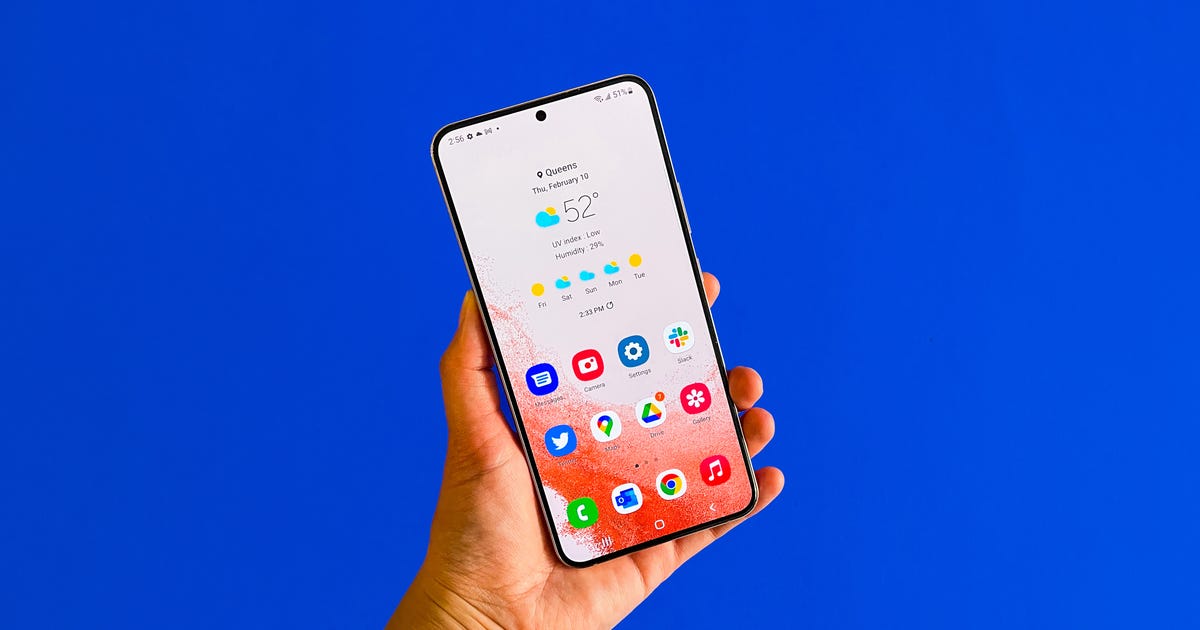
If you're on the hunt for a new smartphone, the Samsung Galaxy S22 Plus should be at the top of your list. It debuted earlier this year, and it's a solid choice that's packed with plenty of features and has enough storage to keep up with all of your photos, videos and apps. Plus, it comes in a variety of colors to suit your style. You can save up to $250 on a Samsung Galaxy S22 Plus at Amazon for a limited time, bringing the price to $800.
The Galaxy S22 Plus comes with a large 6.6-inch AMOLED screen, which is bigger than the S22 and smaller than the S22 Ultra, making it easy to operate with one hand while still providing a display that is large enough to stream content without strain.
It also features Android 12, the Snapdragon 8 Gen 1 processor, 8GB of RAM and your choice of either 128GB of storage or upgrade to the larger 256GB storage capacity version.
This phone has a long battery life that can last all day and features fast charging when you need a boost. And it comes equipped with durable Gorilla Glass in case your phone takes a tumble. The S22 Plus also has a 50-megapixel rear camera that can record in 8K, as well as Adaptive Pixel technology that improves the look of your nighttime photography and video.
This Samsung is unlocked, too, allowing you to choose your carrier so you can get the features and coverage you want at a budget that works for you.
Read more: Samsung Galaxy S22 vs. Plus vs. Ultra: The Difference Is in the Details
Best ceramic coating for headers best ceramic coating for headers best ceramic coating for black cars best ceramic coating 2021 best ceramic coating best ceramic wax best ceramic brake pads best ceramic cookware best ceramic space heater
Best Ceramic Coating for 2022
Best Ceramic Coating for 2022
Listen to the hype about ceramic auto paint coatings and you might get the idea that a ceramic top coat will protect your vehicle from falling tree limbs. It won't. The best ceramic coatings will give your car or truck its best defense against settling airborne chemicals and pollutants, tree sap, road and sea salt, bird poop and the sun's harmful ultraviolet rays. They'll also deliver a gorgeous sheen that's hard to beat.
Think of ceramic coating as a harder, more protective clear coat for your paint's clear coat. It's the best, most durable way to protect your vehicle's finish, short of a full transparent film wrap, and its hydrophobic (water sheeting) properties make cleaning much, much easier. A properly applied ceramic coating can last for years.
The best ceramic coatings require differing amounts of time and energy to apply, but all require some level of sweat equity and commitment (there's a reason automotive detailing shops get big bucks to professionally apply ceramic). There's a lot of white noise about ceramic coatings and literally hundreds of products to choose from. We've waded through the hype and chosen the best OTC ceramic coatings for a variety of circumstances, purposes and commitment levels based on expert knowledge and opinion, user ratings and personal experience. Click through our best ceramic coatings to understand your options, then read on for a primer on what this amazing technology will and won't do for your vehicle and how best to use it.
CarPro
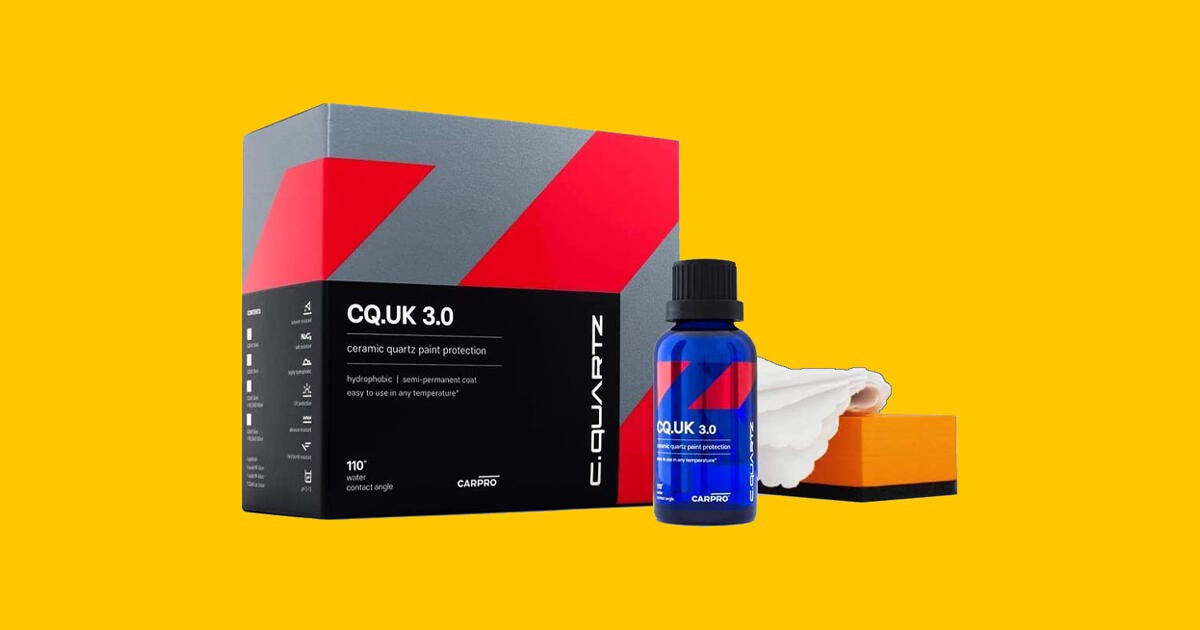
CarPro CQuartz UK 3.0 is the top over-the-counter product from a Malta-based company that pioneered automotive ceramic coatings in the early 21st century. It contains 70% silicon dioxide that's 99% pure and it leaves what might be the deepest wet-look gloss we've seen. It delivers all the durably protective properties only true ceramic coatings can.
Better still, CQuartz UK 3.0 is not terribly difficult to apply, as pro-grade ceramic coatings go. It's much less finicky about air temperature during application than other serum-type ceramic liquids (anything between 40 and 100 degrees Fahrenheit will work). Its initial hardening time is longer than most, so there's more time to spread and work. Yet it fully cures in only 60 minutes, so you can take a blast by the time you clean up. Or you can build layers during a single-day session, if you want even longer protection. CarPro projects 18 to 24 months of full hydrophobic performance for each layer applied. Every bottle is labeled with its production date and it's guaranteed to remain fully pliant for one year
In short, CarPro CQuartz UK 3.0 is the best combination of quality and ease of application we've encountered and the kit includes almost everything you need. According to users (and CarPro's own math), the included suede applicator wraps will be used up before a medium to large size vehicle is coated, so you might want to order some extras.
Nasiol
Like our best overall ceramic coating product, this kit comes from a company that has been in the ceramic coating business since the beginning. Indeed, Turkey-based Nasiol manufacturers a range of nano-ceramic protectants, including coatings for countertops, marine products, wood and clothing. The chemistry in ZR53 Nano Ceramic coating is impeccable. It goes on in one coat, delivers a rich shine and 9H hardness and should last at least three years in all conditions. The kit includes ZR53 ceramic coating, application pads, gloves, two microfiber cloths and other accessories.
So what's not to like? You'd better know what you're doing when you lay this ceramic down. It needs to go on thin and even and that's easier said than done. Trickier still, it starts to harden in as little as 20 seconds. It's imperative to work small, and quickly, because if it's not buffed before it dries, it can leave streaks or uneven clouds. And the only way this stuff is coming off is with ultra-high PH detergent you won't find at your local hardware store, or with pro-skill power wheeling and enough experience to get it without going into the paint underneath.
Mothers
How difficult is applying Mothers CMX Ceramic Spray Coating? You spray it on an applicator pad, spread it evenly, let it set about five minutes and buff it lightly with a microfiber towel. Then you let it cure for 24 hours. In other words, it goes on easier than conventional "wax on, wax off" carnauba or polymer auto coatings. While it won't last as long as more expensive (and more challenging) ceramic coatings, it will last multiples longer than most of those conventional carnaubas and polys. Or a year or so, depending on how much your car sits out in the sunlight and smog.
You can also layer CMX Ceramic Spray with two or three consecutive coats, leaving those 24 hours in between, before you ever pull the car from the garage. That will extend its durability. Either way, it will provide better hydrophobic protection than most carnaubas and poly waxes, keeping your paint safer and your car cleaner and making your car easier to wash. With application this easy there shouldn't be too much trouble finding time to shine your car once a year.
Nexgen
Nexgen Ceramic Spray can leave flecks and streaks that take some serious elbow grease to buff out. That's almost certainly because you sprayed too much on the paint to begin with. Use less, work less. The eight-ounce bottle is enough for four or five mid-size cars. Once it's on, Nexgen leaves a slick shine and something you don't get in many easy-app ceramic sprays.
That would be a whole lot more silicon dioxide in the formula and silicon dioxides are what thatch the coating molecules together and bond the ceramic to your paint. Nexgen claims it has the highest concentration of SiO2 in any over-the-counter spray; at 13%, double what many have. That should mean that its liquid-shedding, chemical protecting gloss will last longer than the typical easy-app ceramic spray.
Meguiar's
Meguiar's Hybrid Ceramic Liquid Wax is more like a conventional wax formula infused with silicon dioxides to bond the molecules and build that ceramic barrier and there's something to be said for familiarity. It goes on like conventional liquid in a circular motion and dries to a haze that you buff off. To be sure, the haze is lighter than old-school wax residue and less work to remove. It's really hard to mess this stuff up.
What's left when you're finished is a deep, mellow shine and extreme water-beading action. Moreover, the haze makes it harder to miss spots and easier to gauge even coverage and Meguiar's Hybrid will not whiten non-painted trim or rubber gaskets.
Drexler
Drexler is a relatively new, small-volume company in France that warrants some of its ceramic coatings up to 10 years. Its over-the-counter ceramic for vehicles is applied in two stages: one liquid, one spray. It's time consuming (at best) to apply, but not terribly tricky and the manufacturer offers an on-line tutorial.
What you get for the trouble is a hard 9H finish that should minimize light scratching as effectively as any ceramic coating can. It's intended to last five years or more, like many of the professionally applied, detail-shop ceramics. Drexler claims that with moderate hose pressure (say, from a low-grade pressure washer), virtually anything stuck to a Drexler-coated vehicle will rinse off without rubbing.
Weiruixin
This product originates in China and delivers pro-grade chemistry for the price of good, easy-application, consumer-grade detailing products, with applicator, towels, etc. in the package. Weiruixin claims 10H Ceramic Coating 3.0 has an industry best 10H hardness rating and remains bonded at temperatures up to 1,400 degrees Fahrenheit. It guarantees its hydrophobic properties for at least two years... or your money back.
We wouldn't want to have to chase that $25, but the indicators suggest this could be a good product for not much money, if you're willing to make it work. Experience tells us that it won't be easy to use. The thick fluid will be temperature sensitive, demanding room-temperature, no-dust application conditions and you'll have to keep your car dry and shaded for seven days for it to fully cure. If you lack pro-grade skills, better to choose something like our best cheap and easy ceramic coating. You'll be much happier with the process and maybe even with the results.
Mothers
Remember the first fundamental rule of all ceramic coatings: Surface or paint preparation matters at least as much as the coating itself. The coating simply protects and shines whatever is underneath and it will last longest when its bond with the paint is strongest.
Now, you could spend thousands of dollars or a week's worth of hard work on a full paint correction for your daily-driving 2008 Subaru Impreza. Or you could get Mothers' relatively inexpensive CMX Surface Prep. CMX Surface Prep is pH neutral and biodegradable, and it strips oil, grease, wax and other chemical residue without harming the paint-as easily as cleaning the windows. Just spray CMX Surface Prep on the paint and wipe it off. It won't do much about existing swirl marks or scratches, but it will leave a chemically spotless foundation that helps ensure maximum bonding for the ceramic coating that follows.
Mothers
Like our best minimalist ceramic coating prep (Mothers CMX Surface Prep), CMX Ceramic 3-in-1 Polish & Coat removes grease, old wax and other chemical residue in advance of your ceramic coating application. Yet 3-in-1 adds a light polishing compound, so with a dose more elbow grease or a polishing wheel, it can also remove swirl marks, light scratches, oxidation and other imperfections in the paint.
Better still, Mothers CMX Ceramic 3-in-1 Polish & Coat includes mineral oxides like those in the ceramic coating itself, so it leaves a nice, hard gloss when you're finished. It's hardy enough to leave as it is, but it also provides a fantastic primer coat for a full ceramic coating on top. It won't deteriorate an existing ceramic coating, either, and that makes it a great refresher to invigorate and deepen a good coating that's a couple years old with less work (and cost) than starting from scratch.
Comparison of the best ceramic coatings for 2022
Product
Price
Best ceramic coating overall
CarPro CQuartz UK 3.0 Kit
$83
Best ceramic coating for pro-skill home detailers
Nasiol ZR53 Nano Ceramic Coating Kit
$118
Best cheap and easy ceramic coating
Mothers CMX Ceramic Spray Coating
$18
Best ceramic coating for home detailing newbies
Nexgen Ceramic Spray
$35
Best old school/new school ceramic wax
Meguiar's Hybrid Ceramic Liquid Wax
$25
Best ceramic coating for off-roaders
Drexler Ceramic Car Coating Kit
$74
Best cheap ceramic coating for pro-skill home detailers
Weiruixin 10H Ceramic Coating 3.0 Kit
$25
Best minimalist prep for any ceramic coating
Mothers CMX Surface Prep
$13
Best stage 1 upgrade prep for any ceramic coating
Mothers CMX Ceramic 3-in-1 Polish & Coat
$13
Mothers
Ceramic coatings 101
Somewhere in or under your automobile, there's almost certainly some ceramic coating. Automakers have been using it for years because it's the best protective finish for a variety of parts, including wheel hubs, interior trim bits and things you'll see if you lift the hood. You just won't have ceramic coating on your vehicle's finish paint unless you put it there yourself.
Ceramic coatings can have different names -- nano ceramic, quartz or silica coatings -- and come in various forms. There are thermal sprays, dry powder coatings and wet chemical sprays or liquids. There are different auto-detailing ceramics for different surfaces like wheels, paint, windows or trim. In this report we'll focus on the paint, though some products will work on all of the above. Some of them aren't ceramic coatings in the original form. They're hybrids manufactured like more conventional auto waxes and infused with the key ingredient that makes ceramic coatings "ceramic."
That ingredient is silicon dioxide (SiO2), which bonds the coating at a molecular level to itself and the paint underneath, then cures to form a hard, hydrophobic (impenetrable to water) layer on top of the paint. The silicon dioxide is extracted from natural materials like quartz or sand. Over the years, some ceramic coating manufacturers have added titanium dioxide (Ti02) or more complex silicon compounds such as silicon nitride (Si3N4 9) and silicon carbide (SiC) to their formulae. These can increase the performance of the coating.
Any ceramic coating worth the name will have at least 5% silicon dioxide. The best consumer-grade ceramics have SiO2 concentrates in the 70-80%range, though these can also be the most difficult to apply. Professional detailers and installers typically use ceramic coatings with SiO2 concentrations between 93 and 97%. Other things equal, the higher the SiO2 percentage, the stronger and more durable the coating becomes, and the more money it costs.
In ceramic coatings, other things are rarely equal. The overall performance and price of the product is at least as important as the amount of silicon dioxide. Every ceramic coating also has polymers (more conventional bonding chemicals), glossing agents, curing compounds and or other ingredients. While most manufacturers keep their exact formula proprietary, their products must do more than protect. They must also maximize shine and make application consistent, if not necessarily easy. While the level of silicon dioxide is important to a ceramic coating's overall durability, it's not the only thing that determines a coating's overall performance, in terms of how it looks on your car and how easy or difficult it is to put there.
Meguiar's
Ceramic coatings are sometimes rated with a number before the letter H like 8H or 9H. Contrary to published claims and popular belief, this is not a rating on the Moh scale, which is used by geologists to rank mineral hardness from 1 to 10 (the surface of a copper penny is about 3.5H on the Moh scale, while a diamond is 10H). Rather, the ratings for ceramic coatings will be based on the Wolff-Wilborn Pencil Hardness Test. A pencil hardness test drags increasingly hard graphite pencils across the surface of a coating. The resultant number identifies the softest pencil that will leave a scratch on the coating. A 9H in a pencil hardness test demonstrates about the same surface hardness as the copper penny on the Moh scale, and while that's not diamond grade, it's still pretty darn hard. By pencil hardness, the standard clear coat paint on your car or truck is somewhere between 2H and 4H. That means a 9H ceramic coating is 2.25 to 4.5 times harder to scra tch.
Over-the-counter ceramic coatings are, obviously, intended for use by DIY auto detailers. In the simplest terms, application is similar to traditional automotive wax: You spread the ceramic on in some fashion and then buff it (though not necessarily off). Yet anyone who's done much automobile waxing knows the simplest terms don't fully explain the level of energy required. The best do-it-yourself ceramic coatings and the best results demand some level of sweat equity, in both surface preparation and application. The best in terms of durability or long-term protection are usually the most demanding. If you mess a high-grade ceramic coating up, it will be really, really hard to get off.
It's no coincidence that high-end detailing shops (sometimes called auto spas) have boomed in the era of ceramic coatings. The good shops know what they're doing and they can almost certainly do it better than you can. There are nonetheless a range of great consumer-grade ceramic coatings out there, suitable for everyone from raw DIY detailers to those with pro-grade skills. Those products can leave the paint on your car or truck looking gorgeous... and a you that's proud of what you accomplished, wherever you rank in the detailing-skills pecking order.
We'll get to the details of ceramic coating preparation and application shortly, but if you plan to do it yourself you need to start by gauging how much time and energy you're willing to commit. And by not overestimating your skills. And by considering what you're willing to do if it goes wrong.
First, let's get specific about the real benefits of ceramic coatings and the myths.
Nasiol
What ceramic coatings will (and won't) do
The best ceramic coatings will give your car or truck an incredible shine and probably a better shine than it's ever had before. Professional detailers and some car geeks know that shines can be different like the deep, mellow, lusty shine of perfectly applied, old-school carnauba wax or the more aggressive, wet-look shine of subsequent polymer sealants. The best ceramic coatings span a similar spectrum, but all of them will leave you looking over your shoulder and admiring as you walk away from your vehicle in a parking lot. They'll keep your car cleaner, longer and they'll make it look like you just re-waxed it every time you wash it.
At least as importantly, the best ceramic coatings will protect your car's paint better than any conventional carnauba or poly wax can. Think of any wax or sealant as a transparent sacrificial layer that can be removed or reapplied as necessary to protect the paint underneath it. Ceramic coating is just harder and less porous than more conventional waxes, so it makes it more difficult for anything that settles on the paint to penetrate or even stick. We're talking things like airborne chemicals and pollutants, overspray of any type, tree sap, bird droppings, road or sea salt or the sun's relentless UV rays. Ceramic coating is the best chemical barrier against the harmful effects of multiple substances that can damage paint and diminish its appearance over the years, even moreso if your car lives outside. It will fill the role of sacrificial layer better than any carnauba or poly was and it can do so more economically.
That's because, thanks to silicon dioxide and all that molecular bonding, ceramics stay put a lot longer. A relatively inexpensive, easy application, ceramic spray can protect for a year or so. To maintain peak performance with a traditional wax-on, wax-off carnauba or poly coat, you'll need to lay down a new layer every three or four months. The manufacturers of some more expensive ceramic liquids warranty their product for two years. (We are not weighing in on how difficult or fruitful it might be to make a claim on those warranties.) We've known consumer-grade ceramic liquids that have lasted close to five years before their hydrophobic properties start to diminish. Detailing shops in urban areas around the country, including Motor City Auto Spas in greater Detroit, will guarantee their ceramic applications five, seven or 10 years, depending on the product used.
"We'll guarantee our top product for life, if the car is relatively new, with an annual inspection and detail," says Motor City founder and CEO Matt Lifter. "Short of the annual visits we'll guarantee seven years. Not even acidic solvents like wheel or brake-dust cleaners will take it off. It's really amazing stuff."
Mothers
Ceramic coating is more durable than wax or poly in another sense because it's much harder. That means it's more resistant to light scratches or paint swirls (those spiraling curves that can develop in clear coat after years of washing). Indeed, a ceramic-coated vehicle that's washed properly (no drive-thrus) is nearly immune to paint swirls.
We emphasize "resistant" above because no ceramic coating is scratch proof, even if some to the wildest marketing hype suggests that it might be. Drag a key along a door panel on a ceramic-coated car and the panel will definitely scratch. Throw pebbles at it hard and it will nick. Bottom line: Ceramic-coated cars are still susceptible to rock chips. Some road rash is still likely to build up over the miles and years.
If your overriding goal is preventing rock chips or road rash, better look past ceramic coating. In the current state of auto protection, that would mean looking toward transparent film or "wraps."
Not up to speed on wraps? Vinyl auto wrap is a blend of polyvinylchloride and additives that make it flexible and resistant to UV light and sometimes add color. The additives are blended, dropped onto moving sheets of PVC, then baked and cured. Transparent wrap is virtually invisible on your car's paint, except for barely perceptible edges where the wrap might end and give way to unprotected paint, and it provides an actual, physical cushioning barrier between the paint and whatever the road throws at it. Good wrap will self-heal, so if a high-velocity pebble takes a divot out of the protective barrier, light and heat will actually close and smooth it again.
Drexler
Wrap will get you closer to proofing your car from scratches, rock chips or road rash than any ceramic coating can. It is also considerably more expensive than ceramic (the product) and significantly more difficult to apply. While some brave amateurs have tried, we wouldn't think about doing this ourselves.
Before we get to the process of applying ceramic, there's one more myth to address: Yes, even with the best ceramic coating, you will still have to wash your car.
We're compelled to make this point because a lot of the hype out there seems to suggest you'll never have to wash your car again. We assure you you'll have to do it less often, but dirt, road salt and other appearance-marring substances will eventually build up on the ceramic. The good news, beyond the fact that you'll wash it less, is that your ceramic coated vehicle should be much easier to wash than it was before the ceramic coating: generally no repeated rubbing back and forth over sticky, embedded stuff (which is another reason ceramic can keep swirl marks to a minimum) and usually more like a wipe and rinse. Indeed, some ceramic manufactures promise that, with proper application and sufficient water pressure, anything on your paint will rinse off without rubbing. Finally, know that washing can still leave water spots on ceramic coated cars, depending on the mineral content in your water source. Always towel dry.
On to the work at hand.
Mothers
Layin' it down
Professional-grade ceramic coatings are usually thick, almost glue-like and often require more than one step in the curing process. Consumer-grade ceramics are generally more forgiving to apply, though the most durable can be tricky. If you've browsed our best list, you've seen that there are several types of over-the-counter ceramic coatings. Even the most modestly priced, easiest-to-apply ceramics should outperform comparably priced conventional waxes when it comes to protection and longevity.
Whichever you choose, you must understand the first rule of ceramic coatings (or conventional carnauba and poly waxes, for that matter): surface or paint preparation matters at least as much as the coating itself, and more so if the paint is in poor shape to begin with. The coating simply protects and shines whatever is underneath and it will last longest when its bond with the paint is strongest. Without any prep, you're going to make those scratches or tar flecks or bits of oxidation shine for a long time.
"I'd say on average, our prep is four to five hours," says Lifter, whose Motor City Auto Spa has been doing ceramic since the early days (ed. note: that's four or five hours from efficient, well-trained techs). "It's at least two or three times more time than the actual application. Sometimes the prep can take two full days, but we can't guarantee our product without it."
You can expect a detailing shop to undertake most or all of these steps in advance of applying ceramic coating: Washing the vehicle with an appropriate detergent and sometimes a power washer; "Claying" the paint from stem to stern, or rubbing it with soft clay slabs and a lubricating fluid to remove sap, tar and other substances from the clear coat's pores; Polishing with a compound and a power pad, which can be the trickiest part depending on the age and depth of the paint, to remove swirls, scratches and oxidation; Wiping with a chemical cleaner to remove the final vestiges of dust, grit, waxes or grease.
Mothers
Now, you can do all those things yourself, if you have the inclination and fortitude and the time. It's always worth it, even on a beater with decent paint. You have to decide what you're willing to try. If it's your baby, which only leaves the garage on nice days for car meets or weekend blasts, you probably need to suck it up and try the full Cleveland. It will pay big in the final results. If it's a car you use for track days or the 10-year-old Civic that gets you reliably and satisfyingly to work and the paint still looks good, you can get away with a clay and chemical wash.
If you lean toward the less-work end of the prep spectrum, we urge you to at least undertake the chemical wash (after a good water wash). Using a product like Mothers CMX Surface Prep is essentially like washing windows. You spray it on and wipe it off, and it leaves a squeaky, chemical-free foundation that will ensure a solid bond between the ceramic and the paint. If you're up to a little more elbow grease or have an easy oscillating buffer, try something like Mothers 3-in-1 Prep & Coat. It adds a light polishing compound, so the extra rubbing will take care of a lot of the swirls and light scratches and leave a nice, polished finish.
Given the steps in proper preparation, you might surmise that the best time to apply ceramic coating is when a car is brand new or nearly so. You'd be correct. New cars (for lack of wear) require the least amount of paint correction. Detail shops will often guarantee their ceramic coatings longest when they're applied to new vehicles. If your car is already a few years old, you've got what you got. Just remember that your final ceramic-coating results will be directly related to how well the paint is prepped.
When it's time to actually apply the coating, follow these general rules. Do not apply in direct sunlight, or to paint that's hot to the touch. Do it in a garage, if there is enough light, or borrow one of those cheap outdoor canopies, if that's the next best option. Zero dust is best, and nearly impossible to achieve short of full climate-control conditions, but keep that objective in mind as you set up to start coating. An ambient temperature of about 70 F is ideal; your specific product's instructions will give you a range of acceptable application temps.
Definitely read those instructions and watch the videos on your product manufacturer's website (if available). Time spent now will be time saved during the application, and it will likely improve the end results.
Mothers
Ceramic liquids are invariably what the pros use and typically have the highest silicon-dioxide concentration in consumer-grade coatings. Most come in kits with an applicator sponge and soft cloths to wrap it. Some come with microfiber towels for buffing. It never hurts to have extra application clothes.
To start, you'll wrap the applicator with one of the clothes and spot it with the ceramic coating, sometimes as little as several drops. Working in small areas, spread the coating as evenly as possible. Your product will have its own recommendation on "small," but it's not going to be more than two feet square. Over the next few minutes, depending on the product, the moisture in the ceramic will evaporate to a point where the surface gets a gleaming, almost oily look (sometimes called flashing). That's when you buff with a microfiber towel. When you're happy with what you see, start a new section.
Too little product will be better than too much. The typical 50 ml bottle of ceramic liquid can be enough for multiple cars and too much on the surface is a frequent cause of bad results. Change the applicator cloth and the polishing rags frequently, because if the coating hardens on the rags, it can definitely scratch the paint. If you have any hope of reusing the rags or applicators, throw them in a bucket of water to keep the ceramic from setting until you can wash them thoroughly.
Once you've made your way around your vehicle, leave it sitting out of the sun (and the rain) for as long as it takes for the ceramic to cure. Your product instructions will tell you specifically. Touch contact is typically allowed in 60 minutes to six hours. Liquid contact usually requires at least 24 hours, though it can take up to seven days.
Nasiol
"You've got to make sure the prep is good, but we already said that," veteran ceramic pro Lifter reminds home detailers. "Stay small [in the application area] as you progress, and don't think because you've successfully applied a couple small patches you can expand to bigger sections. Staying small is the best way to avoid high spots. We've had a few customers bring us messes because they lost track of that idea."
The worst-case outcome with consumer grade ceramic liquids is relatively rare, but it happens. It's usually the result of too much product applied in too big an area for the workable set time and is an uneven mess of ridges and cloudy high spots on the paint that is really, really hard to get off. Remember that this stuff is designed to last for years. The only options are looking at the mess every time you get in your car for years, or heading to a good detail or body shop, where a pro-skill polisher might get it off without wrecking the paint. That's going to cost you as much or more than what you hoped to save by applying the ceramic coating yourself.
If you're not willing to accept that risk, we suggest at least starting with one of our relatively inexpensive best ceramic sprays. The general rules are the same: Use it in the best conditions you can create, use less than you might think you need and work small. Thanks to the viscosity of the sprays, which sometimes include lubricants, and to the way they set up, they're loads more forgiving than most liquids. And they're easy enough that you can apply two or three layers in short order, as long as you respect the cure time.
Finally, whichever product you use, don't neglect your health and safety. These products are industrial-grade chemicals. You definitely want to avoid sucking the vapors into your lungs and you want to keep the liquid off your skin. Work in a well-ventilated space and wear a ventilator or a chemical mask (we should be used to masks by now). Definitely wear gloves (many kits include them); it's not a bad idea to wear a long-sleeve shirt, too.
Mothers
Are you ready?
There might be a couple big-picture questions to ponder before you tear into this ceramic coating thing. If you own multiple vehicles, which do you most want to protect as best you can? How much money do you have to spend on your cars?
If the answer to that second question is as much as you need to spend, have ceramic coating professionally applied. Or maybe think about a full wrap with transparent film. It will cost more than pro-applied ceramic, but it has advantages, as previously noted.
If you only have as much money to protect your paint as you can get away with, think creatively. Maybe you pay the pros for a limited wrap (say the front fascia, door sills and rear fender bulges) and put ceramic on everything including the wrap yourself. That might be your most efficient use of resources. Or maybe you just take a nice day and apply a relatively inexpensive ceramic spray.
Unless you have the full inventory of tools, climate-controlled car space, the right skills, years of experience and a lot of time, you will not get the same results and durability as a professional establishment applying high-grade ceramic coatings. What you can get is an awesome gloss that protects much better and lasts years longer than conventional carnauba or polymer auto waxes, for up to thousands less than you might pay the pros.
That's not bad at all.
Written by J.P. Vettraino for CNET Cars.
More car cleaning recommendations
Ceramic coating FAQs
What is ceramic coating and is it worth it?
Ceramic coatings, sometimes called nano-ceramic, quartz or silica coatings, were developed in the early part of the 21st century. They're applied to automobiles in very generally the same fashion as old-school liquid or paste waxes: spread on and buff. They universally contain silicon dioxide (SiO2), derived from quartz or sand. Over the years, some manufacturers have added other mineral compounds, including titanium dioxide (Ti02) or more complex silicon compounds such as silicon nitride (Si3N4 9) and silicon carbide (SiC). These compounds bond the coating at a molecular level to itself and the paint underneath, then cure to form a hard, hydrophobic layer on the paint. It's the primary reason ceramic coatings last.
Worth it? Loaded question, but yes, ceramic coatings are worth it. The least expensive consumer-grade ceramics don't cost much more than traditional waxes and don't take any longer to apply. Properly done, they'll work better and last longer.
How much does a ceramic coating cost?
It can be $1,000 or more when it's professionally applied by product-certified auto detailers. Consumer-grade ceramics can cost in excess of $100 for top-grade durability and performance and can be tricky to apply. Ultimate results are directly related to cost or time and energy invested, yet even the least expensive, easiest-to-apply ceramics (about $20) should out-perform conventional wax of a similar price.
Is ceramic coating easy to apply?
Yes, and no. Generally, the most protective and durable ceramic coatings are the most difficult or time consuming to apply and the trickiest. Experienced do-it yourself detailers shouldn't have too much trouble with any of them, but it takes work and occasionally disasters ensue. Easy ceramic sprays or hybrids are easier than traditional wax-on, wax-off sealants to apply. They'll shine at least as well as the conventional waxes, protect better and last longer.
Just remember: the ceramic coating will only shine and protect whatever is underneath it, so you can end up with some really shiny scratches and tar flecks. Final appearance and durability are directly related to the amount of paint prep that precedes the actual coating. If your paint is in reasonably good shape, we at least recommend a spay-and-wipe prep solution, which will remove old wax and chemical residue and ensure a solid foundation that maximizes the bond between the coating and paint.
How do I maintain a ceramic-coated car?
You wash it, until the coating's hydrophobic properties start to wane and that can be years. Washing will be easier than ever: You won't have to wash your vehicle as often as you did before the ceramic coating and you shouldn't need strong detergents. Ceramic coatings work partly because far fewer substances stick to them than to old-school carnauba or polymer waxes, sort of like Teflon on a frying pan. Those substances that do settle are much more easily removed.
You can use a wash detergent that's intended for ceramic coatings, or a spray refresher on the paint as you dry. Both can extend the life of the coating itself. Either way, your vehicle will look like you just polished it when you're done. You definitely don't need to wax it once the ceramic is applied. The ceramic coating replaces wax and provides all the gloss and protection you need.
How long does ceramic coating last?
Longer than conventional wax, in the worst case. Some professional auto detailers will guarantee their ceramic coatings for the life of the car. Pro-style consumer-grade ceramics can last five years or more, properly applied. Some manufacturers guarantee these for two or three years. The easiest spray-on ceramic coatings can last a year or so, depending on whether the vehicle lives outside and they're easily layered for more durability. Conventional carnauba or poly waxes typically need to be applied every three or four months.
How to redesign your backyard how to redo a backyard how to remodel your backyard how to plan a backyard how to remodel your backyard how to redo a backyard how to design your own backyard how to get your voice back how to get your real estate license how to get rid of bed bugs how to get rid of hiccups how to get free robux
How to get your new backyard ready for hosting
How to get your new backyard ready for hosting
A new home comes with plenty of new projects indoors, but your outdoor space matters, too. Creating a backyard living space that reflects your personal style is just as important as your interior updates. Here are a few ways you can create a backyard the whole block will flock to.
Make a plan
Before you furnish and organize your backyard, it's important to envision your end goal. Try imagining how you'll use the space. Do backyard barbecues appeal to you? Do you want wide open spaces for pets and children to run around? Would you prefer a peaceful garden for reading books in the shade? Answering the "what" will prepare you to answer the "how" of you backyard's remodel.
No matter what you'll use your space for, take stock of the current condition. Nearly any enjoyable backyard space will need to start with a clean, secure, safe and healthy environment. These basics should be the first things you think about as you get your yard up to snuff.
Lawn area
Your front lawn might catch the eyes of passersby and nosey neighbors, but the lawn in your backyard space is the one you're most likely to really spend time enjoying. Whether it's finding the right lawn care products or simply buying a new lawn mower to take care of overgrowth, your lawn will appreciate some TLC; it is a living thing, after all and the "flooring" of your outdoor living space.
Drawing out a rough sketch of your backyard vision will help you mentally organize the space and decide what parts of your lawn you want to keep, resurface or expand. Be sure to take measurements before you begin. A few sheets of graph paper can really help make sure your plans are in proportion. Be sure to deduct any square footage that might be covered by decking or patio surfaces when calculating the amount of seed, mulch or fertilizer you need.
Pavers and gravel offer a DIY-sensible approach to creating a patio.
Getty Images
Patio structure
With your lawn space accounted for and on the mend, it's time to turn to your other surfaces. This is where you're likely to put furniture, outdoor appliances and other accessories.
If your home came with an existing patio structure like a deck or pergola, it's important to give it a good inspection and check for any rotting boards, popping nailheads or damage that could affect safety. If there are significant issues, repair might be more expensive than removing it and starting over.
If you don't like your current structures, you can usually knock out demo of a wooden structure in a weekend with the help of a friend or two. If it's a concrete patio, you'll probably need to rent a jackhammer or hire skilled labor to get the job done.
Pouring a new patio or building a deck are doable, DIYs, but very labor intensive and should be carefully calculated. If you want (or need) to go the DIY route, laying pavers or filling with gravel could be the easier approach to tackling a new patio on your own.
Fencing
If your home needs fencing for children, pets or privacy, keep that in mind while budgeting for backyard renovations. Most homeowners opt to pay for fence installation by a professional, but you can DIY if you have a few days. Many home improvement stores sell fencing in short sections. Again, some perimeter measuring and math will give you a good idea of how much money this project will cost.
One note on fencing: Before hiring a professional, it's important to make sure you know where you property lines fall. You can find this out by contacting your county assessor or recorder's office. Sometimes, property plat maps are also available online. You may have also received a survey in your paperwork when you purchased your home. This will include lot details.
It's also courteous to discuss your fencing plans with your neighbors. Better to address any concerns before the work is done. Some folks partner with neighbors on the cost and maintenance of fencing, but tread lightly here. It may be a way to cut costs, but like borrowing money from relatives, it can quickly sour an otherwise good relationship should complications arise.
Create living spaces
With your landscaping and basic structures sorted, the next thing to do is focus on creating dedicated living spaces. A backyard should have a floor plan, with spaces for cooking, eating, hanging out and having fun. Consider these major categories and how each one is part of your outdoor living space.
Everyone might not have a backyard large enough for multiple spaces. If you're limited, consider combining spaces. A nice dining set with several chairs allows you to create different seating arrangements. A hammock or higher end folding chairs offer seating that you can store when they're not in use.
A grill and bar cabinet make a great simple outdoor kitchen setup.
Getty Images
Kitchen and grilling
No backyard is complete without a place to grill. You might not need a top-of-the-line outdoor kitchen (although if you can swing it, I highly recommend). Just setting up at "grilling station" of sorts will motivate you to do more cooking outdoors. If you're the host for happy hour, consider an outdoor bar cabinet. Often these have wheels and you can move or store them when you're not using them.
The biggest thing to think about for outdoor grilling is grill placement. You want an area that provides plenty of ventilation, but isn't far from the entrance to your home for quick kitchen access. Grills come in a variety of types, sizes and styles so be sure to take a look at our guide before you get shopping. Other outdoor kitchen considerations include items like coolers, smokers, and pizza ovens.
Outdoor living room
Just like the inside of your home, a welcoming backyard needs a comfy place to kick back. If you have the space, outdoor sofas and chairs are the easiest way to set up dedicated spaces for conversation and relaxing.
Outdoor furniture can be expensive, but second-hand and DIY options exist if you're looking to save some dough. Sectionals, rocking chairs, hammocks and the classic Adirondack style are all great options for seating away from the dinner table.
Dining space
That dinner table is likely to be the heart of your backyard space. Dining al fresco can look like anything from a two-person café set to a full dining table and seating for eight. If you're short on space, café sets often offer a foldable table and two to four chairs that can tuck into a corner when they're not in use.
Be sure to choose furniture made from a material you're willing to maintain. Wood options may need sealing and refinishing in the future. Composite materials or metal will likely require less care.
Yard games are a backyard barbecue hit.
Getty Images
Room for fun
After all your furniture are cooking accessories are in place, you'll still want some room for fun. Think green space for kids and dogs, or an open area for yard games or yoga and meditation.
These fun spaces might be part of the lawn area you mapped out in your original plan or a separate zone with its own special surface. Putting green, anyone?
This is also a great time to think about outdoor entertainment. Speakers, projectors and screens can outfit your space for epic movie nights under the stars. Or you can adorn your outdoor bar with a TV (like Samsung's outdoor model) for a sports bar feel.
String lights add warmth to any outdoor space.
Getty Images
Finishing touches
With all your major pieces in place, it's time to add the details. Outdoor pillows, throws and rugs create a homey feel. Adding textiles softens the look of all the wood, concrete and metal outdoor spaces can be heavy on.
A colorful umbrella adds visual interest and keeps you cool. No magical outdoor dining experience would be complete without twinkling string lights and the warm glow of a fire pit. All of these items can be had for as little or as much money as your budget allows. More expensive isn't always better, so keep an eye on big box stores for well-reviewed deals.
Xiaomi Mi 6 review: The best phone you can't buy (for now)
Xiaomi Mi 6 review: The best phone you can't buy (for now)
I love the Mi 6 for what it is -- an amazing device with the same speedy processor as the Samsung Galaxy S8 and a beautiful design that stands out on its own. It also comes with dual-cameras, and takes portrait pictures like the Apple iPhone 7 Plus and now, the OnePlus 5. You get Android goodness with some Apple-like features. And it costs a lot less than your typical flagship phone. What's not to like?
Well, how about the fact that it's still only available in China two months on from its launch. Xiaomi said it would reach other countries "soon", but it couldn't tell me when exactly it's going to start rolling out.
While eager beavers could order a Mi 6 from China, take heed that the LTE may not work in countries such as the US -- you'll have to compare to your carrier's network bands to be sure. And there are no Google Play services in China so until the company releases a global ROM, you'd have to sideload it if you want native apps such as Google Maps.
The lack of global availability means Xiaomi may be missing the boat in most markets that would have loved to grab a Qualcomm Snapdragon 835 powered phone on the cheap. The cheapest version of the phone retails for about $365, £280 or AU$485 converted, and that model gets you 4GB RAM and 64GB of onboard storage. Step it up to the 6GB RAM version with 128GB onboard storage and you'll pay 2,899 Chinese yuan -- about $420, £330 or AU$560.
A premium ceramic version with 18K gold finish and 128GB of storage space sells for just a little more at 2,999 Chinese yuan. That's about $435, £340 or AU$580.
If you're lucky enough to get and use the Mi 6, you'll find an affordable flagship that matches the Galaxy S8 where it counts. Though it's missing some features, including wireless charging. It makes you wonder just how much of a premium you're paying for other high-end flagships such as the Galaxy S8 or the Sony Xperia XZ Premium. If you live outside China, keep reading to see what the Mi 6 will bring you -- but hold out for the international version before committing.
The power and volume buttons are located on the same side -- and the only problem with that is that I can't use it with my car mount -- the clamps press down on the power button, turning it off.
Aloysius Low/CNET
All the bling in the world
The Mi 6's glass and stainless steel frame stand out. The phone comes in the standard shades of black or white, plus a much snazzier blue-and-gold version that's visually stunning.
I particularly loved that color, and it's a great conversation starter as well. I can't tell you how many people looked at it and said, "Wow." That said, the glass rear can be a tad slippery to hold at times.
The Mi 6 has a 5.15-inch screen with a 1080-pixel display that looks good to the naked eye. Pixel density isn't as sharp on paper as the Galaxy S8, but my eyes didn't strain trying to read news stories or social media updates. Colors pop, and while it has a maximum brightness of 600 nits, it goes all the way down to one at night, helping you not strain your eye. The phone won't take a long dunking like the Galaxy S8 or LG G6, but it is splash-proof, so you shouldn't worry too much about small spills.
Like other Xiaomi phones, the Mi 6 runs MIUI, a customized version of Android 7.1.1.
Double the cameras
One of the Mi 6's key features is its dual 12-megapixel camera setup, which is a hot trend these days. While it's not the first time Xiaomi has used it on phones, it's the first time a Xiaomi phone has added portrait mode similar to the one found in the iPhone 7 Plus (Xiaomi even calls it the same thing).
Portrait Mode works the same way as it does on the iPhone 7 Plus: you stand in front of the object and let the phone apply the effect. It's much simpler than the effect on previous Xioami models such as the Redmi Pro, which let you tweak the depth of field after shooting the picture. As for the quality, well, that's trickier. The Mi 6's Portrait Mode feels very finicky; half the time it detects the object properly, the other time you're either too close to apply the effect or the picture winds up being too out of focus.
The dual-cameras of the Mi 6 can take Portrait Mode pictures just like the iPhone.
Aloysius Low/CNET
But when it does work, the subject remains in focus while blurring everything else. Results are pretty compelling. Check out the picture below for an example.
Portrait mode gets you good looking shots.
Aloysius Low/CNET
Aside from Portrait Mode, the Mi 6 takes great pictures, especially in bright light. It isn't as capable as the Pixel XL or the Samsung Galaxy S8 in low light, but then again, which phone is? The quality of its low-light shots is similar to the iPhone but more saturated, giving images a nice pop, even if they're not 100 percent realistic.
Besides Portrait mode, the Mi 6 also does 2x lossless zoom -- again like the iPhone. Xiaomi's features here are good, but the Mi 6 does lean on the iPhone for a lot of its inspiration, a critique I had of its past phones, too.
HDR shots really pop, though the sky is slightly washed out.
Aloysius Low/CNET
Interestingly, the Mi 6's HDR function now has its own dedicated button you'll have to manually switch on and off. It doesn't seem to turn on HDR automatically the way many other phones do.
Selfies came out looking good, but the 8-megapixel Mi 6's front-facing camera ran into the same problems as a lot of other phones when it comes to bad lighting. You just can't get around terrible backlighting. It also comes with a beauty mode, which made my face look baby smooth (it's really not).
The selfie camera doesn't do well with backlit backgrounds (like most phones).
Aloysius Low/CNET
Where's the jack?
The Mi 6 joins the list of phones with no dedicated headphone jack. Instead, you'll have to use the USB-C charging port for wired headphones, or use a set of wireless Bluetooth headphones. However, the phone does come with a USB Type-C to 3.5mm audio jack converter in the box. Honestly, I'm not as bothered by the lack of an audio jack, since I prefer using wireless headphones to cut down on loose cables anyhow. You may feel differently, of course.
The phone uses Type-C USB and has no audio jack.
Aloysius Low/CNET
Smooth performance and long battery life
Qualcomm's Snapdragon 836 processor keeps the Mi 6 buttery smooth. You won't notice any lag when switching between apps or playing 3D games such as Dynasty Warriors: Unleashed. You'll love how snappy everything is. Battery life is superb as well. It lasted 17 hours 35 minutes in our lab tests and chugged through a full day of relatively heavy use without dying on me. For reference, the Galaxy S8 lasted an average of 16 hours in our video drain tests, and the S8 Plus went 18 hours.
Lenovo ThinkPad X1 Titanium Yoga review: A first-class 2-in-1 for business travelers
Lenovo ThinkPad X1 Titanium Yoga review: A first-class 2-in-1 for business travelers
The X1 Titanium Yoga is the thinnest ThinkPad ever. At 11.5 millimeters (0.45 inch) and with a 13.5-inch 2K-resolution 450-nit display with a 3:2 aspect ratio, it doesn't take up much more space in a backpack than a spiral-bound single-subject notebook. It also weighs just 2.5 pounds (1.1 kilograms), which is barely more than the X1 Nano, Lenovo's lightest ThinkPad to date at 2 pounds (907 grams). Despite the thin-and-light frame, though, the X1 feels solid enough to hold up to being banged around on flights or an everyday transit commute. And that tall screen means you're getting more vertical space to work but the laptop is no wider than a 13.3-inch laptop. My point is, this is a great design for frequent business travelers and I didn't even mention all the privacy and security features yet. The X 1 Titanium Yoga is a first-gen model, however, and while it's good, there's some room for improvement.
Like
Thin, strong 2-in-1 body
High-quality 3:2 display
Lots of security and privacy features
Lenovo Precision Pen included
Don't Like
Performance, battery life are nothing special for the price
Prices for the ThinkPad X1 Titanium Yoga currently start at $1,355, £1,670 in the UK and AU$2,949 in Australia. The configuration I tested, which you can see in the chart below, is $1,440, which is more than reasonable for what you're getting. But that's the price as I'm writing this. A few days ago it was $2,147, making this a much more difficult laptop to recommend. Needless to say, if you're interested in buying this laptop, you'll want to look for a sale or contact Lenovo directly to get the best pricing.
Business laptops are typically more expensive than consumer models, though, because of things like better security and remote IT features, repairability and greater durability. For the X1 Titanium Yoga that means a Mil-Spec-tested chassis constructed of titanium and carbon fiber for the lid and magnesium-aluminum alloy on the bottom; a match-on-chip fingerprint reader (the biometric info is stored on the reader, not the computer) with anti-spoofing technology; and an IR camera for facial recognition. The BIOS is self-healing, too, meaning it can repair itself from a backup in case of a malicious attack or a failed or interrupted update.
The titanium lid is new to ThinkPads.
Josh Goldman/CNET
The X1 Titanium Yoga also has an ultrawideband radar sensor that can tell when you walk away from it and quickly lock the laptop. It can also sense when you return and automatically wake and unlock it. Called Human-Presence Detection, it's simultaneously awesome and a tad creepy. This setting and many more can be controlled through the laptop's Commercial Vantage app.
In the app, you'll find everything from battery and power settings to audio tweaks for its mics and speakers to turning on and off the keyboard's various hotkeys. As you might expect, the controls are designed to improve your work experience, such as setting the laptop's mics -- there are four of them -- and speakers to improve your VoIP call quality while also suppressing keyboard noise.
Lenovo ThinkPad X1 Titanium Yoga
Price as reviewed
$1,440
Display size/resolution
13.5-inch 2,256x1,504-pixel touch display
CPU
2.1GHz Intel Core i7-1160G7
Memory
16GB 4267MHz LPDDR4X (onboard)
Graphics
128MB Intel Iris Xe Graphics
Storage
512GB PCIe NVMe SSD
Networking
802.11ax wireless, Bluetooth 5.1
Connections
Thunderbolt 4 USB-C (x2), 3.5mm audio jack
Operating system
Windows 10 Pro (2H02)
There are always trade-offs when you make a laptop this thin and light but Lenovo manages to keep things comfortable. For instance, it has a 13.5-inch display that gives you some extra vertical room to work compared to a 16:9 display. Also, its 2K resolution is a fair compromise between full HD and 4K, and it can hit a 450-nit brightness level (for working in bright conditions) and covers 100% of the sRGB color gamut. The display looks good right out of the box.
The keyboard is good, but the haptic touchpad needed some adjustment.
Josh Goldman/CNET
Also, despite its thinness, the keyboard is comfortable. I've seen user complaints about how this model's keyboard isn't as good as past ThinkPads and to some extent that's true. However, those better keyboards were in far thicker bodies. Again, given what Lenovo was working with here, it's a good keyboard.
The touchpad, on the other hand, could be better. It's small, partly because this model has the familiar ThinkPad TrackPoint nub and its associated mouse buttons above the touchpad. It also matches the display ratio, so it's simply not that wide. Lenovo also used a haptic touchpad made by Sensel that eliminates moving parts but also means the click is simulated. The out-of-the-box settings caused me some frustration with tracking and click detection. But the touchpad has its own control panel, and once I adjusted it some, it worked just fine.
The laptop's body is barely thicker than the included active pen.
Josh Goldman/CNET
The port assortment on the X1 Titanium Yoga is limited to two Thunderbolt 4 USB-C ports and a 3.5mm headset jack -- though Thunderbolt 4 handles all your connection needs and power with a single cable and the right USB-C hub. Plus, it charges fast using Thunderbolt 4, too, but I wish the two ports were split up so you could charge from the left or right. Speaking of charging, battery life is a little disappointing at 9 hours, 29 minutes on our streaming video test.
This laptop isn't quite the workhorse you might expect for a premium device either -- a cost of being so thin, perhaps -- but it is snappy for typical office productivity. Like the X1 Nano, the value in the X1 Titanium Yoga is in its durable lightweight design, high-quality display and all those extra features that make it easier to pick up and start using fast. Not to mention the security and privacy options. Also, the two-in-one design gives it an edge over the Nano, in my opinion, so if you're choosing between the two, the Yoga wins.
The X1 Titanium Yoga stays thin even in tablet mode.