Here is one of the pictures featuring the Whatsapp Down Right Now. Numerous images associated with the Whatsapp Down Right Now can be utilized as your point of reference. Below, you'll find some additional pictures related to the Whatsapp Down Right Now.
WhatsApp Now Lets You Move Chats, Photos From Android to iPhone
WhatsApp Now Lets You Move Chats, Photos From Android to iPhone
What's happening
Apple and WhatsApp made it possible to switch from an Android phone to iPhone and bring over your chat history, photos and videos.
Why it matters
WhatsApp has over 2 billion active users globally, and most use the app on Android. By allowing people to move to iOS without abandoning years of chat history, Apple could drive even more people to switch to an iPhone.
If you use WhatsApp and want to move from an Android phone to an iPhone, the fact that you can't move your WhatsApp message archive to iOS becomes a huge stumbling block. It might not seem like a critical issue, but there are over 2 billion people who use WhatsApp globally as their main contact with friends and family. Switching to an iPhone typically means they have to abandon years worth of photos and conversations in their WhatsApp message. My colleague Claire Reilly even took to carrying around two phones to solve the problem: her new iPhone and an old Android phone that had her WhatsApp history and media.
Fortunately there's now a remedy: Move to iOS, an Android app Apple created. The app already helps people move their contacts, calendar, SMS messages and photos from an Android phone to an iPhone. As of Tuesday, you can now move your WhatsApp data from Android to iOS, too.
The majority of WhatsApp users are on Android. And it will be interesting to see if this convinces more people who use WhatsApp to switch to an iPhone.
Move to iOS encrypts WhatsApp data, which has to be authenticated on your iPhone before you can pick up where you left off. A beta version of WhatsApp for Android currently offers support for the process.
As far as requirements are concerned, here's what you need:
iPhone running iOS 15.5
Android phone running Lollipop (Android 5)
The most recent version of Move to iOS from the Google Play Store
The most recent version of WhatsApp for Android
Once your WhatsApp data is on your new iPhone, you can back it up using iCloud.
This news falls a week after Apple announced new iOS 16 additions to its Messages app that include being able to unsend or edit sent messages.
Missing iphone texts and notifications are frustrating games missing iphone texts and notifications are frustrating meme missing iphone texts and notifications are frustrating the grace missing iphone texts and notifications are silent missing iphone texts and notifications are bypassing missing iphone texts and notifications are not showing missing iphone texts and notifications are not going missing iphone texts and notifications icon missing iphone texts and calls missing iphone apps app store missing iphone
Missing iPhone texts and notifications are frustrating: These fixes could help
Missing iPhone texts and notifications are frustrating: These fixes could help
Apple's iOS 15 made a number of changes to how notifications work, allowing iPhone users to prioritize important alerts and make less important notifications less intrusive. They're certainly less intrusive: Over the past few months I've been wrestling with my iPhone's settings to even see when my friends message me on WhatsApp, Signal, Instagram and other apps. In one extreme case, a friend texted me on Signal on a Friday, and I didn't even notice their text until Monday when I opened up the app -- thankfully it was nothing pressing, but I was embarrassed.
I'm not alone in this frustration. Multiple threads on Reddit are focused on trying to bring notifications back, whether due to changes in how notifications behave when Do Not Disturb is on, how notifications won't appear unless you proactively enter an app and people having such a difficult time with iOS 15's Focus feature that they're finding it easier to use apps with similar notification controls.
Third-party app developers might not be able to control these systems either. WhatsApp has an FAQ page that specifically references the way Apple controls push notifications on the iPhone. While the issue appears to originate from WhatsApp, there's little the company can recommend apart from restoring the phone to factory settings and starting over.
These issues have the potential to come to a head during the busy holiday season, since family and friends will use whatever device and messaging service is most convenient to get in touch. Notifications are the way we keep up with chats, whether your friends and family prefer iMessage, WhatsApp, Facebook Messenger or any other number of texting and video chat apps.
So let's go over some of the biggest obstacles that currently affect notifications and applicable solutions where possible.
iOS 15's Focus may need some tweaks
iOS 15's Focus mode is meant to be an evolution of Do Not Disturb. In addition to allowing users to select Do Not Disturb, which lets you silence notifications until it is turned off, it allows you to create situational profiles that are more custom tailored to your needs. For instance, I recently created a "Movies" focus that when enabled turns off notifications from all apps, phone calls and texts except for the RunPee app, which is a timer that sends a notification at the best times to leave a movie theater to take a restroom break.
Focus, while well-intentioned, does however lead to an easy way to accidentally leave your phone in a state of not receiving notifications. Focus can also be enabled to be run across your various Apple devices, making it either convenient for silencing notifications for your needs or a liability if you only wanted to silence your phone but leave your iPad and Mac computers alone.
Accessing Focus for turning it on and off is fairly easy: You open Control Center by either scrolling down from the top-right corner of an iPhone with Face ID's display or scrolling up from the bottom of an iPhone with a home button's display. This should serve as a decent first start for figuring out whether Focus is the issue at fault.
If it appears like the issues are the Focus settings themselves, you'll need to drill down by going to the iPhone's Settings app, scrolling down to Focus and entering the menu for the specific Focus you need to adjust. For instance, I noticed my Sleep focus that begins to activate around 10:50 p.m. was causing me to miss texts and video calls from friends that I do enjoy talking to before bed -- but I didn't want to leave my phone open for anyone to ring that late at night. I adjusted the Sleep focus to allow calls from specific people that I am OK with reaching me after that time. It's not elegant as now that smaller list could potentially decide to wake me up to calls at 3 a.m., but for now it's the best system for me.
The way your notifications are delivered might also have been changed depending on your Focus settings. Instead of receiving notifications individually, your Focus may be collecting them together into a Summary. Tweaks to how that summary works can be found separately by going to Settings, Notifications and tapping Scheduled Summary to make tweaks or to turn the feature off.
Notifications that are hidden might be collected for a summary, depending on your settings.
Patrick Holland/CNET
Do Not Disturb's changes may disturb how you use your phone
Do Not Disturb is now part of Focus, but it has a key tweak that appears to be messing with the way some people have previously used their phone. Before iOS 15, when turning on Do Not Disturb an iPhone wouldn't buzz or immediately display notifications while the phone was locked and the display was off. However, notifications would display if you were actively using the phone while it's in Do Not Disturb mode.
The fix isn't quite clean as of yet. Like with the previous example I gave of adjusting the settings of an individual Focus, you can adjust how the Do Not Disturb Focus behaves. In addition to selecting people you can ring your phone, you can pick specific apps that are allowed to notify you when you have Do Not Disturb on. However, then the apps you choose will notify your phone at all times when Do Not Disturb is enabled, whether your phone display is on or off.
If this bothers you, you aren't alone. A fairly active Reddit thread on r/iOS has been communicating on exactly that issue and sharing tips for workarounds until something official is hopefully baked in at a later date.
A strange solution for getting notifications back
During my own wrangling through various Reddits and Apple support pages to get my notifications working for WhatsApp, Signal and Instagram, I found a strange solution that has at least worked for myself.
In Apple's Support forums, one person discovered that turning on and off the "Announce Notifications" feature could possibly fix your phone's notifications. To access it, you go to Settings, then Notifications, then Siri, then turn Announce Notifications on. The feature is normally for allowing Siri to read your notifications out loud, such as when you are driving. But instead of leaving it on, exit out of the Settings app, then re-enter it and turn it back off.
Somehow when I do those steps, apps that aren't notifying me resume again. It doesn't make sense, but I've now run through these steps twice when I noticed the problem has resumed, and it's fixed it each time.
I'll keep updating this article as I find more solutions for getting notifications back in iOS 15. If you have found any roadblocks that have stopped you from receiving notifications or solutions to getting them back, feel free to write them in the comments.
Tuesday briefing: The mystery of the Moscow car bomb attack | World news
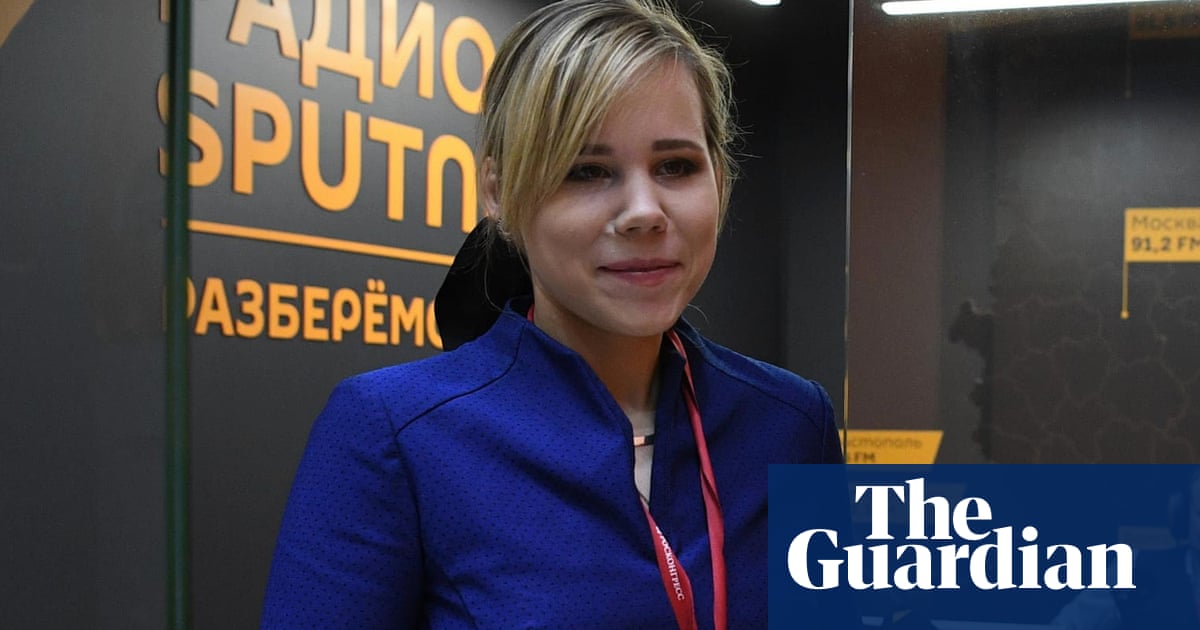
Good morning. On Saturday, Darya Dugina, the daughter of the ultranationalist Russian ideologue Alexander Dugin, was killed by a car bomb in Moscow. Yesterday, Vladimir Putin called it a “vile, cruel crime”, and Moscow said that Ukraine was responsible. But that description tells only a small part of the story of an attack in the Russian capital that is unprecedented in the six months since the war began.
There are many unresolved questions about the killing – and the military consequences that could flow from it. Today’s newsletter, with the Guardian’s Moscow correspondent Andrew Roth, is about some of the possible answers. Here are the headlines.
Five big stories
Environment | The Tory leadership frontrunner, Liz Truss, was responsible for cutting millions of pounds in funding earmarked for tackling water pollution during her time as environment secretary, the Guardian revealed.
Crime | A nine-year-old girl has been shot dead in Liverpool and two other people taken to hospital with gunshot injuries. Officers began a murder investigation after attending a house at 10pm over reports an unknown male had fired a gun inside the property.
US politics | Donald Trump on Monday filed suit against the US government over the FBI search of his Mar-a-Lago home, seeking to temporarily stop the bureau reading seized materials until a special court official can be appointed to review documents concerned.
Policing | The Metropolitan police were wrong to Taser a man on Chelsea Bridge and their “excessive and unnecessary force” contributed to his death, his family have said. Oladeji Omishore, 41, was hit by the electric stun gun on 4 June before climbing over a barrier and falling into the River Thames below.
Justice | Criminal barristers in England and Wales have voted in favour of an all-out strike next month in a clash with the government over jobs and pay, with 79.5% of members of the Criminal Bar Association voting to strike.
In depth: Setting the stage for ‘total war’
The site of a suspected car bomb attack that killed Darya Dugina in Moscow. Photograph: Investigative Committee of Russia/Reuters
What do we know about how the attack happened?
On Saturday night, Alexander Dugin gave a lecture at a festival at an estate in Moscow dedicated to the kind of hard-right pro-war worldview he is known for. He and his daughter Darya Dugina left, apparently in different vehicles. About five minutes after Dugina left, the Toyota Land Cruiser she was driving was blown up by a car bomb. Footage circulated on social media appeared to show Dugin standing next to the wreckage in a state of distress.
Reports in the Russian media on Monday claimed that an untraceable telephone may have been used to remotely detonate the device after it left a garage where CCTV had been switched off. They also claimed that the perpetrators may have been following the car when it blew up.
It’s hard to assess some of these claims with any certainty, Andrew said. Russian authorities have given limited evidence to back up their version of events, “but that doesn’t discount it”. But we can say with confidence that Dugina died in an attack which may have been aimed at her father – and it appears to have been carefully planned.
Who was Darya Dugina, and who is her father, Alexander Dugin?
“Most analysts who heard the news immediately thought it was Alexander who had been targeted,” Andrew said. Dugin exults in the nickname “Putin’s Brain”; but while some people in Putin’s circle have read Dugin’s work, it is less clear that he has the kind of sway on the Russian leader that would justify that title.
“He’s the kind of person you see on these gladiatorial screamathons you get on pro-Kremlin TV,” Andrew said. “But it’s important to understand that people like Dugin don’t make the final decisions – they’re just one pressure group in a complicated country.” As a rough comparison, think of some of the talking heads with tenuous links to the Trump administration who turn up on Fox News.
Dugin’s politics are extreme: he is an ultranationalist who advocates for a new Russian empire. At the same time, Andrew said, he is “a political opportunist – I remember him requesting €500 to give interviews”.
Russian ideologue Alexander Dugin at a ‘Battle for Donbas’ rally in Moscow. Photograph: Moscow City News Agency/AFP/Getty Images
“This is not the same as an attack killing a member of a Kremlin official’s family,” he said. “In those terms, he’s small fry. But he has an outsize profile.” That profile suggests another important feature of the attack: “He doesn’t have the security detail you would associate with somebody at the Kremlin. He’s a softer target.”
Dugina, meanwhile, was the editor of a disinformation website, United World International, and a TV pundit. Her politics were “close to a continuation of her father’s approach, but she was a little slicker,” Andrew said. She was also less prominent: “People in Moscow know who he is. You didn’t have to know who she was unless you were following this stuff closely.” Nonetheless, her pro-war rhetoric had earned her a place on UK and US sanctions lists, and it is not impossible she was targeted herself.
Who does Russia say was responsible?
One of the key questions in the aftermath of the attack was whether Russia would “frame it as terrorism or sweep it under the rug”, Andrew said; on Monday, the Federal Security Service (FSB) provided an answer. It accused Ukrainian intelligence services of carrying out the killing, and said the suspect was a Ukrainian woman in Russia with her 12-year-old daughter since July. The suspect had attended the festival, and fled to Estonia in a Mini Cooper after the bomb went off.
The FSB’s version of events appears to suggest that it was Dugina and not Dugin who was the target. Ukraine has denied responsibility for the attack, with one official noting: “Not many people here have heard of him, and nobody had heard of his daughter.”
The FSB has provided little evidence for its claims beyond footage of the woman driving across the border in and out of Russia. As Shaun Walker argues in this excellent analysis of the claimed chronology, there are plenty of reasons for scepticism. He noted how quickly the agency put its case together, and how remarkable it would be for a Ukrainian assassin with a child in tow to navigate Russia with impunity. “If true, it is a shocking FSB failure and, if false, it is a strangely self-incriminating tale to invent,” he wrote.
At the same time, Shaun notes, it is possible to see a motive to carrying out the attack from Kyiv. If so, it marks a departure from Ukraine’s strategy of retaliation within Russia, which has been confined to military and logistical assets near the border, and a string of attacks in Crimea, the Black Sea territory annexed by Russia in 2014.
Is that the only possible explanation?
No. One claim is that the attack was carried out by an underground opposition movement within Russia – “but I’m sceptical of that”, Andrew said. “From what we know the internal opposition haven’t done anything like this before. It would be a huge step up.”
There’s also the theory of a false flag attack carried out by elements close to the Kremlin as a pretext for retaliation. “There is no reason to do that if you want to intensify attacks on Ukraine or crack down on the opposition,” Andrew said. ”The Kremlin doesn’t need a pretext to do that – it does whatever it wants.” If so, the significant downside of spreading panic among Kremlin outriders doesn’t seem worthwhile.
Finally, some have floated the possibility that the killing was simply a crime tied to a business dispute involving Dugin or Dugina. But that doesn’t appear to align with the sophistication of the attack, even if the FSB’s claims should be taken with a grain of salt.
What are the likely consequences of the attack?
“This is unprecedented here,” Andrew said. “And there are already people writing that this is not the last act of terror we’re going to see. It will have scared people in Dugin’s circles. Until now, they have been able to agitate for war without thinking it would come for them.”
The larger question is whether claims of Ukrainian responsibility will lead to a Russian escalation. “It could set the stage for a new wave of political violence,” Andrew said, against so-called “decision making centres” and specific Ukrainian officials. But if more general attacks on Kyiv increase, it’s worth bearing in mind that such an escalation was already expected to coincide with Ukraine’s independence day on Wednesday.
Regardless, for the most belligerent voices in Russia – voices aligned with Dugin’s – the death of his daughter will be viewed as evidence for the strategy they already espoused. “Many of those who’ve been agitating for a more aggressive approach are demanding a response now,” Andrew said. “They want total war.”
What else we’ve been reading
Zoe Williams’s interview with Mick Lynch is a great primer on the RMT leader who has become something of a folk hero during Britain’s summer of strikes. Hannah J Davies, deputy editor, newsletters
With the Tory leadership contest apparently all but over, you might expect Rishi Sunak’s supporters to stop attacking Liz Truss. Instead, the criticisms have intensified. Rowena Mason’s analysis is an excellent guide to what one source calls a level of vitriol that “will be extremely difficult to heal”. Archie
A new release from Christine and the Queens and tours from Sugababes and Kendrick Lamar (as teased at Glastonbury) are among the autumn musical highlights helpfully compiled by the Guardian music team. Hannah
If dragons and thrones leave you cold, read this Stuart Heritage piece about how the real stars of TV this year are fictional chefs. (And do watch The Bear, one of the US shows he mentions, when it comes out – it’s amazing.) Archie
Water vapour, poison … or something else? I enjoyed this explainer from Dazed on how chemtrails conspiracy theories took over. Hannah
Sport
Football | Manchester United produced a superb performance to beat Liverpool 2-1 at Old Trafford. After a difficult start to the season, goals from Jadon Sancho and Marcus Rashford were enough to secure the win.
Football | England and Manchester City forward Ellen White has announced her retirement at the age of 33, saying all her football “dreams came true” in winning Euro 2022. The England women’s team’s all-time record goalscorer with 52 goals, White earned 113 caps for her country.
Cricket | In an exclusive interview with the Guardian, Ben Stokes described how a spate of anxiety attacks twelve months ago led him to consider retiring from cricket. Stokes said that he is now in a much better place but “it’s an ongoing process” and urged fellow sufferers to seek help.
The front pages
Guardian front page, 23 August 2022 Photograph: Guardian
The Guardian this morning leads with “Truss cuts millions from services that kept sewage off UK beaches” while the i has “Truss to risk ‘flying blind’ after Budget pledge U-turn”. The Financial Times says “UK inflation projected to top 18% as gas prices surge” while the Times says “Spiralling inflation is forecast to hit 18%” and the Express asks “how will millions cope” with the effects. “Snowflakes blocking A&E” – somewhat literally, the Metro reports, after a patient walked in demanding dandruff treatment. “Refugee host cash ‘should be double’” – that’s the Telegraph’s lead. “Justice is being held to ransom” – the Daily Mail paraphrases Dominic Raab as barristers go on strike. “Ronaldo doesn’t feel sorry at all … he left me crying and shaking” – the Mirror has a follow-up on an incident involving a smashed phone.
Today in Focus
Photograph: Giles Clarke/Getty Images
Revisited: The Division: New Orleans – part two
In 1995, Kuantay Reeder is sentenced to spend the rest of his life in prison for a crime he says he didn’t commit. He spends years doing hard labour in the fields of the prison, and trying to have his conviction overturned. By 2020, he has exhausted almost every legal avenue available to him. But 2020 is also the year that Jason Williams is elected to be the new district attorney of New Orleans. Will the creation of a new civil rights division in his office offer hope to Reeder?
Cartoon of the day | Stephen Lillie
Illustration: The Guardian
The Upside
A bit of good news to remind you that the world’s not all bad
Scott Oughton-Johnson, centre, who founded the Proper Blokes walking club. Photograph: Alicia Canter/The Guardian
A few years ago, Scott Oughton-Johnson was struggling with stress and anxiety following a long custody struggle. He’d had cognitive behaviour therapy from the NHS but was then, in his words, “back in the wild” and having to cope on his own, as Sirin Kale reports in the latest profile for the Guardian Angel series. So Oughton-Johnson launched a Facebook group with a video asking if any other men in his south London neighbourhood were up for a walk. Two years later, the Proper Blokes Club has a website and an active WhatsApp group, and men in neighbouring boroughs are organising their own walks. “Each day we do a check-in, and say, ‘Good morning. Hope everyone is all right. Have a good day,’” says Oughton-Johnson. “We’ve had incidents where people say, ‘I’m not in a great place; is anyone about?’ And people have gone and met them, or called them up.”
Sign up here for a weekly roundup of The Upside, sent to you every Sunday
Bored at work?
And finally, the Guardian’s crosswords to keep you entertained throughout the day – with plenty more on the Guardian’s Puzzles app for iOS and Android. Until tomorrow.