Here is one of the pictures featuring the Next Big Thing From Apple. Numerous images associated with the Next Big Thing From Apple can be utilized as your point of reference. Below, you'll find some additional pictures related to the Next Big Thing From Apple.
Save money on netflix hulu hbo max and discovery save money on netflix hulu hbo max and youtube save money on netflix hulu disney save money on netflix hulu youtube save money on netflix hulu hbo save money on netflix hulu july 2022 how to save money on netflix how to save money on groceries ways to save money on a tight budget how to save money on hotels easy ways to save money how to save money fast
Save Money on Netflix, Hulu, HBO Max and More With This Clever Trick
Save Money on Netflix, Hulu, HBO Max and More With This Clever Trick
House of the Dragon, She-Hulk, and the upcoming season of Cobra Kai will keep our TV screens occupied. There are lots of great shows and movies across dozens of streaming services, but even subscribing to five of them could cost you more than $50 a month. (Just look at the latest pricing news for Disney Plus.) We're going to show you a trick that can help save you money.
Think about this: You subscribe to one or more services like Netflix, Hulu, Disney Plus or HBO Max, stream until your favorite series ends its season run, then look for the next thing to watch. But is it worth keeping multiple subscriptions active if you're not actively watching anything on them? I don't think so.
Here's a breakdown on our money-saving strategy and some tips on how to become a master at it.
Read more:Best Live TV Streaming Service for Cord Cutting in 2022
Rotate your streaming services
For cord-cutters, leaving pricey cable packages behind in favor of streaming is a win for the wallet. Because we're able to sign up for monthly plans, it's easy to jump into a streaming service and jump out when prices increase or content dries up. According to Deloitte's 2022 Media Trends report, the biggest reasons people cancel their streaming subscriptions are because of pricing and lack of fresh content. Media companies call this behavior "churn." We're calling this the rotation method.
The benefits? You save cash and avoid content droughts. Let's say a hot title like House of the Dragon or The Real Housewives is set to premiere on a service. Note the total episode count and wait until they're all available at once on a platform. You cancel HBO Max, Disney Plus or other service and then, once the episodes are available, resubscribe to catch up on your faves. Alternately, you can start streaming a show midseason to cut costs. My monthly guide on which streaming services to cancel can help you keep up.
The downside? You won't have immediate access to every show you want to watch and will have to wait until the full season airs. And since many streaming services release new episodes weekly, rather than all at once, you might not be caught up at the same time as your friends. If you're someone who prefers to watch episodes immediately when they drop, you may decide it's worth it to have multiple subscriptions at a time. If you have patience, however, you can save some money.
Read more: Best Streaming Device for 2022: Our Picks from Roku, Google, Fire TV and Apple
The strategy can also work if you have a live TV streaming service to keep up with a particular sport. Once the season wraps up, cancel the service and save big, or move to a cheaper platform with fewer channels like Sling TV.
Would you want to pay for four months of Disney Plus to watch Andor when you can catch all 12 episodes in November for the price of one month?
Lucasfilm
Tip No. 1: Cancel your streaming subscription before getting charged
Set calendar reminders for your billing cycle and upcoming TV show or movie release dates. Give yourself enough warning to begin or end a subscription. Apps such as JustWatch, TV Time and Hobi help you track when and where TV shows and movies appear on a streaming service.
Tip No. 2: Snag a streaming service deal
Look for discounts on streaming services. For example, Starz is offering a special rate of $5 per month for three months, which cuts its regular monthly rate of $9 nearly in half. You can also take advantage of the Disney Bundle, which provides access to Disney Plus, Hulu and ESPN Plus in one package for a reduced price. And eligible Hulu subscribers can add on Disney Plus for $3. Lastly, be sure to check with your mobile carrier to see which ones offer free streaming subscriptions.
Read more: Best Streaming Service Deals From Verizon, AT&T and T-Mobile
Tip No. 3: Pick one or two default streamers
Subscribe to one or two must-have services for the year, and select only one or two more options to fit your monthly budget. Rotate the bonus service(s) according to what you want to watch, ensuring you don't miss your favorite shows while sticking to your monthly spending cap.
Tip No. 4: Stick to monthly billing
Avoid annual subscriptions and pay attention to your auto-renewal payment dates. Your billing cycle can help determine when it's the best time to quit a service, even if you've only signed up for a free trial.
Tip No. 5: Don't cancel your streaming service, pause it
Hulu allows you to pause your subscription for up to 12 weeks, and Sling has a similar option with stipulations. Check with your streaming provider to see if you can take a temporary break without canceling.
Give it a shot, and if you don't like it you can always resubscribe. For more excellent tips on streaming TV, check out this guide to Netflix's hidden tricks and our recommendations for the best internet services.
Apple, Google, Other Tech Giants Urge Texas to Drop Anti-Transgender Legislation
Apple, Google, Other Tech Giants Urge Texas to Drop Anti-Transgender Legislation
More than 60 companies, including tech giants Apple, Google, Microsoft, Meta and Salesforce, signed an open letter calling for Texas Gov. Greg Abbott and other lawmakers to abandon an order that equates gender-affirming medical care for transgender children to child abuse.
The letter, published in a full page ad in the Dallas Morning News on Friday, calls for an end to "efforts to write discrimination into law and policy." It was organized in partnership with LGBTQ+ civil rights group Human Rights Campaign.
"The recent attempt to criminalize a parent for helping their transgender child access medically necessary, age-appropriate healthcare in the state of Texas goes against the values of our companies," reads the open letter. "This policy creates fear for employees and their families, especially those with transgender children, who might now be faced with choosing to provide the best possible medical care for their children but risk having those children removed by child protective services for doing so."
See Also:In Texas, Big Tech's Liberal Leanings Take a Back Seat
In February, Abbott directed state agencies to investigate claims of children receiving gender-affirming medical care. The order also requires medical professionals and teachers to report children receiving care or face "criminal penalties."
The move drew swift backlash from civil rights groups and medical organizations. The American Medical Association supports "patient-led" gender-affirming care and has said attempts by states to prohibit care for minors patients are "inappropriate and harmful."
Apple CEO Tim Cook also spoke out about the issue in a tweet on Thursday. "As a proud member of the LGBTQ+ community, I am deeply concerned about laws being enacted across the country, particularly those focused on our vulnerable youth," Cook wrote. "I stand with them and the families, loved ones, and allies who support them."
Other companies that signed the letter include Box, Capital One, Cisco, Corning, Dropbox, Electronic Arts, Gearbox, IBM, Ikea, Johnson & Johnson, Patreon, PayPal, Pinterest, Shutterstock, SXSW, Unilever, VMWare, Yahoo and Yelp.
Take Better Vacation Photos: 7 Tips From a Travel Buff
Take Better Vacation Photos: 7 Tips From a Travel Buff
Here's a secret: You don't need an expensive camera to get great photos. Sure, it can help, and there are some photos only a "real" camera can take. However, you might be surprised at how good your photos can be just using your phone or an inexpensive camera. Learning these tips and techniques will help you if you ever upgrade to a big camera too.
Who am I to give this advice? I'm a travel writer and photographer, with over 150 photo galleries here on CNET taken all over the world. I have an expensive camera, sure, but I also use my phone more than you'd expect.
There's an overused, but still true, adage: The best camera is the one you have with you. So if you can get photos you like without spending money on a camera you might only use once or twice a year, even better.
While each phone is slightly different in its hardware and camera app, I've kept the following tips general enough that they should work on just about every device. More expensive phones can generally take higher quality images than cheaper phones, but you should be able to get great results no matter what you have. Also, if you're confused by any of the terminology, there's a glossary of some often-used camera terms at the bottom.
For more, here's how to take great vacation videos with your phone camera and some tips for getting great shotseven if your phone is old. Plus, here are the seven things you should always pack when you travel and what travel veterans recommend before leaving on vacation.
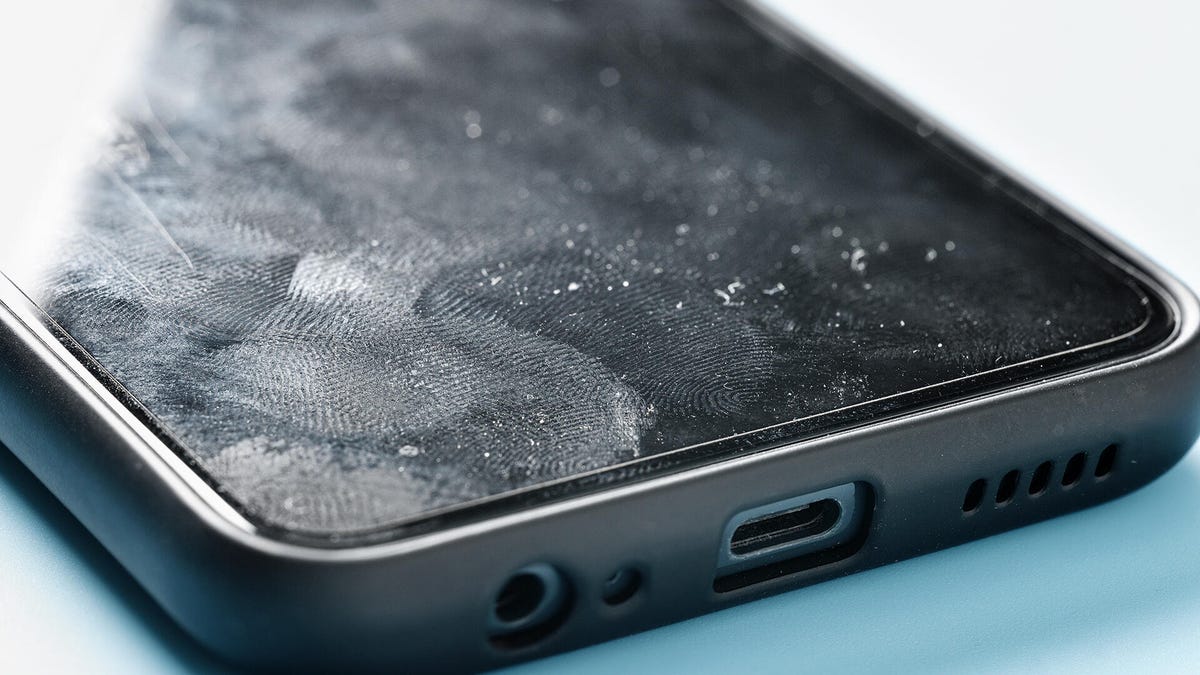
1. Clean the lens
Does your phone screen look like this? I bet the camera does too. Few things can improve the quality of your photos more than a clean camera lens.
Serhii Shleihel/GettyImages
I can't stress enough how important this is. Well, I guess I can stress it since I'm putting it first. I'm amazed how often I see washed out and smudged images that are the result of fingerprints or other schmutz on the camera lens. Just cleaning your lens will improve the quality of your images probably more than any other tip.
How often? I literally check my camera lens before every group of photos. Important ones, anyway. Phone comes out of my pocket, I check the camera lens.
Ideally, you'll use a microfiber cloth, the same sort that comes with glasses/sunglasses. If not, even a soft shirt will be fine. Nothing rough or coarse. Nikon sells a nice microfiber cloth that comes in its own tiny neoprene baggie. This keeps it clean and conveniently on hand.
If you have a real camera, always (always always always) use a lens cap. I get such anxiety when I see people pull a camera from a bag, or have it dangling around their neck, and there's no lens cap. Scratches are even worse than smudges since they permanently decrease the image quality possible with the lens. Lenses are the eyeballs of your camera. Treat them as such.
If you're worried about losing your lens cap, or hate juggling it while you're handling your camera, check out cheap lens cap straps. They're great.
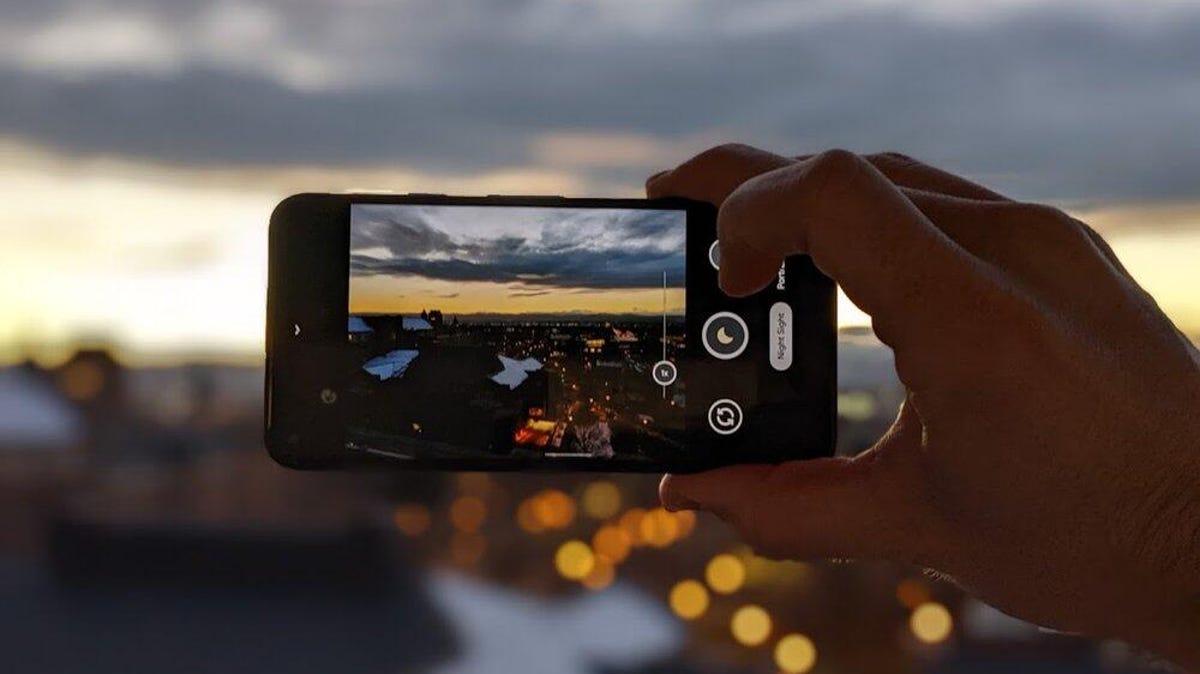
2. Tap the screen
The camera app on a Google Pixel
Google
This always seemed obvious to me, but I've regularly caused "ah-ha!" moments giving this advice. When lining up your shot, if it doesn't look right, tap the screen. Most phones are pretty good at figuring out what you're trying to photograph, but not always. Tapping on your subject, a person, animal, thing, whatever, and changes the focus and exposure.
Here's an example. Say you want to take a photo of your partner on the beach at sunset. Three beautiful things in one photo: partner, setting sun, ocean. The beach too I suppose unless you don't like sand. This is called a backlit photo, and it's extremely hard to do. Most often, your partner will be underexposed (see the terminology section below), as in they'll look dark/shadowed.
With most phone and camera apps, you can tell the camera where to expose the image. In this case, on your partner. The sun will then be overexposed (blown out), but you'll still get the idea it's a sunset and you'll be able to see your partner, which is generally the point, right? If your phone is able to take HDR photos, this image will look better than if it can't.
There is some editing you can do to make a photo like this look better, but that can only go so far. We'll get to editing a little later.
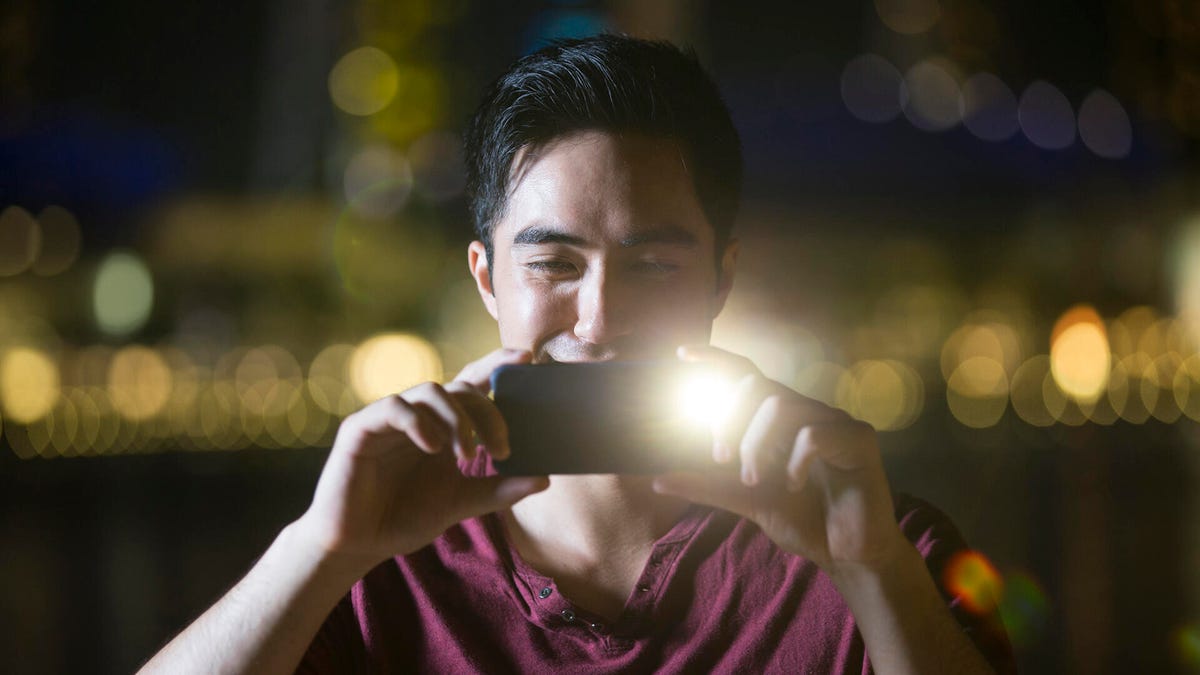
3. Don't use the flash
If you're this close to your subject, sure, try the flash. Most phones and cameras have decent low-light capabilities, so the image might look better with the flash turned off. It's worth checking.
Jenner Images/Getty Images
There's no such thing as a good camera flash on a phone. They're all terrible. Even the big add-on flashes for full-size cameras only work in certain situations. Believe it or not, in most cases you'll get a better photo turning the flash off completely. Not 100% of the time, however, so it's worth trying both options.
This is especially true if you're using a full-size camera with built-in flash. In every scenic place I've ever been there's at least one person trying to take a landscape photo and their flash fires. Flashes, even the best, only work within a few feet of the subject. Not only will they do nothing for landscapes, they'll wear down your battery faster at best, and mess with the exposure at worst.
You can turn off the flash in your camera app's settings. More on that below.
There is such a thing as a Slow Sync Flash photography that can be great when trying to photograph people in front of a twilight or night landscape. I'd classify this as a bit more advanced, but with a bit of practice the results can be great!
4. Get a selfie stick
Grandma's gonna find that reindeer and enact revenge.
Geber86/Getty Images
Selfie sticks are good. I have apishly long arms and I still have one, though I typically use it for my 360 camera. My 80-year-old dad has one. They're great. People should take more photos of themselves, of their family and friends, everything. I honestly don't get the hate. Photos are great! Preserve whatever memories you can. Future you will thank you.
To put it more pragmatically, a selfie stick will let you get a wider field of view of yourself, the people you're with and where you are. It just makes for a better photo.
When you're using them, certainly be wary of your immediate surroundings and the people near you. Some locations, especially crowded or dangerous ones, tend to restrict selfie stick usage. Keep an eye out for signage.
If you're not sure how much you'll use it, there's this $8 option on Amazon that extends to 28.7 inches, has a Bluetooth remote built in, and has a base that extends out into a tripod. It collapses down quite small too. For something a bit more elaborate and sturdy for an action camera, GoPro's own 3-way 2.0 configures to a wide variety of positions and angles. It's made for their cameras, of course, but many action cameras use the GoPro-style mount.
5. Get a better angle
This is Smeagol and he is a Very Good Boy.
Geoffrey Morrison/CNET
Most people just bring the phone or camera up to eye level and take the photo. Sometimes that's fine, but you can often get far better results with a different angle. Try holding the camera above your head and aim down. Photographing people from below tends to be rather unflattering, but slightly above often looks great. If you're taking a picture of a kid or animal, get down to their level. A dog's-eye-view of a dog is almost always a more interesting photo than a human's-eye-view of a dog.
This is an aspect where a selfie stick helps. Extend it out and you'll be able to easily frame that epic photo of you and the fam at the Grand Canyon where you can see you, the fam, and the Grand Canyon instead of you, parts of the fam, and a sliver of the Grand Canyon.
6. Learn your app's settings and modes
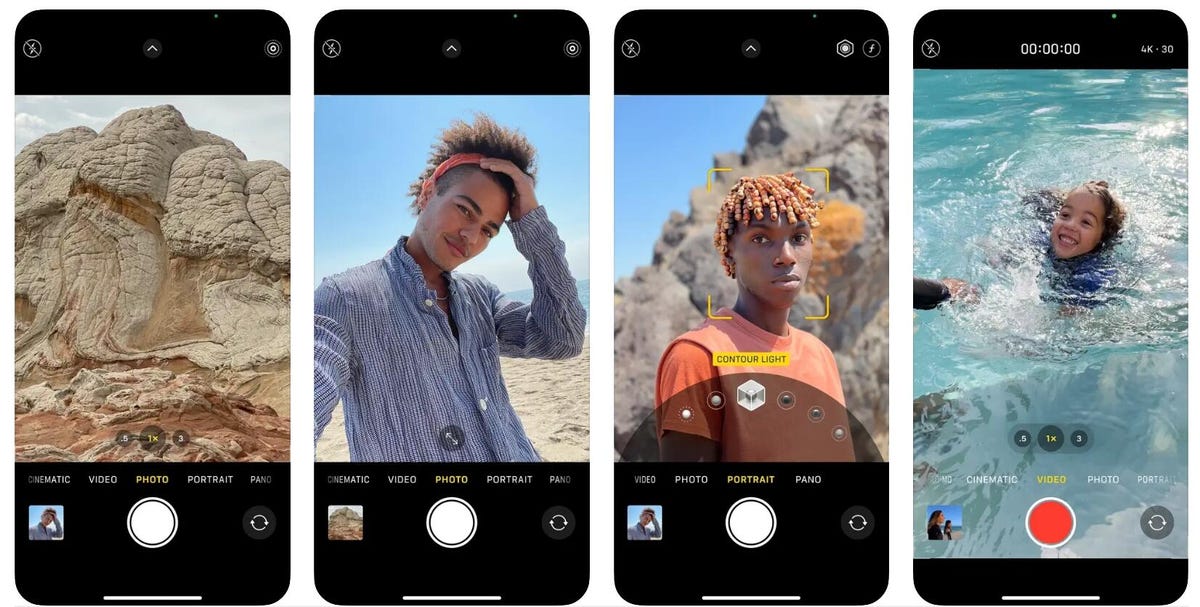
Changing the default settings on your phone's camera app can have big results.
Apple
Nearly every phone's camera app is capable of a variety of different photo styles. I'm always surprised to see how many people have no idea. Portrait mode, landscape mode and night mode all let you take vastly more interesting photos than the basic mode, all with just a few taps on the screen. Check them out, see what they do.
As far as settings go, generally the stock ones should be fine. It's worth checking to make sure it's taking the highest-resolution it can and that the flash is turned off (see No. 3). Some apps let you shoot RAW, more info on that in the terms section below.
I'd also recommend enabling manual controls, if available. They'll just take a few minutes to learn and they should help you get the photo you want when, like described in No. 2, the camera itself is struggling to do so.
Fun fact: Many camera apps have the option to use one of the phone's buttons as the shutter. If it's too hard for you to tap the screen while holding the phone, perhaps using the volume button instead will be easier. There are also timer functions that give you a countdown of a few seconds to get your pose and people ready.
Read more: How to Use the iPhone's ProRaw Mode to Make Your Photos Look Better Than Before
7. Editing
Note the different editing possibilities cycling through on the right.
Google
Nearly every great digital photo you've ever seen has gone through some amount of editing. Colloquially this is called "Photoshopping" but you don't need to pay Adobe for a subscription to that specific program. In fact, there are a lot of free options. Your phone might have some built in to its gallery already. Instagram has some great adjustments too. Beyond those, check out CNET's best free and paid photo editing apps for iPhone and Android.
The easiest way to learn is to just pick a photo and see what all the options do. Visually, it will be pretty obvious what things like contrast, brightness, and so on actually do. Most of them do the same thing on your TV, if you're interested.
Slight tweaks to contrast, brightness, and color will do wonders for any image. You can "slap a filter on it," sure, but starting with a better base image will usually make it look better after you apply a filter too.
Bonus! Cloud backup
Ymgerman
While not a camera tip per se, I very strongly recommend getting some sort of cloud backup for your photos. Integrated with your phone this means that whenever you're on Wi-Fi all your photos will get backed up to the cloud. With a real camera you can download them to the camera's phone app, and usually they'll get sent to the cloud from there. Sometimes, like with GoPro, there's an extra step required to save them to your phone's gallery.
With a cloud backup if you lose your phone or camera, you won't lose your photos. This saved me in a big way when I got robbed on an overnight train in Italy, and another time when a hard drive crashed on me.
Also, never forget, there are only two types of hard drives: Those that have failed, and those that will fail.
Check out our six ways to keep your photos safe in case of an emergency and best cloud storage services for 2022.
When to upgrade
As you get to know your phone's camera, you'll start to find its limitations. A limited zoom is going to be the most obvious, followed by noise in the image, a lack of settings, and so on. Some of you will start wanting more. It's a logical progression, one I bounded through myself, from inexpensive options to more and more expensive options. It's a pricey hobby, to be sure. Buying used can help.
I recommend checking out my Best Camera for Summer Travel article as a next step. It's aimed towards vacation/travel options, but should give you an idea what's out there and what the upgrade steps look like.
Terms and words and stuff
You'll find these terms when reading about actual cameras, as well as about phone cameras and within apps.
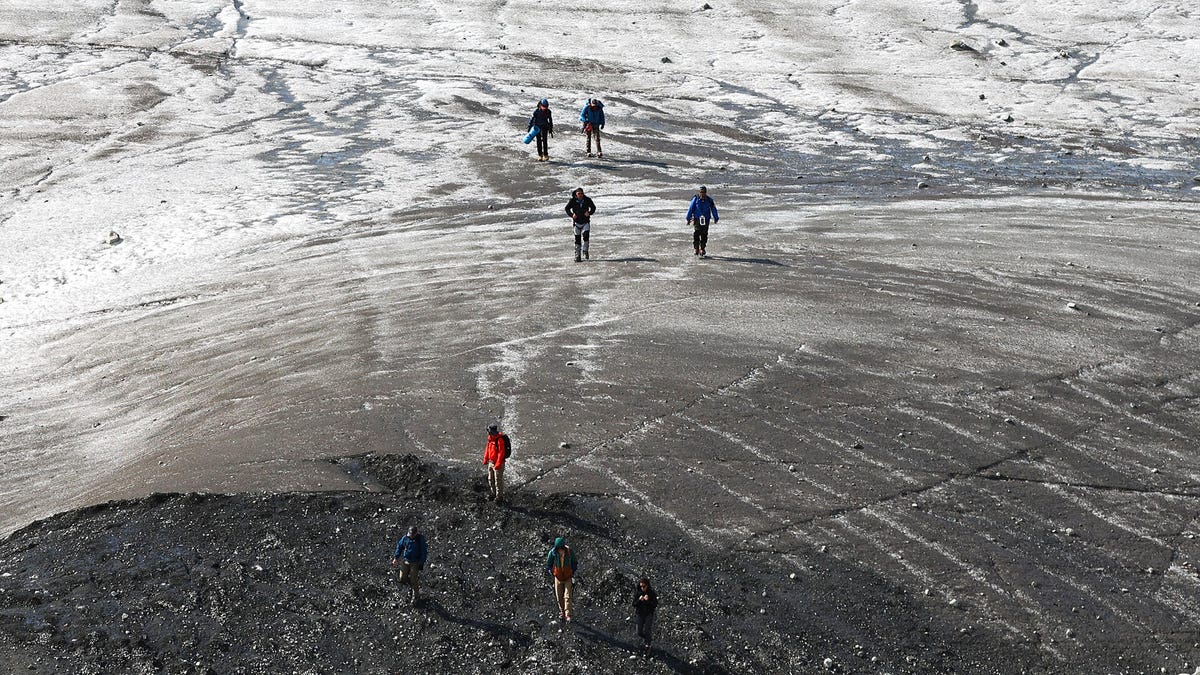
Wide angle: A type of lens that typically captures more than what you'd see with your eyes in one glance. The whole forest instead of a single tree, so to speak.
A wide angle photo, taken with my phone, of the Root Glacier in Wrangell-St. Elias National Park. Note the tiny people in the lower left.
Geoffrey Morrison/CNET
Telephoto: The tree, not the forest. Telephoto lenses let you capture images where you seem right up close to a subject but were actually far away.
Standing in the same place as the above photo, but with a 135mm telephoto lens on a Canon R6. These are the same hikers, a few minutes earlier, as they made their way across the glacier. Note how much closer they seem.
Geoffrey Morrison/CNET
SLR/DSLR: Single Lens Reflex/Digital Single Lens Reflex. Historically the "big, real camera." Usually a shorthand for a camera where you can change the lenses. Gradually being replaced, even among expensive cameras, with mirrorless versions.
Mirrorless: Lacking the moving mirror found in all SLR/DSLR cameras. What this means for you is the cameras are slightly smaller and lighter. Offered in a wide variety of prices. At the top end they're replacing professional DSLRs.
35mm equivalent: Refers to 35 millimeter film, the old standard, as a way to describe how wide, or telephoto, a lens is. For example, a 35mm-equivalent 12mm lens is wide, a 100mm lens is telephoto. Used as a relative reference since the actual focal length will vary depending on the size of the image sensor.
Optical zoom: This is the only real zoom. Uses glass or plastic lenses to make a subject appear closer.
Digital zoom: Best to think of this as "fake" zoom. It merely crops the image, and then upconverts it. Doesn't make the subject more detailed, just larger. OK if there's no other option, but the image quality is vastly inferior to optical zoom.
Underexposed: A subject or image that's darker than desired.
Overexposed: A subject or image that's brighter than desired.
RAW: An image format that's just very lightly processed data from the image sensor. At the professional level, RAW files are used almost exclusively as there is more range available to edit. However, you need to be knowledgeable with photo editing and have an app/software that can edit your camera/phone's RAW files. Not for beginners.
As well as covering TV and other display tech, Geoff does photo tours of cool museums and locations around the world, including nuclear submarines, massive aircraft carriers, medieval castles, epic 10,000-mile road trips, and more. Check out Tech Treks for all his tours and adventures.
He wrote a bestselling sci-fi novel about city-size submarines, along with a sequel. You can follow his adventures on Instagram and his YouTube channel.