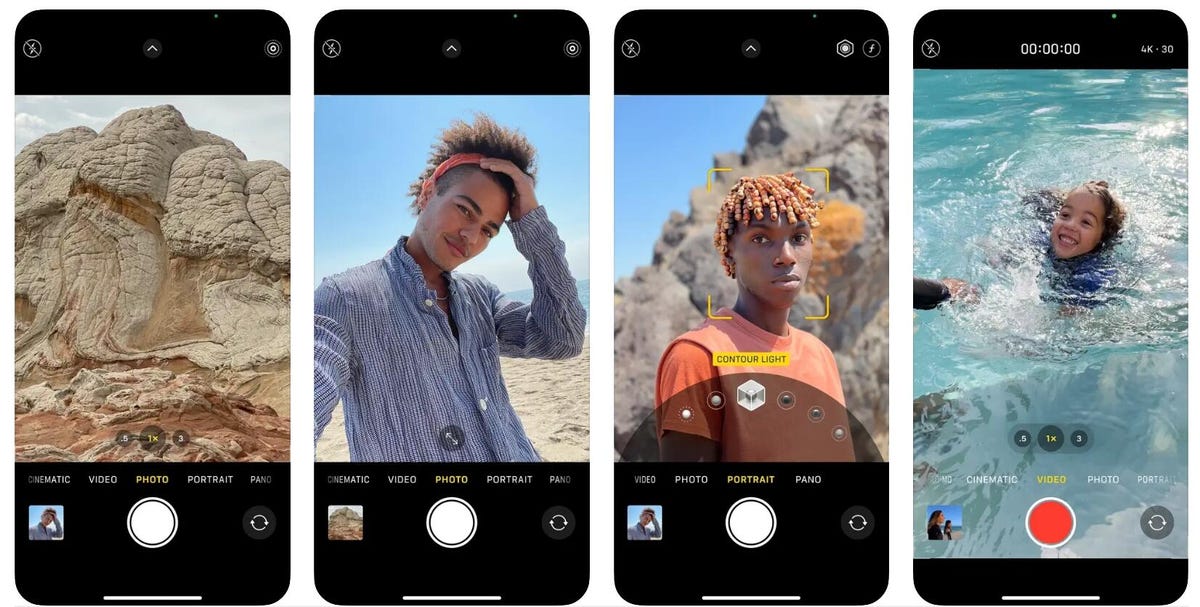
Here is one of the pictures featuring the One Two Three App. Numerous images associated with the One Two Three App can be utilized as your point of reference. Below, you'll find some additional pictures related to the One Two Three App.
One-Third of Apple and Google Apps Are So Outdated They Could Get Removed
One-Third of Apple and Google Apps Are So Outdated They Could Get Removed
A new report finds that 1.5 million apps on both Apple's App Store and Google's Play Store haven't been updated in two years or longer and get hidden or removed entirely according to recent policy changes.
These "abandoned" apps constitute one-third of the combined app catalogs of the App Store and Play Store, according to the report from analyst firm Pixalate. Google's store had around 869,000 apps that had been neglected for more than two years, while Apple's store had around 650,000. After two years without an update, apps are more vulnerable to exploits, which is why Apple and Google have introduced new policies in recent months that punish apps neglected by their developers.
If an app hasn't been updated in two years, it will be hidden from view on the Google Play Store and won't appear in search results. Apple's policy for outdated apps is far less clear, though at least one developer said their app would be removed because it was more than two years old.
Plenty of apps are more up to date, per the report, with 68% of apps on both stores, or over 3.1 million apps, updated within the last two years. Apps that updated more frequently tended to be those with far more downloads: 84% of the apps with over 100 million downloads had been updated in the last six months.
Neither Apple nor Google responded to comment by time of publication.
TunnelBear VPN review: The overpriced ursine has trouble living up to the hype
TunnelBear VPN review: The overpriced ursine has trouble living up to the hype
TunnelBear's gotten a lot of hype in the last couple of years. It was touted by Wirecutter as the New York Times' top virtual private network pick for several months through 2020, US News and World Report ranked it 6th for the year, and PC Magazine and TechRadar liked it too. But when I look at TunnelBear after a year spent under the hoods of its VPN competitors, I just don't get the excitement.
Sure, TunnelBear's speeds are reasonable. And yes, like some of its competitors, it offers yearly transparency reports and has been audited independently. But it's also a Canadian business owned by US-based McAfee, so if you're looking for subpoena-proof international privacy, you're playing with fire. It holds a paltry 23 server locations from which you can't manually choose your server or even a city. It doesn't offer Tor-over-VPN, it only offers split tunneling on Android, and it can't even unblock Netflix.
Read more: The best VPN service of 2022
Why do people like this VPN so much? What am I missing? Is it the cutesy little bear animation that you see when you click the connection button? Is that what's got everyone excited? No judgment. I just want to know.
I know it can't be the cost that makes it so appealing. The TunnelBear plan with the best value is $120 for a three-year subscription with a limit of five connected devices. Meanwhile, competitor Surfshark costs half as much at $60 for a two-year subscription, outperforms TunnelBear on every privacy and feature front, has likewise been independently audited, and allows unlimited connected devices.
By every measurement I've got, TunnelBear is just a slightly overpriced yet middling offering within a privacy-averse jurisdiction, and has all the configuration options and visual appeal of Baby's First VPN by PlaySkool.
Editors' note, Feb. 9, 2022: The VPN industry has undergone significant change in the past few months, with all three of our top VPN choices announcing major changes in corporate ownership. In December, ExpressVPN announced that it had officially joined Kape Technologies, a company that already owns several other VPNs and has raised privacy concerns in the past. In February, NordVPN and Surfshark announced the two companies were merging, though they'll continue to operate autonomously. We're in the process of reevaluating all of our top picks in light of these changes. We will update our reviews and, if necessary, our rankings to account for this new competitive landscape.
Speed
Average speed loss: 63%
Number of servers: 1,800
Number of server locations: 23
Number of IP addresses: Unknown
I ran speed tests using TunnelBear over three days with dynamic IP addresses, in two locations, using both wireless and ethernet connections. Internet speeds in the US vary by state and provider. And with any speed test, results are going to rely on your local infrastructure. Hyperfast internet service will yield higher test speed results.
That's one reason I'm more interested in testing the amount of speed lost (which for most VPNs is typically half or more) across both high-speed and slower connection types, and in using tools such as speedtest.net to even out the playing field. In the case of TunnelBear, nearly 63% of average internet speed was lost. That average includes both the superfast speeds recorded for nearby servers, and the sluggish speeds recorded for the more distant servers.
Read more:All the VPN terms you need to know
Speeds I recorded for TunnelBear placed it near the middle of the VPN pack. It struggled to catch up to the popular NordVPN's overall 32% speed loss, and catching up to other speed-intensive VPNs such as Surfshark and ExpressVPN (which in previous tests experienced overall losses of just 27% and less than 2%, respectively) could be an even bigger problem. TunnelBear's speeds have steadily improved over the years as measured by other review and testing sites, though, and the US scores I recorded saw a speed loss of only 54%.
In my tests, US servers delivered the peak speed of 176Mbps, with an average of 112Mbps. That's more than fast enough to torrent, game, or browse. Non-VPN speeds in the same round averaged about 244Mbps. UK speeds came in second place, averaging 104Mbps. Australia followed in third place, with an average 100Mbps.
Speeds bottomed out in Singapore, though, with a low of 4.95Mbps and an average speed of 68Mbps. TunnelBear's connections routinely faltered when testing in the region. The lowest averages were found in Europe, at 65Mbps overall. As has been the case for every VPN I've tested, German servers underperformed compared to French.
Security and privacy
Jurisdiction: Canada, with US parent company
Encryption: AES-256
Leaks: None detected
Includes kill switch
You want to unblock Netflix, BBC iPlayer, or another streaming service? TunnelBear isn't the best choice. You want to torrent? Yes, TunnelBear offers P2P torrenting on all of its servers but its home jurisdiction of Canada -- a member of the Five Eyes international mass surveillance and intelligence-sharing agreement -- is known to come down hard on copyright violations when they're caught. As is the US, where its parent company McAfee is headquartered.
Notably, TunnelBear isn't making the same "no logs" promise that many other VPNs make. It is open about collecting what would normally be considered very limited connection logs -- as opposed to usage logs -- which include data on your bandwidth use and whether you've used TunnelBear in any given month, and which version of the app you've installed on which OS.
I prefer a VPN keep no logs, especially a VPN located inside a country that's part of an international intelligence-sharing ring. But TunnelBear is holding its own in the transparency competition among VPNs by publishing the results of its independent security audits and annual transparency reports that are presented in plain, easily understood language. Those reports tell us that from September 2018 to September 2019, TunnelBear received 10 government or legal requests for user information.
Those reports also tell us something arguably more important: When TunnelBear is alerted to a significant service or security issue, the company addresses and fixes it. When it contracted Cure53 for its third independent security audit (released in January), TunnelBear set about fixing issues post-haste. While TunnelBear isn't the only VPN with routine audits and transparency reports, this is the kind of habitual transparency we should all expect from every VPN on the market.
No IP address, DNS or other potentially user-identifying data leaks were detected during our testing, but in the past TunnelBear was observed to have been leaking WebRTC information on at least two occasions. TunnelBear's encryption is standard AES-256, and it supports Perfect Forward Secrecy, which means it frequently changes encryption keys to avoid security compromises.
I'd like to see TunnelBear offer the latest VPN protocol WireGuard, but for now it offers only OpenVPN and IKEv2 protocols. The software includes a kill switch, which prevents network data from leaking outside of their secure VPN tunnel in the event the VPN connection fails. TunnelBear doesn't offer a multi-hop option nor Tor-over-VPN, but it does offer limited split-tunneling in its Android client so you can pick which of your computer's connections you want to encrypt. However, split-tunneling is not available on any other OS.
In a recent release, TunnelBear claims to have successfully circumvented a nationwide VPN block in Iran, while offering 10GB worth of free VPN usage to individuals inside the country. Perhaps more interesting, though, is that TunnelBear appears to have become the second app to have built support for a notably effective anti-censorship extension into its Android application. These moves toward expanded privacy under encroaching internet restriction suggest promising advancements in TunnelBear's security priorities.
Cost
Usability: Nearly impossible to get wrong, at times oversimple
Platforms: Windows, Android, MacOS, iOS, (limited) Linux
Price: $3.33 per month, or $120, for a three-year plan
Number of simultaneous connections: Five
I don't usually dig into the aesthetics of VPN software outside of how easily they might allow a newcomer to get the hang of a product, or how intuitively organized and accessible the software's configuration options are. But nearly every review of TunnelBear ends up noting the unavoidable cuteness of its design as a standout feature, and it's worth pointing out why it works and how it could help users in the longer run.
My general distaste for cutesy-tech aside, I get it: In a world full of wanna-be edgy VPN software aesthetics, a cartoon bear doing silly things is an inviting visual queue of user friendliness. VPNs seem complicated and internet surveillance is scary; a teddy bear is comforting and simple. The choice of a bear as a marketing mascot is all the more clever for its dual symbolism: Where other VPNs rely on abstract logo design (or on less cuddly animals like vipers or sharks), a bear mascot stands out from the crowd by suggesting powerful protection of the user. In some design elements, TunnelBear's mascot is a cub. In others, it's a giant grizzly using its laser eyes to attack fighter jets.
When you're spending more than you should for a product with less features than its competitors, however, the cuteness stops being cute and becomes infantilizing, insulting even. It's more frustrating than helpful to be presented with an interactive map for choosing your desired country when there's only one "tunnel" per country.
TunnelBear has cute, accessible branding and design, but its features are lacking.
TunnelBear
But I'm not suggesting TunnelBear grow up and polish its playground look. The mascot strategy is brilliant, and the branding too strong to let go. What's more, the cartoonish aesthetic provides TunnelBear a better opportunity at creating VPN power users than perhaps any other VPN on the market. If Joe Camel could persuade kids to light up a cigarette, TunnelBear's grizzly can persuade VPN newcomers to understand encryption and internet censorship.
To take advantage of this opportunity, TunnelBear should put some elbow grease into developing a stronger suite of features. Why not introduce WireGuard and let users experiment with different security protocols by allowing them to choose what kind of armor the bear wears (the lighter the armor, the faster he tunnels but the less protected he is)? Why not give the bear more than one cartoon tunnel per country and illustrate the differences in server load by showing the number of other bears queuing through each tunnel?
More playfulness in design is needed across privacy tech as its first-time users flee increasingly invasive domestic surveillance and strive to secure their browsing across an often too-steep learning curve. I don't think we should kill TunnelBear's cutesy-tech mascot, but for the money he demands, we should at least put him to work.
On a per-month breakdown, the least expensive TunnelBear plan is its $120, three-year plan. Given the volatility of the competitive VPN field, though, three years is a long time to commit to a VPN provider, especially one like TunnelBear -- one with a 48-hour wait time on its troubleshooting ticketing system instead of 24/7 live chat support, one which "may offer refunds on a case-by-case basis," and one whose trial period is only available for its free version (which has limited use and features). You can do better. So can TunnelBear.
You can also go month to month for $10, or pay $60 upfront for a single year. If you're going to spend $60 on a VPN, though, you might as well spend it on Surfshark's two-year plan, rather than TunnelBear's one-year. Either way, TunnelBear accepts payment via credit card and Bitcoin. Unlike other VPNs, it doesn't take PayPal. Also unlike other VPNs, it doesn't support Amazon Fire Stick or Android TV.
Galaxy s21 ultra 5g review samsung s premier phone is pretty a noun galaxy s21 ultra 5g review samsung s premier phone is pretty an adjective galaxy s21 ultra 5g review samsung s premier phone is pretty an adverb galaxy s21 ultra 5g review samsung s premier phone holder galaxy s21 ultra 5g review samsung s20 galaxy s21 ultra 5g review samsung s 10 galaxy s21 ultra 5g review samsung sound galaxy s21 ultra 5g review samsung phones galaxy s21 ultra 5g 128gb unlocked galaxy s21 ultra 5g 512gb iphone 13 pro max vs galaxy s21 ultra galaxy s21 ultra review
Galaxy S21 Ultra 5G review: Samsung's premier phone is pretty badass
Galaxy S21 Ultra 5G review: Samsung's premier phone is pretty badass
The Galaxy S21 Ultra 5G, unveiled alongside Samsung's Galaxy S21 and S21 Plus phones, proves that sometimes you have to do something twice to get it right. While just as bold as last year's Galaxy S20 Ultra, the S21 Ultra is a refined second take on the concept. There's still the 100x Space Zoom, but it's easier to use. There is still the "big for the sake of being big" design, but it looks more appealing. And there's still a high price, but at $1,200 (£1,149, AU$1,849) it costs $200 less than the S20 Ultra in the US.
If you want the absolute best specs and features, the S21 Ultra is undoubtedly appealing. The phone will also attract camera nerds, thanks to the improvements. The addition of S-Pen support -- it's the first Galaxy S phone to support the stylus -- will likely catch the eye of Galaxy Note users looking for a different option.
Like
Gorgeous phantom black finish
Two telephoto cameras
The screen is spectacular
S-Pen support
Don't Like
It's heavy
Lacks a microSD card slot
$1,200 is still expensive
Last year's Ultra model seemed like it came out of nowhere. It was a phone all about excess that, by sheer fate, was launched at the beginning of a global pandemic and recession. Its bold, behemoth take on the Galaxy S line was undercut by its $1,400 (£1,199, AU$1,999) price and issues with its nearly domino-size camera system.
Overall, the S21 Ultra is a major update both in terms of hardware and software over the S20 Ultra. And when you factor in a lower price, it all kind of makes sense. And that's why the Samsung Galaxy S21 Ultra earned a CNET's Editors' Choice Award. The whole Galaxy S21 lineup is available to purchase -- here's how you can buy one.
Read more: Samsung Galaxy S21 vs. S21 Plus vs. S21 Ultra
The Galaxy S21 Ultra has the best black finish
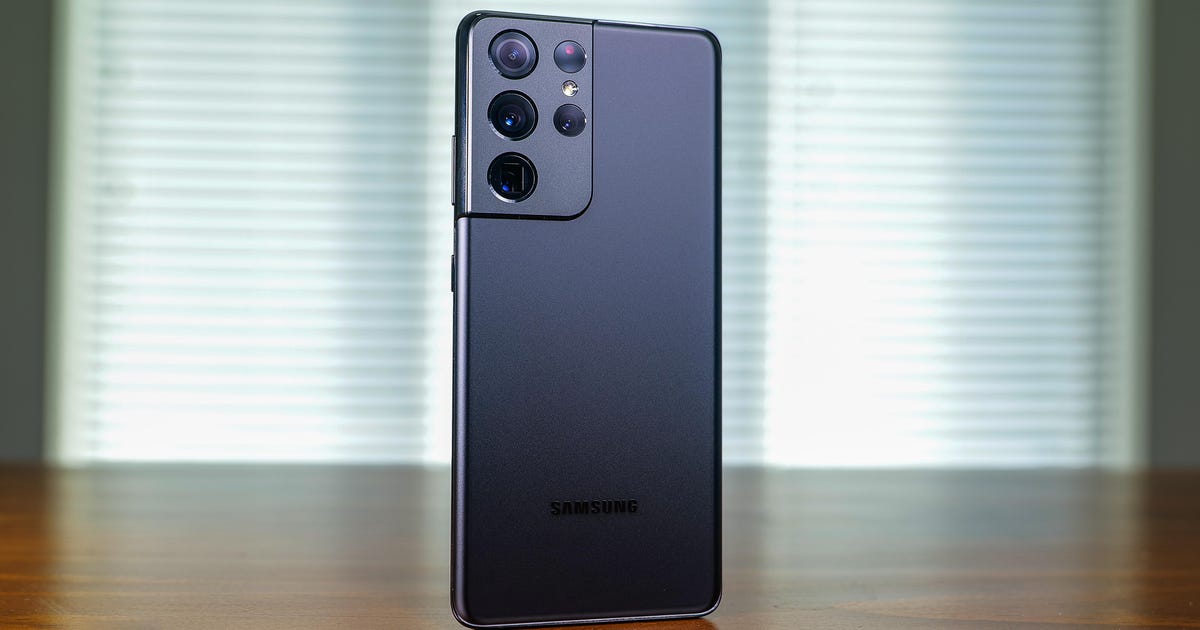
I wouldn't call the S21 Ultra's design radically different, but my review unit has the best black finish I've ever seen on a phone. It's the stuff that goth dreams are made of. The color is called phantom black, and seeing it in person makes you understand why Samsung made a nearly three-minute video explaining the blackest black finish. The S21 Ultra also comes in phantom silver and there are limited-edition phantom finishes in titanium, brown and navy, which can only be found on Samsung's website.
The camera bump is large and melts into the sides of the phone, which are glossy black. And while the regular S21 and S21 Plus looks snazzy in their two-tone colors, the all-black S21 Ultra is cool, elegant and badass all at the same time.
Read more: Galaxy S21 drop test: It broke on the first drop
The S21 Ultra is heavier than last year's S20 Ultra and the iPhone 12 Pro Max. It's the second heaviest phone I have tested in the past year, just behind the Asus ROG Phone 3.
The display is brighter and adds S-Pen support
Around the front is one of the most impressive displays I've seen. It has a Wide Quad HD resolution and a variable refresh rate between 10 and 120Hz, which is determined by what's on the screen. And just to be clear, it can be set to 120Hz without the hit to resolution that the S20 Ultra had. The 6.8-inch display is bright and the contrast is gorgeous. Covering the front and back is Corning's Gorilla Glass Victus.
Support for the S-Pen means you can draw, write, edit photos and sign documents on the S21 Ultra.
Sarah Tew/CNET
Under the screen is a larger ultrasonic fingerprint reader which feels peppy. I had a hard time telling if it was faster than the one on the S20 Ultra. The display also has S-Pen support.
The Galaxy Note phones line always tempted me, but I didn't think I'd use the S-Pen enough to justify getting one. I like the iPad Pro-Apple Pencil approach Samsung took with the S21 Ultra. Without an S-Pen, you can still enjoy using the S21 Ultra. But if you're S-Pen curious, you can buy a new S-Pen or find an old one and it will work. There's a lot you can do like draw, take notes and sign documents. I love editing photos and making adjustments with the S-Pen.
There are a few S-Pen considerations. The S21 Ultra doesn't come with an S-Pen and doesn't support Bluetooth or gesture functionality. For example, the S21 Ultra can't send you a notification if you leave your S-Pen behind. Also, the Ultra doesn't have a built-in slot to store an S-Pen. Samsung does sell cases for the phone that include S-Pen storage.
The S21 Ultra has two telephoto cameras
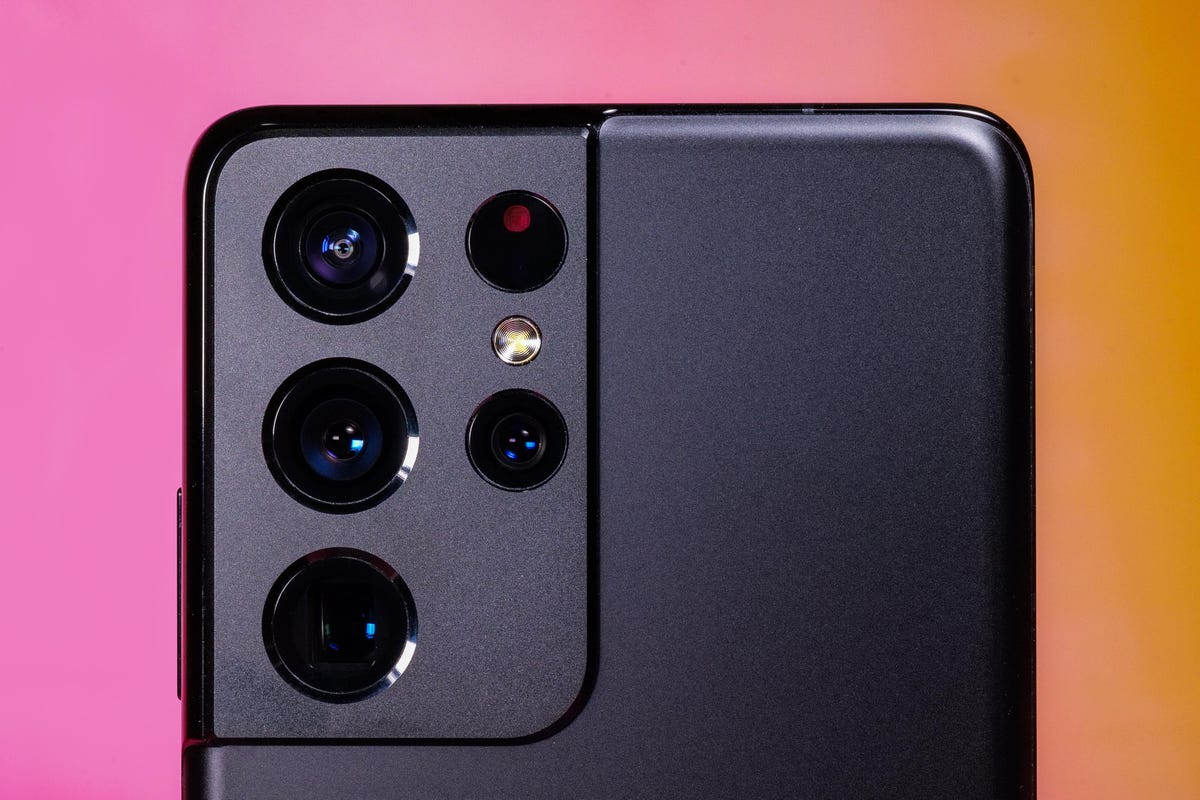
The S21 Ultra's camera system received several significant updates. There are four rear cameras: one wide, one ultrawide and two telephoto cameras. The time-of-flight sensor on the S20 Ultra is gone; in its place is a laser autofocus module.
The 108-megapixel sensor on the main camera is new and has better autofocus for both photos and videos. There's even a new focus enhancer tool that pops onscreen to help the phone focus faster. The tool looks like it might be switching to a wider view to do so.
Read more: S21 Ultra vs. iPhone 12 Pro Max vs. Pixel 5: Which phone has the best night mode?
There are four rear cameras: wide, ultrawide and two telephotos.
Patrick Holland/CNET
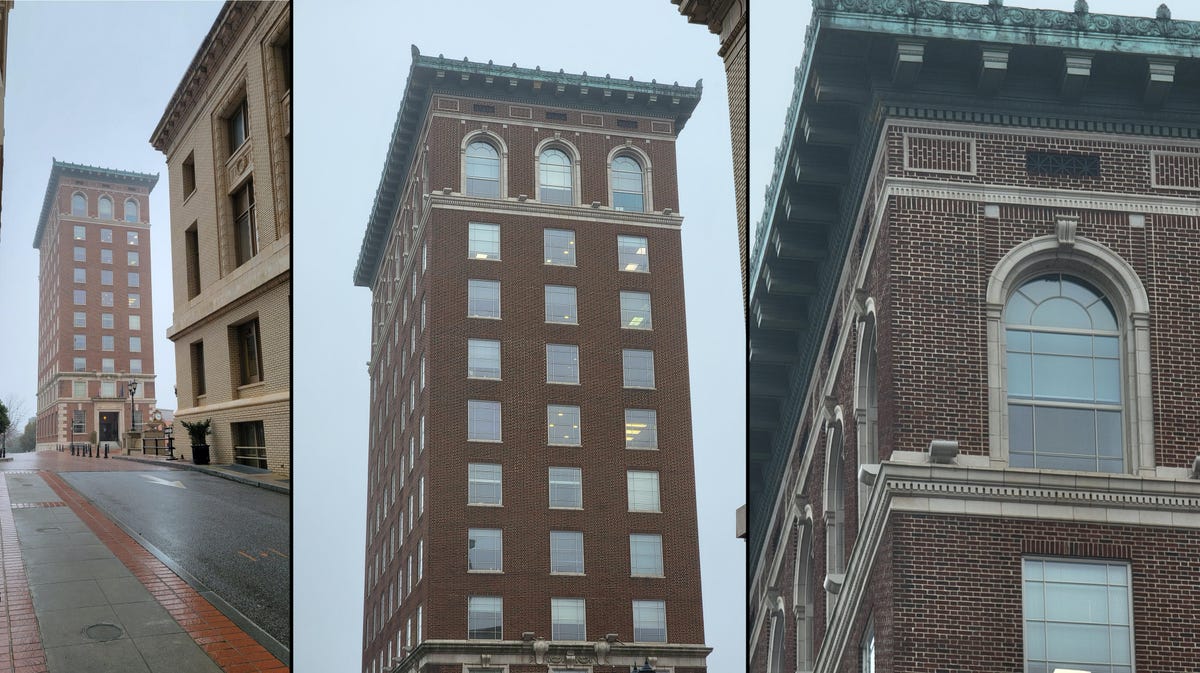
The dual-telephoto cameras add a number of benefits. One has 3x magnification and the other 10x. This means when you zoom in, there are two places in your zoom range where the image isn't cropped and where you'll capture the best image quality. Another benefit is stability. The two cameras are paired to help make zooming in, even at 100x, easier and more steady.
At 30x or higher, a zoom guide appears to help you find the specific spot that you're zoomed in at. You can lock it so the cameras don't move, which turns the guide yellow. This works quite well. Obviously you have to be careful not to move the phone around too much, but it's less finicky and frustrating than the S20 Ultra.
Photos from the S21 Ultra are excellent, with good detail and a wide dynamic range. There is a 108-megapixel mode, but I found that the 12-megapixel photos that come from pixel binning look consistently great.
Below are several photos I took with the S21 Ultra.
The main camera was set to 12 megapixels, which uses pixel binning to combine nine pixels into one.
Patrick Holland/CNET
One benefit of pixel binning is that it can bring out the details in a photo. Notice the different textures and details.
Patrick Holland/CNET
I used the single-take mode in the camera app to capture photos and videos of this cute dog. Here's one of the pictures my S21 Ultra chose.
Patrick Holland/CNET
There's so much for the S21 Ultra to capture correctly here: the barren tree branches, the water and the white fluffy clouds in the blue sky.
Patrick Holland/CNET
Here are three different photos I took from the exact same spot using the wide 1x camera (left), the 3x telephoto camera (middle) and the 10x telephoto camera (right).
Patrick Holland/CNET
In low light, the S21 Ultra's night mode is outstanding. Flaring on the lens is minimized and photos look bright without a bunch of image noise or noise-reduction smearing. Below are a few night mode photos I took:
This might be my favorite night mode photo of the bunch.
Patrick Holland/CNET
Here's another night mode capture. I like how the S21 Ultra brought out the colors in the sculpture.
Patrick Holland/CNET
Night mode on any of the S21 Ultra's cameras. I took this shot with the ultrawide.
Patrick Holland/CNET
For selfies there's the same 40-megapixel camera that the S20 Ultra had. You now have an option to change the color tone to either bright or natural which is excellent.
Here is a selfie I took with the natural setting.
Patrick Holland/CNET
Samsung added the ability to take raw 12-bit color photos. There's a new video feature called Director's View, which gives you a thumbnail preview of the video feeds coming from all of the cameras on the phones. As you record, you can switch between them. Within Director's View, there's a vlogger setup that gives you a side-by-side video view or a stacked one if you're shooting vertically. This means you can record yourself with the selfie camera and show what you're seeing or reacting to with any of the rear cameras.
On paper, Director's View seemed like something I might try once and not really use. But after some time using it, some people will definitely be into the feature. A downside to Director's View is that the final video is saved in HD instead of 4K or 8K. I'd love to see a similar thumbnail preview interface of all the rear cameras when recording a regular 4K video.
I'm excited to pit the S21 Ultra and its cameras against the iPhone 12 Pro Max and Google Pixel 5. Each phone takes a different approach to photography and will appeal to different people.
S21 Ultra has a Snapdragon 888 chip and 12 or 16GB of RAM
Powering the S21 Ultra is the new Qualcomm Snapdragon 888 chip, along with 12GB of RAM, or 16GB in the most expensive model -- which also has 512GB of storage (see the chart below for prices). In my benchmark tests, the S21 Ultra scored better than last year's S20 Ultra. And in use, it handled everything I threw at it, even playing Xbox Game Pass Ultimate games on it.
You can use the Xbox Game Pass Ultimate app to play Xbox games on your S21 Ultra.
Sarah Tew/CNET
Supplying juice to the phone is a 5,000-mAh battery. I've easily been averaging a day and a half on a single charge. Battery tests on the S21 Ultra for continuous video playback on Airplane mode clocked an average of 22 hours and 57 minutes with the refresh rate set to Auto 120Hz. That's actually an hour less than the S20 Ultra lasted in the same test. Though keep in mind, in real world use my colleague Jessica Dolcourt found the S20 Ultra's battery drained like it was being bitten by a "thirsty vampire."
Below are the results of my benchmark tests for the S21 Ultra.
3DMark Slingshot Unlimited
Note:
Longer bars indicate better performance
Geekbench v.5.0 single-core
Note:
Longer bars indicate better performance
Geekbench v.5.0 multicore
Note:
Longer bars indicate better performance
Android 11 and 5G support
The Galaxy S21 Ultra runs Android 11 with Samsung's OneUI 3.1 top layer. And I like it a lot. I can now default to Google Pay or Google Discover News feed instead of Samsung's versions. The look for everything from settings to pop-up windows is clean and contemporary. And with a phone this big, OneUI helps make it easier to use one-handed.
Last, the Galaxy S21 Ultra has 5G and supports both sub-6 and mmWave flavors of 5G. You shouldn't get the Ultra for its 5G. But as 5G networks get better, so will your 5G speeds and connection. And then we'll really have something to talk about.
Take Better Vacation Photos: 7 Tips From a Travel Buff
Take Better Vacation Photos: 7 Tips From a Travel Buff
Here's a secret: You don't need an expensive camera to get great photos. Sure, it can help, and there are some photos only a "real" camera can take. However, you might be surprised at how good your photos can be just using your phone or an inexpensive camera. Learning these tips and techniques will help you if you ever upgrade to a big camera too.
Who am I to give this advice? I'm a travel writer and photographer, with over 150 photo galleries here on CNET taken all over the world. I have an expensive camera, sure, but I also use my phone more than you'd expect.
There's an overused, but still true, adage: The best camera is the one you have with you. So if you can get photos you like without spending money on a camera you might only use once or twice a year, even better.
While each phone is slightly different in its hardware and camera app, I've kept the following tips general enough that they should work on just about every device. More expensive phones can generally take higher quality images than cheaper phones, but you should be able to get great results no matter what you have. Also, if you're confused by any of the terminology, there's a glossary of some often-used camera terms at the bottom.
For more, here's how to take great vacation videos with your phone camera and some tips for getting great shotseven if your phone is old. Plus, here are the seven things you should always pack when you travel and what travel veterans recommend before leaving on vacation.
1. Clean the lens
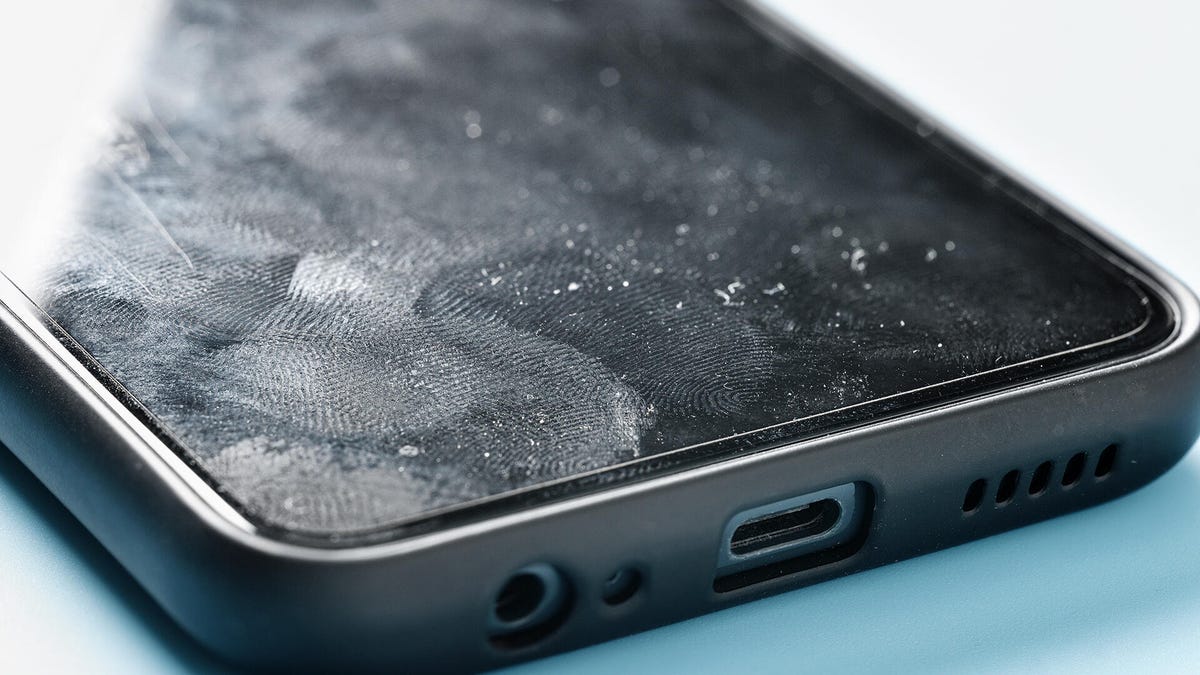
Does your phone screen look like this? I bet the camera does too. Few things can improve the quality of your photos more than a clean camera lens.
Serhii Shleihel/GettyImages
I can't stress enough how important this is. Well, I guess I can stress it since I'm putting it first. I'm amazed how often I see washed out and smudged images that are the result of fingerprints or other schmutz on the camera lens. Just cleaning your lens will improve the quality of your images probably more than any other tip.
How often? I literally check my camera lens before every group of photos. Important ones, anyway. Phone comes out of my pocket, I check the camera lens.
Ideally, you'll use a microfiber cloth, the same sort that comes with glasses/sunglasses. If not, even a soft shirt will be fine. Nothing rough or coarse. Nikon sells a nice microfiber cloth that comes in its own tiny neoprene baggie. This keeps it clean and conveniently on hand.
If you have a real camera, always (always always always) use a lens cap. I get such anxiety when I see people pull a camera from a bag, or have it dangling around their neck, and there's no lens cap. Scratches are even worse than smudges since they permanently decrease the image quality possible with the lens. Lenses are the eyeballs of your camera. Treat them as such.
If you're worried about losing your lens cap, or hate juggling it while you're handling your camera, check out cheap lens cap straps. They're great.
2. Tap the screen
The camera app on a Google Pixel
Google
This always seemed obvious to me, but I've regularly caused "ah-ha!" moments giving this advice. When lining up your shot, if it doesn't look right, tap the screen. Most phones are pretty good at figuring out what you're trying to photograph, but not always. Tapping on your subject, a person, animal, thing, whatever, and changes the focus and exposure.
Here's an example. Say you want to take a photo of your partner on the beach at sunset. Three beautiful things in one photo: partner, setting sun, ocean. The beach too I suppose unless you don't like sand. This is called a backlit photo, and it's extremely hard to do. Most often, your partner will be underexposed (see the terminology section below), as in they'll look dark/shadowed.
With most phone and camera apps, you can tell the camera where to expose the image. In this case, on your partner. The sun will then be overexposed (blown out), but you'll still get the idea it's a sunset and you'll be able to see your partner, which is generally the point, right? If your phone is able to take HDR photos, this image will look better than if it can't.
There is some editing you can do to make a photo like this look better, but that can only go so far. We'll get to editing a little later.
3. Don't use the flash
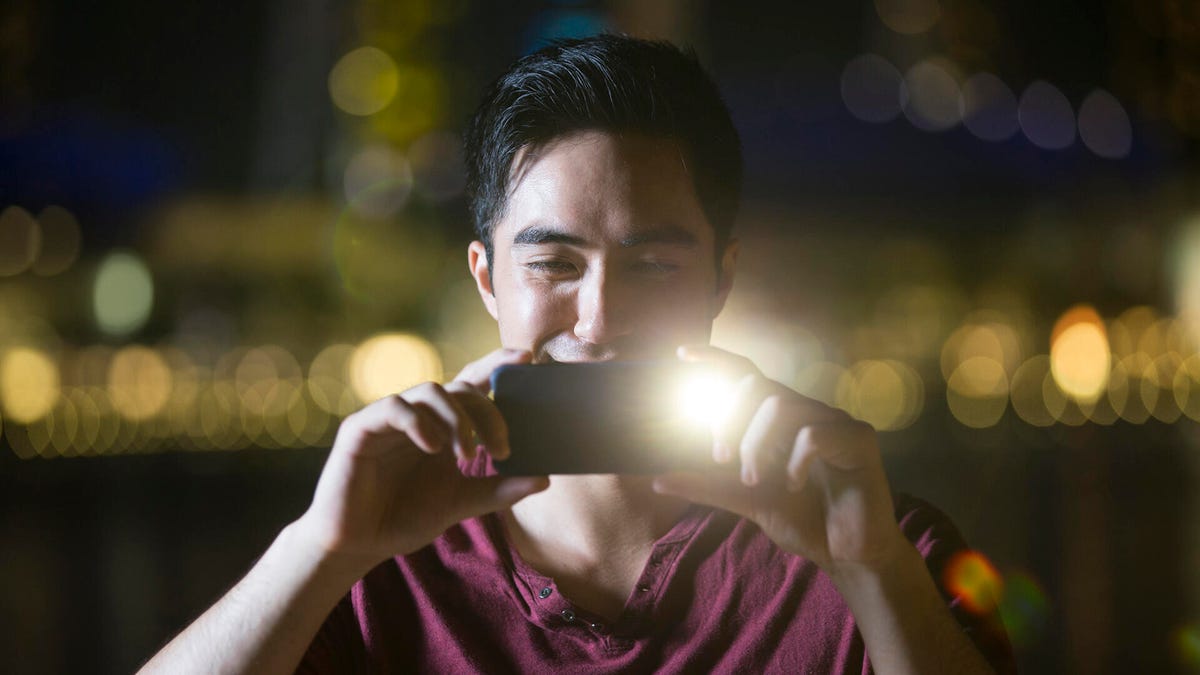
If you're this close to your subject, sure, try the flash. Most phones and cameras have decent low-light capabilities, so the image might look better with the flash turned off. It's worth checking.
Jenner Images/Getty Images
There's no such thing as a good camera flash on a phone. They're all terrible. Even the big add-on flashes for full-size cameras only work in certain situations. Believe it or not, in most cases you'll get a better photo turning the flash off completely. Not 100% of the time, however, so it's worth trying both options.
This is especially true if you're using a full-size camera with built-in flash. In every scenic place I've ever been there's at least one person trying to take a landscape photo and their flash fires. Flashes, even the best, only work within a few feet of the subject. Not only will they do nothing for landscapes, they'll wear down your battery faster at best, and mess with the exposure at worst.
You can turn off the flash in your camera app's settings. More on that below.
There is such a thing as a Slow Sync Flash photography that can be great when trying to photograph people in front of a twilight or night landscape. I'd classify this as a bit more advanced, but with a bit of practice the results can be great!
4. Get a selfie stick
Grandma's gonna find that reindeer and enact revenge.
Geber86/Getty Images
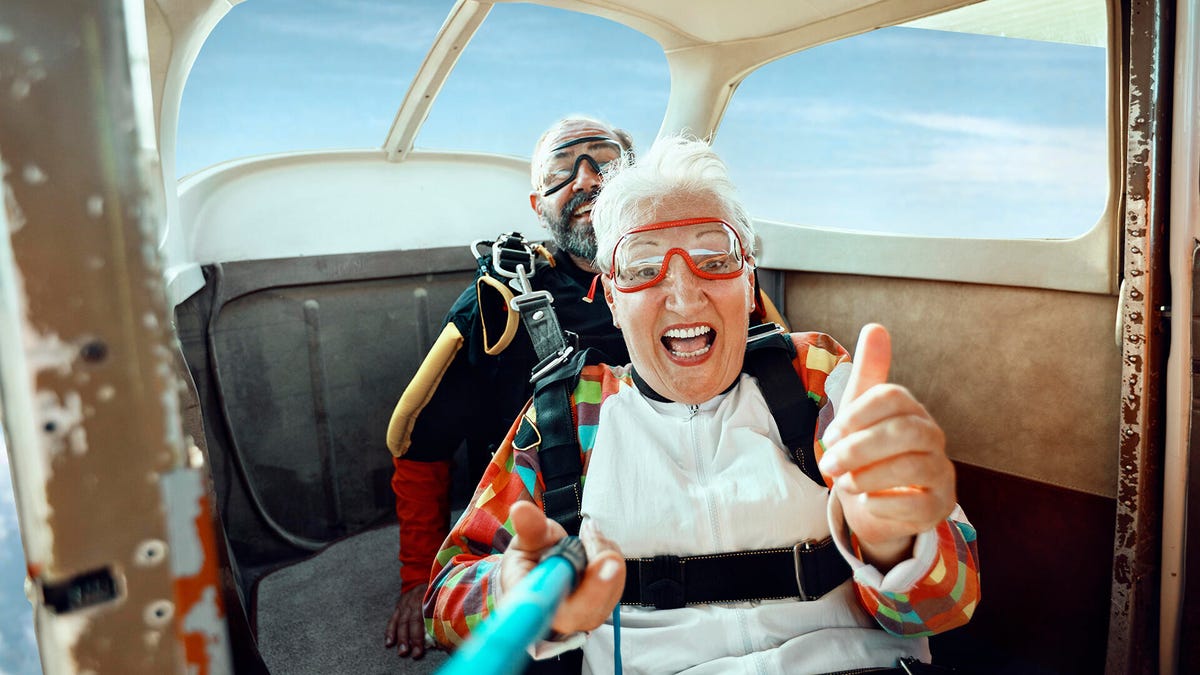
Selfie sticks are good. I have apishly long arms and I still have one, though I typically use it for my 360 camera. My 80-year-old dad has one. They're great. People should take more photos of themselves, of their family and friends, everything. I honestly don't get the hate. Photos are great! Preserve whatever memories you can. Future you will thank you.
To put it more pragmatically, a selfie stick will let you get a wider field of view of yourself, the people you're with and where you are. It just makes for a better photo.
When you're using them, certainly be wary of your immediate surroundings and the people near you. Some locations, especially crowded or dangerous ones, tend to restrict selfie stick usage. Keep an eye out for signage.
If you're not sure how much you'll use it, there's this $8 option on Amazon that extends to 28.7 inches, has a Bluetooth remote built in, and has a base that extends out into a tripod. It collapses down quite small too. For something a bit more elaborate and sturdy for an action camera, GoPro's own 3-way 2.0 configures to a wide variety of positions and angles. It's made for their cameras, of course, but many action cameras use the GoPro-style mount.
5. Get a better angle
This is Smeagol and he is a Very Good Boy.
Geoffrey Morrison/CNET
Most people just bring the phone or camera up to eye level and take the photo. Sometimes that's fine, but you can often get far better results with a different angle. Try holding the camera above your head and aim down. Photographing people from below tends to be rather unflattering, but slightly above often looks great. If you're taking a picture of a kid or animal, get down to their level. A dog's-eye-view of a dog is almost always a more interesting photo than a human's-eye-view of a dog.
This is an aspect where a selfie stick helps. Extend it out and you'll be able to easily frame that epic photo of you and the fam at the Grand Canyon where you can see you, the fam, and the Grand Canyon instead of you, parts of the fam, and a sliver of the Grand Canyon.
6. Learn your app's settings and modes
Changing the default settings on your phone's camera app can have big results.
Apple
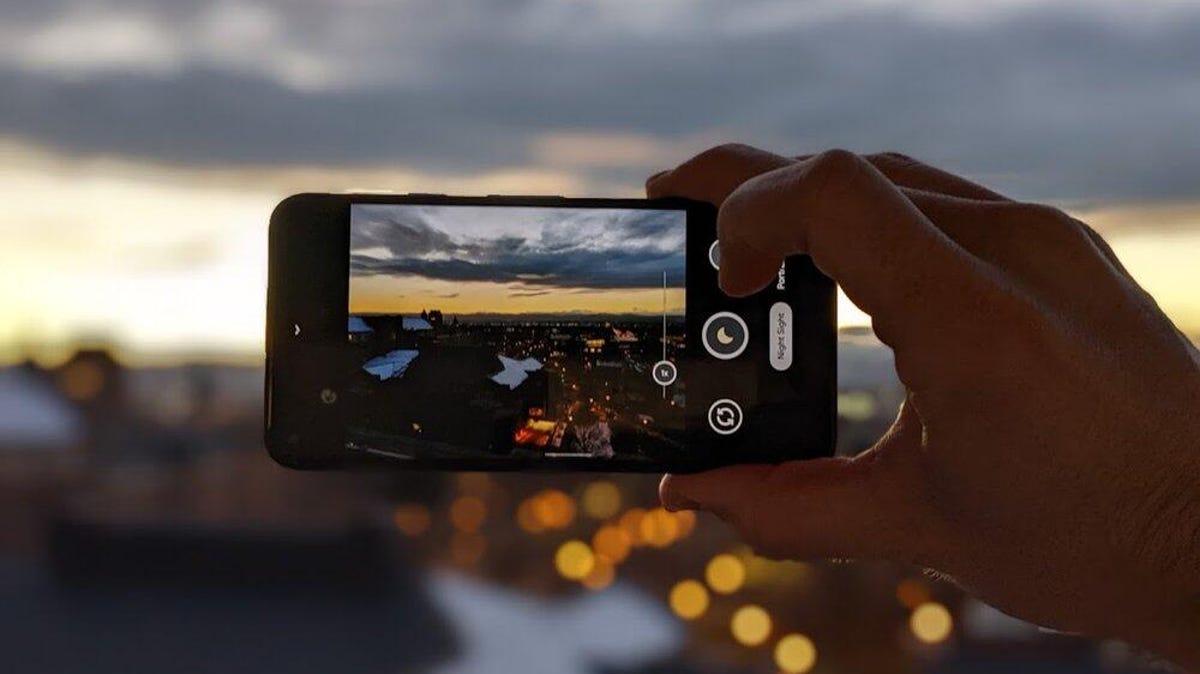
Nearly every phone's camera app is capable of a variety of different photo styles. I'm always surprised to see how many people have no idea. Portrait mode, landscape mode and night mode all let you take vastly more interesting photos than the basic mode, all with just a few taps on the screen. Check them out, see what they do.
As far as settings go, generally the stock ones should be fine. It's worth checking to make sure it's taking the highest-resolution it can and that the flash is turned off (see No. 3). Some apps let you shoot RAW, more info on that in the terms section below.
I'd also recommend enabling manual controls, if available. They'll just take a few minutes to learn and they should help you get the photo you want when, like described in No. 2, the camera itself is struggling to do so.
Fun fact: Many camera apps have the option to use one of the phone's buttons as the shutter. If it's too hard for you to tap the screen while holding the phone, perhaps using the volume button instead will be easier. There are also timer functions that give you a countdown of a few seconds to get your pose and people ready.
Read more: How to Use the iPhone's ProRaw Mode to Make Your Photos Look Better Than Before
7. Editing
Note the different editing possibilities cycling through on the right.
Google
Nearly every great digital photo you've ever seen has gone through some amount of editing. Colloquially this is called "Photoshopping" but you don't need to pay Adobe for a subscription to that specific program. In fact, there are a lot of free options. Your phone might have some built in to its gallery already. Instagram has some great adjustments too. Beyond those, check out CNET's best free and paid photo editing apps for iPhone and Android.
The easiest way to learn is to just pick a photo and see what all the options do. Visually, it will be pretty obvious what things like contrast, brightness, and so on actually do. Most of them do the same thing on your TV, if you're interested.
Slight tweaks to contrast, brightness, and color will do wonders for any image. You can "slap a filter on it," sure, but starting with a better base image will usually make it look better after you apply a filter too.
Bonus! Cloud backup
Ymgerman
While not a camera tip per se, I very strongly recommend getting some sort of cloud backup for your photos. Integrated with your phone this means that whenever you're on Wi-Fi all your photos will get backed up to the cloud. With a real camera you can download them to the camera's phone app, and usually they'll get sent to the cloud from there. Sometimes, like with GoPro, there's an extra step required to save them to your phone's gallery.
With a cloud backup if you lose your phone or camera, you won't lose your photos. This saved me in a big way when I got robbed on an overnight train in Italy, and another time when a hard drive crashed on me.
Also, never forget, there are only two types of hard drives: Those that have failed, and those that will fail.
Check out our six ways to keep your photos safe in case of an emergency and best cloud storage services for 2022.
When to upgrade
As you get to know your phone's camera, you'll start to find its limitations. A limited zoom is going to be the most obvious, followed by noise in the image, a lack of settings, and so on. Some of you will start wanting more. It's a logical progression, one I bounded through myself, from inexpensive options to more and more expensive options. It's a pricey hobby, to be sure. Buying used can help.
I recommend checking out my Best Camera for Summer Travel article as a next step. It's aimed towards vacation/travel options, but should give you an idea what's out there and what the upgrade steps look like.
Terms and words and stuff
You'll find these terms when reading about actual cameras, as well as about phone cameras and within apps.
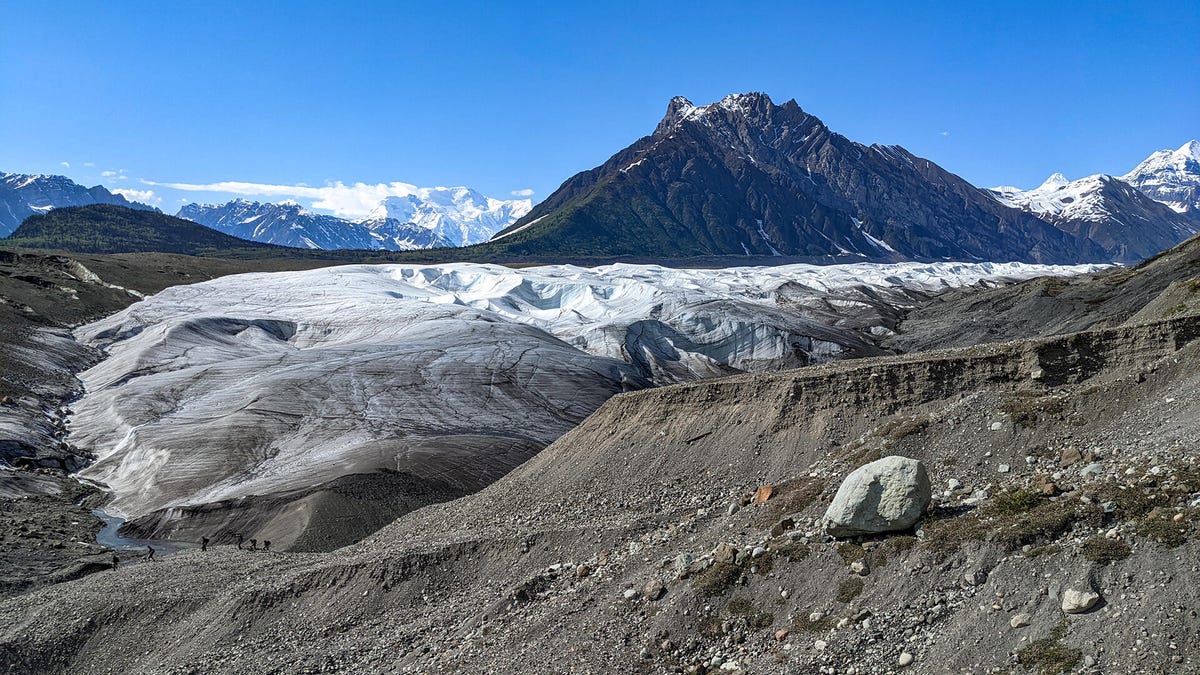
Wide angle: A type of lens that typically captures more than what you'd see with your eyes in one glance. The whole forest instead of a single tree, so to speak.
A wide angle photo, taken with my phone, of the Root Glacier in Wrangell-St. Elias National Park. Note the tiny people in the lower left.
Geoffrey Morrison/CNET
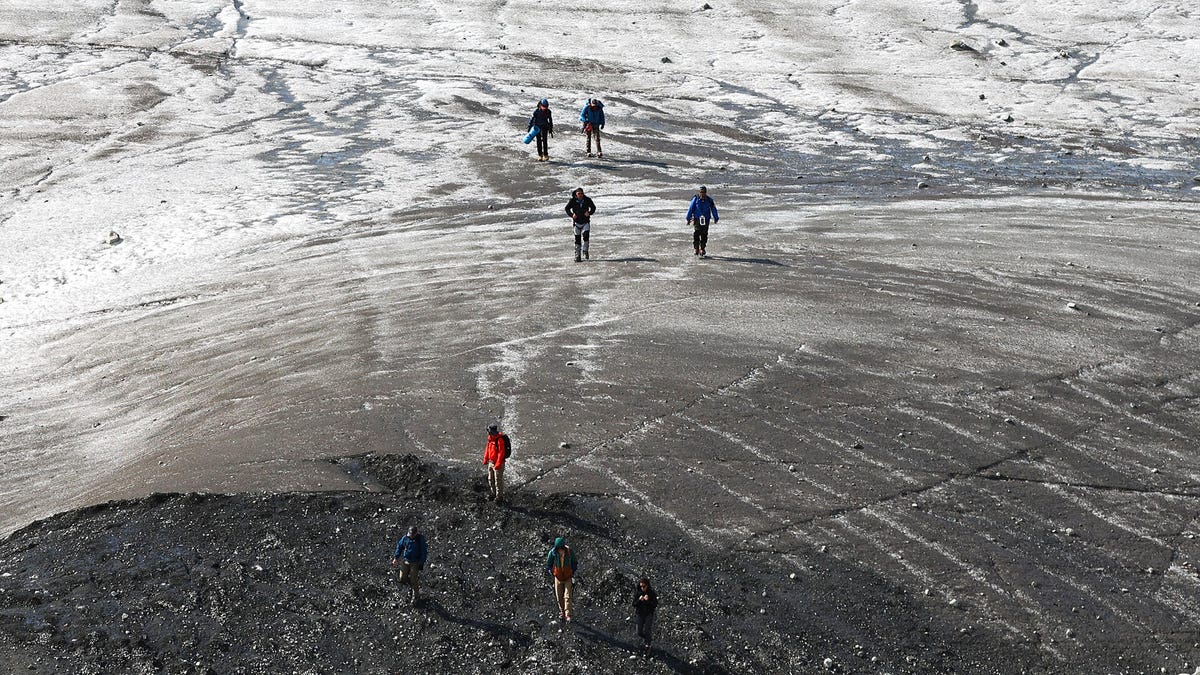
Telephoto: The tree, not the forest. Telephoto lenses let you capture images where you seem right up close to a subject but were actually far away.
Standing in the same place as the above photo, but with a 135mm telephoto lens on a Canon R6. These are the same hikers, a few minutes earlier, as they made their way across the glacier. Note how much closer they seem.
Geoffrey Morrison/CNET
SLR/DSLR: Single Lens Reflex/Digital Single Lens Reflex. Historically the "big, real camera." Usually a shorthand for a camera where you can change the lenses. Gradually being replaced, even among expensive cameras, with mirrorless versions.
Mirrorless: Lacking the moving mirror found in all SLR/DSLR cameras. What this means for you is the cameras are slightly smaller and lighter. Offered in a wide variety of prices. At the top end they're replacing professional DSLRs.
35mm equivalent: Refers to 35 millimeter film, the old standard, as a way to describe how wide, or telephoto, a lens is. For example, a 35mm-equivalent 12mm lens is wide, a 100mm lens is telephoto. Used as a relative reference since the actual focal length will vary depending on the size of the image sensor.
Optical zoom: This is the only real zoom. Uses glass or plastic lenses to make a subject appear closer.
Digital zoom: Best to think of this as "fake" zoom. It merely crops the image, and then upconverts it. Doesn't make the subject more detailed, just larger. OK if there's no other option, but the image quality is vastly inferior to optical zoom.
Underexposed: A subject or image that's darker than desired.
Overexposed: A subject or image that's brighter than desired.
RAW: An image format that's just very lightly processed data from the image sensor. At the professional level, RAW files are used almost exclusively as there is more range available to edit. However, you need to be knowledgeable with photo editing and have an app/software that can edit your camera/phone's RAW files. Not for beginners.
As well as covering TV and other display tech, Geoff does photo tours of cool museums and locations around the world, including nuclear submarines, massive aircraft carriers, medieval castles, epic 10,000-mile road trips, and more. Check out Tech Treks for all his tours and adventures.
He wrote a bestselling sci-fi novel about city-size submarines, along with a sequel. You can follow his adventures on Instagram and his YouTube channel.